Loading...
Ali Bongo Ondimba vs Julius Caesar
Julius Caesar leads by 39.1 pts · 2 figures compared
…
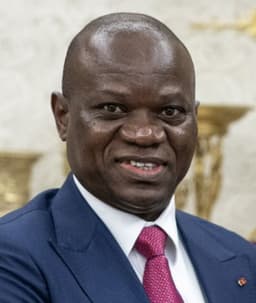
Ali Bongo Ondimba
Politician · Modern
43.7Total

Julius Caesar
General · Ancient
82.8Total
Basic Information
Born
1959
-100
Died
—
-44
Era
Modern
Ancient
Nationality
Gabon
Roman Republic
Occupation
Politician
General
Civilization
Other
Western
Score Comparison
Military (10%)
48.1
88.0
Political (20%)
32.2
78.0
Influence (20%)
47.9
85.0
Legacy (20%)
37.5
82.0
Leadership (15%)
55.3
80.0
Strategy (15%)
44.0
85.0
TOTAL
43.7
82.8
Ali Bongo Ondimba — Complete Timeline
2009 AD
Elected President of GabonPolitical Action◆ Major
Following the death of his father Omar Bongo, Ali Bongo Ondimba won the presidential election in Gabon. His victory was contested by the opposition, leading to protests and accusations of electoral fraud.
ElectionSuccessionControversy
Impact: national
2018 AD
Suffered StrokeOther◆ Major
Ali Bongo Ondimba suffered a stroke while attending a summit in Saudi Arabia. He spent months abroad recovering, which fueled speculation about his health and ability to govern, leading to a power vacuum and attempted coup in 2019.
Health CrisisPower VacuumSpeculation
Impact: nationaltragic
2023 AD
Overthrown in Coup d'ÉtatPolitical Action
On August 30, 2023, military officers led by General Brice Oligui Nguema announced the overthrow of President Ali Bongo Ondimba. The coup occurred shortly after Bongo was declared winner of a disputed election, ending his 14-year rule.
CoupEnd of RegimeMilitary Takeover
Impact: nationaldestructive
Julius Caesar — Complete Timeline
58 BC
Gallic WarsWar◆ Major
Caesar, as proconsul of Gaul, launched a series of campaigns that conquered all of Gaul (modern France, Belgium, and parts of Switzerland). He fought numerous battles, including against the Helvetii, the Belgae, and the Gallic chieftain Vercingetorix. The wars brought immense wealth and a loyal army to Caesar.
Gallic WarsConquestRoman Expansion
Impact: regional
49 BC
Crossing the RubiconPolitical Action◆ Major
Caesar led Legio XIII across the Rubicon River into Italy, defying the Roman Senate's order to disband his army. This act triggered a civil war against Pompey and the Optimates, ultimately leading to Caesar's dictatorship and the end of the Roman Republic.
Roman Civil WarEnd of RepublicPower Struggle
Impact: global
48 BC
Battle of PharsalusWar◆ Major
Caesar's outnumbered army defeated the larger forces of Pompey the Great at Pharsalus in Greece. Caesar's tactical use of a reserve line to counter Pompey's cavalry charge proved decisive. Pompey fled to Egypt, where he was assassinated, leaving Caesar as the undisputed master of the Roman world.
Roman Civil WarBattleDecisive Victory
Impact: regional
44 BC
Appointment as Dictator for LifePolitical Action◆ Major
The Roman Senate appointed Caesar dictator perpetuo (dictator for life), granting him unprecedented personal power. This move concentrated military, legislative, and judicial authority in one person, effectively ending the Roman Republic's traditional system of checks and balances and alarming many senators.
DictatorshipEnd of RepublicPower Consolidation
Impact: regionaldestructive
Assassination on the Ides of MarchPolitical Action◆ Major
A group of Roman senators, led by Marcus Junius Brutus and Gaius Cassius Longinus, stabbed Caesar to death at a meeting of the Senate in the Theatre of Pompey. The assassination was intended to restore the Republic, but instead triggered another civil war that led to the rise of the Roman Empire.
AssassinationRoman PoliticsEnd of Republic
Impact: globaldestructive
Expert Analysis
ali-bongo-ondimba-vs-julius-caesar
# The Man Who Crossed the Rubicon and the Man Who Fell From the Sky
On a January morning in 49 BCE, a Roman general stood on the banks of a small river in northern Italy, contemplating an act that would shatter centuries of republican tradition. On an August evening in 2023, a Gabonese president sat in his palace in Libreville, watching soldiers surround his home. Both men had inherited power from worlds that were already shifting beneath their feet. One crossed the Rubicon; the other was crossed out of history. What separates a figure who remakes the world from one who is merely swept away by it? The answer lies not in the stars, but in the soil from which they grew.
Origins
Julius Caesar was born into the chaos of a dying republic. The year was 100 BCE, and Rome was a city of marble and blood—its Senate choked with corruption, its streets thick with the ghosts of civil wars. Caesar’s family, the Julii, claimed descent from the goddess Venus, but they were patricians in name only, impoverished and politically marginalized. Young Caesar learned early that in Rome, survival meant audacity. He fled the dictator Sulla’s proscriptions, refused to divorce his wife, and spent years in exile and study, absorbing the art of war in Asia Minor and the art of persuasion from the finest Greek tutors. His was a world where a man could rise only by breaking the rules.
Ali Bongo Ondimba was born in 1959 in Brazzaville, Congo, into a very different kind of inheritance. His father, Omar Bongo, had ruled Gabon since 1967, a tiny oil-rich nation on Africa’s Atlantic coast where power was a family heirloom. Young Ali was sent to France for education, trained as a lawyer, and returned to Gabon as a minister at twenty-eight. He changed his name from Alain Bernardin to Ali Bongo, converted to Islam, and learned to navigate the shadowy corridors of a one-party state. Where Caesar had to claw his way up from the margins, Ali Bongo was handed a throne. That difference—between striving and inheriting—would define everything that followed.
Rise to Power
Caesar’s ascent was a masterpiece of calculated risk. He borrowed fortunes to fund lavish games, bought the loyalty of the masses, and formed the First Triumvirate with Pompey and Crassus—an alliance of ambition disguised as friendship. His real breakthrough came when he secured the governorship of Gaul in 58 BCE. Over the next eight years, he conquered a territory larger than Italy itself, writing his own legend in the *Commentaries* that still teach generals how to lead. He crossed the Rhine, invaded Britain, and amassed an army that loved him more than Rome. When the Senate ordered him to disband, he knew the choice: exile or empire. At the Rubicon, he chose empire.
Ali Bongo’s rise was quieter, but no less decisive. When his father died in 2009 after forty-one years in power, the presidency was not a prize to be won but a seat to be occupied. He won the election—though opponents cried fraud—and inherited a state built on oil revenues and patronage. His political action score of 50.0 reflects a man who never had to fight for power; he merely had to hold it. There was no Gaul to conquer, no Senate to defy. Gabon’s political system was a machine designed by his father, and Ali Bongo was its heir, not its architect.
Leadership & Governance
Caesar governed as he conquered: with speed, intelligence, and a terrifying willingness to break precedent. As dictator, he reformed the calendar, granted citizenship to provincials, launched public works projects, and packed the Senate with his supporters. His military genius—scored at 88.0—was matched by a political cunning that understood that power required performance. He pardoned enemies, celebrated triumphs, and kept his soldiers loyal with land grants. But he also centralized authority, undermined the Senate, and accepted the title “dictator for life.” He was building an empire, but he was also building a target on his back.
Ali Bongo, by contrast, governed in the shadow of a giant. His leadership score of 78.7 suggests competence, but not brilliance. He modernized Gabon’s infrastructure, pushed for economic diversification beyond oil, and championed environmental conservation. Yet the system remained fundamentally unchanged: a small elite controlled the wealth, elections were disputed, and opposition was managed, not engaged. When he suffered a stroke in 2018 while attending a summit in Saudi Arabia, the country saw a president who could not speak or walk. The machinery of state continued, but the man at its center had become a symbol of fragility.
Triumph & Tragedy
Caesar’s greatest triumph was not the conquest of Gaul, but the civil war that followed. At Pharsalus in 48 BCE, he defeated Pompey’s larger army with tactical brilliance, then famously pardoned his enemies—a gesture of magnanimity that was also a political calculation. His tragedy was that he could not stop. He accepted the dictatorship, allowed himself to be deified, and ignored the warnings of soothsayers and friends. On the Ides of March, 44 BCE, sixty senators surrounded him in the Theatre of Pompey and stabbed him twenty-three times. His last words, according to legend, were to his friend Brutus: “You too, my child?”
Ali Bongo’s triumph was simply surviving. He won elections in 2016 and 2023, despite accusations of fraud and violent protests. His tragedy came on August 30, 2023, when military officers led by General Brice Oligui Nguema announced his overthrow. The coup was swift, almost bloodless. The president who had inherited power lost it in hours. Where Caesar died at the height of his ambition, Ali Bongo died politically—a slow decline from stroke to isolation to the moment soldiers surrounded his home.
Character & Destiny
Caesar was a gambler who believed in his own luck. He was vain, ruthless, and brilliant—a man who could dictate four letters at once while drinking wine with friends. His character drove him to take risks that others would not: crossing the Rubicon, pardoning enemies, accepting a crown. He believed that destiny favored the bold, and for twenty years, it did. But his arrogance also blinded him. He dismissed the conspiracy, walked into the Senate without guards, and died believing that his achievements would protect him.
Ali Bongo was a caretaker, not a conqueror. His character was shaped by the knowledge that he was always second—second to his father, second to the system, second to history. He governed cautiously, avoided confrontation, and relied on the machinery of state rather than personal charisma. His strategy score of 56.4 suggests a man who managed, but did not create. When the crisis came—a disputed election, a weakened body, a restless military—he had no reservoir of loyalty to draw upon. The soldiers who overthrew him did not hate him; they simply found him irrelevant.
Legacy
Caesar’s legacy is the Roman Empire. His name became a title—Caesar, Kaiser, Tsar—carried by rulers for two thousand years. His reforms outlived him, his *Commentaries* are still read in military academies, and his assassination launched a chain of events that ended the Republic forever. He is remembered as both a tyrant and a visionary, a man who destroyed one world to build another. His scores—military 88.0, influence 85.0, legacy 82.0—reflect a figure who reshaped civilization itself.
Ali Bongo’s legacy is smaller, but no less instructive. He will be remembered as the son who tried to hold his father’s kingdom together, and failed. His legacy score of 48.9 reflects a presidency that maintained the status quo but could not transform it. In Gabon, his name will fade into the list of African leaders who inherited power and lost it—a cautionary tale about the limits of dynastic rule in a world that demands more than inheritance.
Conclusion
What separates Caesar from Ali Bongo is not talent or luck, but the nature of their ambition. Caesar wanted to remake the world; Ali Bongo wanted to keep it as it was. One crossed a river and changed history; the other stayed in his palace and was swept away by it. The Rubicon was not just a river—it was a choice. Caesar chose to risk everything for everything. Ali Bongo chose to risk nothing for nothing. In the end, both lost their lives to politics. But one of them, even in death, still commands the legions of memory.
Rankings
🥇
Julius CaesarLeader
Mil: 88.0Pol: 78.0Inf: 85.0
82.8
🥈
Ali Bongo Ondimba
Mil: 48.1Pol: 32.2Inf: 47.9
43.7
+39.1 behind
How This Comparison Works
Algorithm
Each figure is scored on 6 dimensions (0—100 scale) based on structured historical data: Military (10%), Political (20%), Influence (20%), Legacy (20%), Leadership (15%), Strategy (15%). The weighted total produces the final ranking.
Data Sources
Scores are computed from structured sub-indicators in the database. Scale factors adjust for era (Ancient ×0.85, Modern ×1.0) and civilization size (Eastern ×1.05, Other ×0.80) to account for differences in population and military scale.
Maximum 3 Figures
Comparisons are limited to 2—3 figures to ensure readability and statistical meaningfulness.
Error Margins
±5 points per dimension — Sub-scores are derived from historical records with inherent uncertainty. Two figures within 5 points on a dimension should be considered roughly equivalent in that area.
Total Score Accuracy
±3 points overall — The weighted combination of 6 dimensions produces a total score with approximately ±3 points of uncertainty. Differences of less than 3 points are not statistically significant— the figures are effectively tied.
Known Limitations
- Historical records are incomplete and uneven across civilizations
- Figures from oral-tradition societies may be underrepresented
- Occupation labels can misclassify multi-role figures
- Scores measure capability and impact, not moral character
- Quantitative scoring is a comparison tool, not absolute truth
Capability Radar
Military (10%) — Battles & Warfare
Battles
21
95
Win Rate
24
92
Expansion
30
97
Political (20%) — Governance & Reform
Reform
15
90
Diplomacy
30
85
Economy
20
82
Influence (20%) — Cultural & Global Reach
Cultural
10
88
Global
15
94
Legacy (20%) — Historical Impact
Historical
15
95
Longevity
10
96
Leadership (15%) — Power & Stability
Tenure
40
75
Stability
10
60
Strategy (15%) — Tactics & Innovation
Strategy
31
94
Tactics
34
96
Reform
35
88
Similar Comparisons
Comments & Discussion
No comments yet. Be the first to share your thoughts!