Loading...
Ali Bongo vs Rafic Hariri
Rafic Hariri leads by 15.6 pts · 2 figures compared
…

Ali Bongo
Politician · Modern
40.0Total
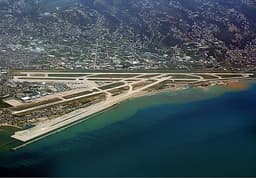
Rafic Hariri
Politician · Modern
55.6Total
Basic Information
Born
1959
1944
Died
—
—
Era
Modern
Modern
Nationality
Gabon
Lebanon
Occupation
Politician
Politician
Civilization
Other
Middle Eastern
Score Comparison
Military (10%)
20.1
26.9
Political (20%)
35.1
78.0
Influence (20%)
47.1
55.0
Legacy (20%)
35.8
52.0
Leadership (15%)
55.3
68.0
Strategy (15%)
36.9
42.1
TOTAL
40.0
55.6
Ali Bongo — Complete Timeline
2009 AD
Elected President of GabonPolitical Action◆ Major
Ali Bongo was elected President of Gabon following the death of his father, Omar Bongo, who had ruled for 41 years. The election was marred by allegations of fraud and opposition protests, but Bongo's victory was confirmed by the constitutional court.
ElectionSuccessionControversy
Impact: national
2018 AD
Suffered StrokeOther◆ Major
President Ali Bongo suffered a stroke while attending a summit in Saudi Arabia. He spent several months abroad for medical treatment, leading to a power vacuum and speculation about his ability to govern. His absence fueled political instability.
HealthStrokePolitical Instability
Impact: nationaltragic
2023 AD
Overthrown in Military CoupPolitical Action
President Ali Bongo was overthrown by a military coup led by General Brice Oligui Nguema. The coup occurred shortly after Bongo was declared winner of a disputed presidential election. The military cited corruption and poor governance as reasons for the takeover.
CoupOverthrowMilitary
Impact: nationaldestructive
Rafic Hariri — Complete Timeline
1992 AD
Appointed Prime Minister of LebanonPolitical Action◆ Major
Rafic Hariri was appointed Prime Minister of Lebanon on October 31, 1992, after the end of the civil war. He was tasked with rebuilding the country's economy and infrastructure, leveraging his personal wealth and international connections.
Prime MinisterReconstructionPost-war
Impact: nationalconstructive
1994 AD
Launched the reconstruction of Beirut Central DistrictOther◆ Major
Hariri's government initiated the reconstruction of Beirut's central district through the Solidere company. The project rebuilt the war-torn city center with modern infrastructure, but faced criticism for displacing residents and favoring wealthy investors.
ReconstructionBeirutUrban Development
Impact: nationalconstructive
1998 AD
Resigned as Prime Minister amid political crisisPolitical Action
Hariri resigned as Prime Minister in December 1998 after a dispute with President Emile Lahoud over economic policy and corruption. He returned to power in 2000 after winning parliamentary elections.
ResignationPolitical CrisisElections
Impact: national
2005 AD
Assassinated in Beirut bombingPolitical Action
Rafic Hariri was assassinated on February 14, 2005, when a massive truck bomb exploded near his motorcade in Beirut. His death sparked the Cedar Revolution, leading to the withdrawal of Syrian troops from Lebanon and international investigations.
AssassinationCedar RevolutionSyria
Impact: regionaltragic
Expert Analysis
Origins
Ali Bongo was born on February 9, 1959, in Brazzaville, Congo, as Alain Bernard Bongo. He is the son of Omar Bongo, who ruled Gabon from 1967 until his death in 2009. Ali Bongo studied law at the Sorbonne in Paris but did not complete a degree. His early career included working in his father's administration as a foreign minister and defense minister, gaining political exposure but little independent experience.
Rafic Hariri was born on November 1, 1944, in Sidon, Lebanon, into a modest Sunni Muslim family. He studied business administration at the Arab University of Beirut but left before graduating. He emigrated to Saudi Arabia in 1965, where he worked as a teacher and later founded his own construction company, Saudi Oger, which became a major contractor. His fortune was built through connections with the Saudi royal family.
Rise to Power
Ali Bongo rose to power largely through inheritance. After his father's death in June 2009, he was elected president in August 2009 in an election criticized for irregularities. His main opponent, André Mba Obame, claimed fraud. Bongo consolidated power by co-opting elites and using state resources. His rise was not based on a popular movement but on dynastic succession.
Rafic Hariri leveraged his wealth and Saudi connections to become a key figure in Lebanon. After the Taif Agreement ended the civil war in 1990, Hariri was appointed Prime Minister in 1992, tasked with reconstruction. He used his construction company, Solidere, to rebuild Beirut's central district. His rise was driven by his economic influence and ability to secure foreign investment.
Leadership & Governance
Ali Bongo's leadership style was autocratic and centralized. He continued his father's system of patronage and repression. He faced protests in 2016 after a disputed election, and his security forces cracked down violently. He scored 55.3 in leadership, but his governance was marked by corruption and nepotism. Economically, he attempted to diversify Gabon's oil-dependent economy but made limited progress. His political score of 35.1 reflects his inability to build democratic institutions.
Rafic Hariri was a pragmatic technocrat focused on economic reconstruction. He scored 78.0 in politics, indicating his skill in navigating Lebanon's sectarian system. He promoted private-sector growth and foreign investment, but his government was plagued by corruption and high public debt. He resigned in 1998 after disputes with President Lahoud over economic policy, but returned in 2000. His leadership score of 68.0 reflects his ability to manage coalitions, though he failed to tackle systemic issues.
Triumph & Tragedy
Ali Bongo's greatest success was maintaining power for 14 years despite weak legitimacy. He oversaw modest infrastructure projects but failed to improve living standards. His tragedy was his overthrow in a military coup on August 30, 2023, after being declared winner of a disputed election. The coup, led by General Brice Oligui Nguema, ended his rule and exposed the fragility of his regime. His military score of 20.1 reflects his inability to control the armed forces.
Rafic Hariri's triumph was overseeing the reconstruction of Beirut's central district, which became a symbol of post-war recovery. He also helped stabilize Lebanon's currency and attract foreign investment. His tragedy was his assassination on February 14, 2005, by a truck bomb in Beirut. The assassination sparked the Cedar Revolution, which led to Syrian withdrawal from Lebanon. However, his murder also deepened sectarian divisions. His legacy score of 52.0 is tied to his symbolic status as a martyr.
Character & Destiny
Ali Bongo was aloof and reliant on his father's legacy. He showed little strategic vision, scoring 36.9 in strategy. His decision to cling to power despite protests and economic decline led to his downfall. His character was shaped by entitlement and a lack of political acumen.
Rafic Hariri was ambitious and charismatic, with a global outlook. He was a skilled negotiator but also confrontational with rivals like Syria. His decision to challenge Syrian influence in Lebanon likely led to his assassination. His destiny was sealed by his refusal to back down, but his death transformed him into a national icon.
Legacy
Ali Bongo's legacy is one of failed dynastic rule. He is remembered for corruption and repression, and his ouster weakened the Bongo family's grip on Gabon. The coup may lead to political change, but his personal legacy is negative.
Rafic Hariri's legacy is more complex. He is celebrated as a reconstructionist and a martyr for Lebanese independence. The Hariri family remains influential in politics. However, his economic policies contributed to Lebanon's debt crisis, and his assassination did not solve the country's sectarian problems. His overall score of 55.6 reflects his mixed impact.
Conclusion
Rafic Hariri had a greater impact than Ali Bongo, with a total score of 55.6 versus 40.0. Hariri's role in rebuilding Beirut and his assassination's political consequences reshaped Lebanon's modern history. Bongo, by contrast, was a mediocre leader who failed to adapt and was overthrown without resistance. While Hariri's legacy is imperfect, his influence on Lebanon's trajectory was more profound than Bongo's on Gabon.
Rankings
🥇
Rafic HaririLeader
Mil: 26.9Pol: 78.0Inf: 55.0
55.6
🥈
Ali Bongo
Mil: 20.1Pol: 35.1Inf: 47.1
40.0
+15.6 behind
How This Comparison Works
Algorithm
Each figure is scored on 6 dimensions (0—100 scale) based on structured historical data: Military (10%), Political (20%), Influence (20%), Legacy (20%), Leadership (15%), Strategy (15%). The weighted total produces the final ranking.
Data Sources
Scores are computed from structured sub-indicators in the database. Scale factors adjust for era (Ancient ×0.85, Modern ×1.0) and civilization size (Eastern ×1.05, Other ×0.80) to account for differences in population and military scale.
Maximum 3 Figures
Comparisons are limited to 2—3 figures to ensure readability and statistical meaningfulness.
Error Margins
±5 points per dimension — Sub-scores are derived from historical records with inherent uncertainty. Two figures within 5 points on a dimension should be considered roughly equivalent in that area.
Total Score Accuracy
±3 points overall — The weighted combination of 6 dimensions produces a total score with approximately ±3 points of uncertainty. Differences of less than 3 points are not statistically significant— the figures are effectively tied.
Known Limitations
- Historical records are incomplete and uneven across civilizations
- Figures from oral-tradition societies may be underrepresented
- Occupation labels can misclassify multi-role figures
- Scores measure capability and impact, not moral character
- Quantitative scoring is a comparison tool, not absolute truth
Capability Radar
Military (10%) — Battles & Warfare
Battles
19
19
Win Rate
25
22
Expansion
25
29
Political (20%) — Governance & Reform
Reform
20
70
Diplomacy
30
75
Economy
25
85
Influence (20%) — Cultural & Global Reach
Cultural
10
55
Global
10
60
Legacy (20%) — Historical Impact
Historical
10
60
Longevity
5
50
Leadership (15%) — Power & Stability
Tenure
40
65
Stability
10
40
Strategy (15%) — Tactics & Innovation
Strategy
29
31
Tactics
31
35
Reform
35
35
Similar Comparisons
Comments & Discussion
No comments yet. Be the first to share your thoughts!