Loading...
Besigye Kizza vs Rafic Hariri
Rafic Hariri leads by 14.5 pts · 2 figures compared
…

Besigye Kizza
Politician · Modern
41.1Total
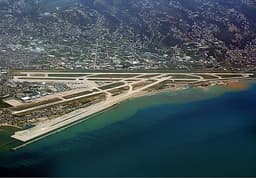
Rafic Hariri
Politician · Modern
55.6Total
Basic Information
Born
1956
1944
Died
—
—
Era
Modern
Modern
Nationality
Uganda
Lebanon
Occupation
Politician
Politician
Civilization
Other
Middle Eastern
Score Comparison
Military (10%)
43.7
26.9
Political (20%)
35.1
78.0
Influence (20%)
49.4
55.0
Legacy (20%)
40.0
52.0
Leadership (15%)
31.2
68.0
Strategy (15%)
43.9
42.1
TOTAL
41.1
55.6
Besigye Kizza — Complete Timeline
2001 AD
Challenged Yoweri Museveni in 2001 Presidential ElectionOther◆ Major
Kizza Besigye, a former physician and Museveni ally, ran as the main opposition candidate against President Yoweri Museveni in Uganda's presidential election. Museveni won with 69% of the vote. Besigye alleged widespread fraud, leading to protests and his subsequent self-exile to South Africa.
Ugandan PoliticsElectionOpposition
Impact: nationaldestructive
2005 AD
Arrested and Charged with TreasonOther◆ Major
Besigye was arrested upon returning from exile in South Africa and charged with treason, rape, and illegal possession of firearms. The treason charge related to alleged links with the rebel Lord's Resistance Army. His arrest sparked riots in Kampala and international condemnation of Museveni's government.
Ugandan PoliticsPolitical RepressionHuman Rights
Impact: nationaldestructive
2006 AD
Challenged Museveni in 2006 Presidential ElectionOther◆ Major
Besigye ran as the Forum for Democratic Change candidate in Uganda's first multi-party election in 25 years. Museveni won with 59% of the vote to Besigye's 37%. Besigye again alleged fraud. The election was marked by Besigye's ongoing treason trial and restrictions on opposition rallies.
Ugandan PoliticsElectionOpposition
Impact: nationaldestructive
2011 AD
Challenged Museveni in 2011 Presidential ElectionOther◆ Major
Besigye ran against Museveni for the third time. Museveni won with 68% of the vote to Besigye's 26%. Besigye rejected the results, citing vote rigging and intimidation. He led a series of 'walk-to-work' protests against rising fuel and food prices, which were met with police tear gas and arrests.
Ugandan PoliticsElectionProtest
Impact: nationaldestructive
2016 AD
Challenged Museveni in 2016 Presidential ElectionOther◆ Major
Besigye ran against Museveni for the fourth time. Museveni won with 60% of the vote to Besigye's 35%. Besigye was placed under house arrest before results were announced. He declared himself the rightful winner and held a symbolic swearing-in ceremony, leading to his arrest and military detention.
Ugandan PoliticsElectionPolitical Crisis
Impact: nationaldestructive
Rafic Hariri — Complete Timeline
1992 AD
Appointed Prime Minister of LebanonPolitical Action◆ Major
Rafic Hariri was appointed Prime Minister of Lebanon on October 31, 1992, after the end of the civil war. He was tasked with rebuilding the country's economy and infrastructure, leveraging his personal wealth and international connections.
Prime MinisterReconstructionPost-war
Impact: nationalconstructive
1994 AD
Launched the reconstruction of Beirut Central DistrictOther◆ Major
Hariri's government initiated the reconstruction of Beirut's central district through the Solidere company. The project rebuilt the war-torn city center with modern infrastructure, but faced criticism for displacing residents and favoring wealthy investors.
ReconstructionBeirutUrban Development
Impact: nationalconstructive
1998 AD
Resigned as Prime Minister amid political crisisPolitical Action
Hariri resigned as Prime Minister in December 1998 after a dispute with President Emile Lahoud over economic policy and corruption. He returned to power in 2000 after winning parliamentary elections.
ResignationPolitical CrisisElections
Impact: national
2005 AD
Assassinated in Beirut bombingPolitical Action
Rafic Hariri was assassinated on February 14, 2005, when a massive truck bomb exploded near his motorcade in Beirut. His death sparked the Cedar Revolution, leading to the withdrawal of Syrian troops from Lebanon and international investigations.
AssassinationCedar RevolutionSyria
Impact: regionaltragic
Expert Analysis
Origins
**Kizza Besigye** was born in 1956 in Rukungiri, Uganda. He studied medicine at Makerere University and became a physician. He joined the National Resistance Army (NRA) during the Ugandan Bush War and served as Yoweri Museveni's personal doctor. His early life was shaped by the conflict under Idi Amin and Milton Obote, leading him to support Museveni's rebellion.
**Rafic Hariri** was born in 1944 in Sidon, Lebanon, into a modest Sunni Muslim family. He studied business administration at the Arab University of Beirut but left before graduating. He moved to Saudi Arabia in 1965, where he worked as a teacher and then entered the construction business, founding the Saudi Oger company. His fortune grew through contracts with the Saudi royal family, making him a billionaire.
Rise to Power
Besigye rose to prominence as a key figure in Museveni's government, serving as Minister of State for Internal Affairs and later as Minister of Local Government. However, he fell out with Museveni over corruption and the direction of the country. In 1999, he fled to South Africa, returning in 2001 to challenge Museveni in the presidential election. He scored 43.9 in strategy, reflecting his ability to organize opposition, but his military score of 43.7 is tied to his NRA background.
Hariri's rise was built on his wealth and connections. He became a key intermediary between Lebanon and Saudi Arabia. After the Taif Agreement ended the Lebanese Civil War in 1990, Hariri was appointed Prime Minister in 1992, tasked with reconstruction. His political score of 78.0 reflects his adeptness at navigating Lebanon's sectarian politics and securing international support.
Leadership & Governance
Besigye's leadership style is confrontational and principled. He founded the Forum for Democratic Change (FDC) and consistently challenged Museveni's authoritarian rule. He scored 31.2 in leadership, reflecting his failure to mobilize enough support to win elections. His governance approach focuses on anti-corruption and democratic reform, but he has never held executive power.
Hariri's governance was pragmatic and business-oriented. He launched the Solidere project to rebuild Beirut's central district, attracting foreign investment. His leadership scored 68.0, as he successfully managed a fragile coalition government. However, his critics accused him of corruption and concentrating wealth. He resigned in 1998 after disputes with President Emile Lahoud.
Triumph & Tragedy
Besigye's greatest success is his role in pushing for democratic reforms in Uganda. He survived multiple arrests and a treason trial, gaining international attention. His tragedy is his inability to unseat Museveni; he lost four elections, with his best performance being 35% in 2016. He scored 40.0 in legacy, limited by his perpetual challenger status.
Hariri's triumph is the reconstruction of Beirut, which restored the city's economic hub. He also helped stabilize Lebanon after the civil war. His tragedy is his assassination in 2005, which plunged Lebanon into crisis. His death sparked the Cedar Revolution, leading to Syrian withdrawal. His legacy score of 52.0 reflects his impact, though complicated by corruption allegations.
Character & Destiny
Besigye is characterized by resilience and principle. He chose exile and imprisonment over compromise, but his refusal to moderate his stance may have limited his appeal. His determination to challenge Museveni repeatedly shaped his destiny as a perennial opposition figure.
Hariri was a charismatic dealmaker, using wealth and connections to build consensus. His ambition to rebuild Lebanon made him a target. His assassination was a turning point, turning him into a martyr for Lebanese sovereignty. His character as a self-made billionaire and political pragmatist defined his legacy.
Legacy
Besigye's legacy is as a symbol of resistance in Uganda. He inspired a generation of activists but failed to achieve electoral victory. His influence score of 49.4 reflects his role in keeping opposition alive, but his total score of 41.1 indicates limited systemic change.
Hariri's legacy is more tangible: the reconstructed Beirut, the Cedar Revolution, and the Special Tribunal for Lebanon investigating his assassination. His political score of 78.0 and leadership of 68.0 underscore his impact on Lebanese politics. However, his legacy is also tied to corruption and sectarian tensions.
Conclusion
Rafic Hariri had greater impact than Kizza Besigye. Hariri's total score of 55.6 exceeds Besigye's 41.1 by 14.5 points. Hariri's reconstruction of Beirut and his assassination's political consequences reshaped Lebanon. Besigye, despite his resilience, never achieved power or enacted his vision. Hariri's legacy is concrete and enduring, while Besigye's remains symbolic. The data supports Hariri as the more influential figure.
Rankings
🥇
Rafic HaririLeader
Mil: 26.9Pol: 78.0Inf: 55.0
55.6
🥈
Besigye Kizza
Mil: 43.7Pol: 35.1Inf: 49.4
41.1
+14.5 behind
How This Comparison Works
Algorithm
Each figure is scored on 6 dimensions (0—100 scale) based on structured historical data: Military (10%), Political (20%), Influence (20%), Legacy (20%), Leadership (15%), Strategy (15%). The weighted total produces the final ranking.
Data Sources
Scores are computed from structured sub-indicators in the database. Scale factors adjust for era (Ancient ×0.85, Modern ×1.0) and civilization size (Eastern ×1.05, Other ×0.80) to account for differences in population and military scale.
Maximum 3 Figures
Comparisons are limited to 2—3 figures to ensure readability and statistical meaningfulness.
Error Margins
±5 points per dimension — Sub-scores are derived from historical records with inherent uncertainty. Two figures within 5 points on a dimension should be considered roughly equivalent in that area.
Total Score Accuracy
±3 points overall — The weighted combination of 6 dimensions produces a total score with approximately ±3 points of uncertainty. Differences of less than 3 points are not statistically significant— the figures are effectively tied.
Known Limitations
- Historical records are incomplete and uneven across civilizations
- Figures from oral-tradition societies may be underrepresented
- Occupation labels can misclassify multi-role figures
- Scores measure capability and impact, not moral character
- Quantitative scoring is a comparison tool, not absolute truth
Capability Radar
Military (10%) — Battles & Warfare
Battles
22
19
Win Rate
22
22
Expansion
30
29
Political (20%) — Governance & Reform
Reform
30
70
Diplomacy
35
75
Economy
10
85
Influence (20%) — Cultural & Global Reach
Cultural
20
55
Global
15
60
Legacy (20%) — Historical Impact
Historical
25
60
Longevity
15
50
Leadership (15%) — Power & Stability
Tenure
10
65
Stability
5
40
Strategy (15%) — Tactics & Innovation
Strategy
28
31
Tactics
35
35
Reform
37
35
Similar Comparisons
Comments & Discussion
No comments yet. Be the first to share your thoughts!