Loading...
This comparison has not been analyzed yet.
One-time AI generation (~1 minute). Scores and timeline are already available below.
Almanzor vs John Hawkwood
Almanzor leads by 10.8 pts · 2 figures compared
…

Almanzor
General · Medieval
63.7Total
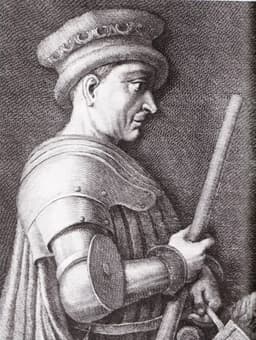
John Hawkwood
General · Medieval
52.9Total
Basic Information
Born
938
1323
Died
1002
1394
Era
Medieval
Medieval
Nationality
Al-Andalus
Italy
Occupation
General
General
Civilization
Middle Eastern
Western
Score Comparison
Military (10%)
90.0
60.0
Political (20%)
72.0
42.3
Influence (20%)
58.0
53.3
Legacy (20%)
50.0
45.0
Leadership (15%)
62.0
68.0
Strategy (15%)
76.0
58.0
TOTAL
63.7
52.9
Almanzor — Complete Timeline
978 AD
Appointment as HajibPolitical Action
Almanzor was appointed as hajib (chamberlain) to the young Caliph Hisham II, effectively becoming the de facto ruler of the Caliphate of Cordoba. This marked the beginning of his rise to power and his control over the state.
Caliphate of CordobaHajibRise to Power
Impact: regional
981 AD
Campaign of 57 RaidsWar◆ Major
Almanzor launched a series of 57 military campaigns against the Christian kingdoms of northern Iberia. These raids, conducted annually, devastated Christian territories and brought wealth and slaves to Cordoba, but also drained the caliphate's resources.
Al-AndalusMilitary CampaignsChristian Kingdoms
Impact: regionaldestructive
997 AD
Sack of Santiago de CompostelaWar◆ Major
Almanzor's forces sacked Santiago de Compostela, a major Christian pilgrimage site in Galicia. The cathedral was destroyed, and the bells were taken to Cordoba. This act demonstrated the reach of his military power and humiliated the Christian kingdoms.
Al-AndalusSantiago de CompostelaMilitary Campaign
Impact: regionaldestructive
1002 AD
Destruction of the Library of CordobaCultural
Almanzor ordered the destruction of parts of the library of Cordoba, burning books deemed heretical or unnecessary. This act, though controversial, was part of his efforts to consolidate religious orthodoxy and eliminate opposition.
CordobaLibraryCultural Destruction
Impact: regionaldestructive
Death of AlmanzorOther◆ Major
Almanzor died in Medinaceli after returning from a campaign. His death led to a power vacuum and the eventual collapse of the Caliphate of Cordoba, as his successors were unable to maintain his authoritarian control.
Caliphate of CordobaDeathCollapse
Impact: regionaltragic
John Hawkwood — Complete Timeline
1363 AD
Commanded the White CompanyPolitical Action◆ Major
Hawkwood took command of the White Company, a mercenary band of English and German soldiers. He led them into Italy, where they became a major military force, selling their services to various Italian city-states.
MercenaryItalyMilitary
Impact: regional
1377 AD
Sack of CesenaWar◆ Major
Hawkwood, in the service of Cardinal Robert of Geneva, participated in the massacre of thousands of civilians in Cesena. The city was sacked after its surrender, an event that tarnished his reputation.
MassacreWar CrimeItaly
destructive
1387 AD
Battle of CastagnaroWar◆ Major
Hawkwood led the Paduan army to victory against Verona. Using a feigned retreat, he broke the Veronese lines, capturing many prisoners. This battle is considered a masterpiece of medieval tactical deception.
BattleCondottieroItaly
Impact: regional
1390 AD
Appointed Captain-General of FlorencePolitical Action◆ Major
The Republic of Florence appointed Hawkwood as its Captain-General, granting him command of its armies. This position made him the highest-ranking military officer in Florence, a role he held until his death.
AppointmentFlorenceMilitary
Impact: regionalconstructive
This comparison has not been analyzed yet.
One-time AI generation (~1 minute). Scores and timeline are already available below.
Rankings
🥇
AlmanzorLeader
Mil: 90.0Pol: 72.0Inf: 58.0
63.7
🥈
John Hawkwood
Mil: 60.0Pol: 42.3Inf: 53.3
52.9
+10.8 behind
How This Comparison Works
Algorithm
Each figure is scored on 6 dimensions (0—100 scale) based on structured historical data: Military (10%), Political (20%), Influence (20%), Legacy (20%), Leadership (15%), Strategy (15%). The weighted total produces the final ranking.
Data Sources
Scores are computed from structured sub-indicators in the database. Scale factors adjust for era (Ancient ×0.85, Modern ×1.0) and civilization size (Eastern ×1.05, Other ×0.80) to account for differences in population and military scale.
Maximum 3 Figures
Comparisons are limited to 2—3 figures to ensure readability and statistical meaningfulness.
Error Margins
±5 points per dimension — Sub-scores are derived from historical records with inherent uncertainty. Two figures within 5 points on a dimension should be considered roughly equivalent in that area.
Total Score Accuracy
±3 points overall — The weighted combination of 6 dimensions produces a total score with approximately ±3 points of uncertainty. Differences of less than 3 points are not statistically significant— the figures are effectively tied.
Known Limitations
- Historical records are incomplete and uneven across civilizations
- Figures from oral-tradition societies may be underrepresented
- Occupation labels can misclassify multi-role figures
- Scores measure capability and impact, not moral character
- Quantitative scoring is a comparison tool, not absolute truth
Capability Radar
Military (10%) — Battles & Warfare
Battles
85
65
Win Rate
90
60
Expansion
85
55
Political (20%) — Governance & Reform
Reform
75
20
Diplomacy
70
70
Economy
75
40
Influence (20%) — Cultural & Global Reach
Cultural
60
45
Global
60
35
Legacy (20%) — Historical Impact
Historical
70
50
Longevity
65
40
Leadership (15%) — Power & Stability
Tenure
80
50
Stability
65
45
Strategy (15%) — Tactics & Innovation
Strategy
85
65
Tactics
80
70
Reform
70
30
Similar Comparisons
Comments & Discussion
No comments yet. Be the first to share your thoughts!