Loading...
This comparison has not been analyzed yet.
One-time AI generation (~1 minute). Scores and timeline are already available below.
Alojzije Stepinac vs Clement Attlee
Clement Attlee leads by 25.9 pts · 2 figures compared
…
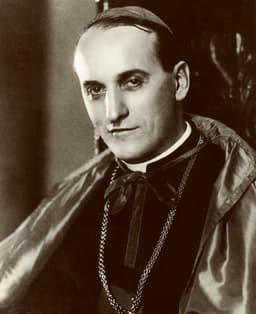
Alojzije Stepinac
Politician · Modern
42.4Total

Clement Attlee
Politician · Modern
68.3Total
Basic Information
Born
1898
1883
Died
1960
1967
Era
Modern
Modern
Nationality
Croatia
United Kingdom
Occupation
Politician
Politician
Civilization
Western
Western
Score Comparison
Military (10%)
47.6
50.0
Political (20%)
25.0
85.0
Influence (20%)
52.5
68.0
Legacy (20%)
45.0
68.0
Leadership (15%)
38.1
82.0
Strategy (15%)
38.0
42.9
TOTAL
42.4
68.3
Alojzije Stepinac — Complete Timeline
1937 AD
Appointment as Archbishop of ZagrebPolitical Action◆ Major
Alojzije Stepinac was appointed Archbishop of Zagreb, the highest Catholic ecclesiastical office in Croatia. This position made him a prominent moral and political figure during the turbulent years of World War II and the subsequent communist takeover.
Church AppointmentCatholic ChurchCroatia
Impact: regional
1946 AD
Trial and Conviction for War CrimesPolitical Action
Stepinac was tried by the communist Yugoslav government on charges of collaboration with the Usta
TrialWar CrimesCommunist Yugoslavia
Impact: regionaltragic
Imprisonment and House ArrestOther◆ Major
Following his conviction, Stepinac was imprisoned in Lepoglava prison. In 1951, due to international pressure, his sentence was commuted to house arrest in his native village of Kra
ImprisonmentHouse ArrestCommunist Repression
Impact: nationaltragic
Clement Attlee — Complete Timeline
1945 AD
Became Prime Minister of the United KingdomPolitical Action◆ Major
Attlee led the Labour Party to a landslide victory in the general election, defeating Winston Churchill. He formed the first majority Labour government, with a mandate to implement sweeping social and economic reforms.
ElectionLabour GovernmentPost-War
Impact: nationalconstructive
1946 AD
Nationalized major industriesReform◆ Major
Attlee's government nationalized the Bank of England, coal mines, railways, road transport, and later steel and electricity. This created a mixed economy with state ownership of key industries, aiming to improve efficiency and public control.
NationalizationEconomySocialism
Impact: nationalconstructive
1947 AD
Granted independence to IndiaPolitical Action
Attlee's government passed the Indian Independence Act, ending British rule in India. The subcontinent was partitioned into India and Pakistan, leading to massive population transfers and violence. This marked the beginning of the end of the British Empire.
DecolonizationIndiaPartition
Impact: global
1948 AD
Established the National Health Service (NHS)Reform
Attlee's government passed the National Health Service Act, creating a publicly funded healthcare system providing free medical care to all residents. The NHS became a cornerstone of the British welfare state and a model for other countries.
HealthcareWelfare StateNHS
Impact: nationalprogressive
Oversaw the creation of the welfare stateReform◆ Major
Attlee's government implemented the recommendations of the Beveridge Report, establishing a comprehensive system of social insurance covering unemployment, sickness, and old age. This created a safety net for all citizens, a defining feature of post-war Britain.
Welfare StateSocial SecurityBeveridge
Impact: nationalprogressive
This comparison has not been analyzed yet.
One-time AI generation (~1 minute). Scores and timeline are already available below.
Rankings
🥇
Clement AttleeLeader
Mil: 50.0Pol: 85.0Inf: 68.0
68.3
🥈
Alojzije Stepinac
Mil: 47.6Pol: 25.0Inf: 52.5
42.4
+25.9 behind
How This Comparison Works
Algorithm
Each figure is scored on 6 dimensions (0—100 scale) based on structured historical data: Military (10%), Political (20%), Influence (20%), Legacy (20%), Leadership (15%), Strategy (15%). The weighted total produces the final ranking.
Data Sources
Scores are computed from structured sub-indicators in the database. Scale factors adjust for era (Ancient ×0.85, Modern ×1.0) and civilization size (Eastern ×1.05, Other ×0.80) to account for differences in population and military scale.
Maximum 3 Figures
Comparisons are limited to 2—3 figures to ensure readability and statistical meaningfulness.
Error Margins
±5 points per dimension — Sub-scores are derived from historical records with inherent uncertainty. Two figures within 5 points on a dimension should be considered roughly equivalent in that area.
Total Score Accuracy
±3 points overall — The weighted combination of 6 dimensions produces a total score with approximately ±3 points of uncertainty. Differences of less than 3 points are not statistically significant— the figures are effectively tied.
Known Limitations
- Historical records are incomplete and uneven across civilizations
- Figures from oral-tradition societies may be underrepresented
- Occupation labels can misclassify multi-role figures
- Scores measure capability and impact, not moral character
- Quantitative scoring is a comparison tool, not absolute truth
Capability Radar
Military (10%) — Battles & Warfare
Battles
30
28
Win Rate
32
31
Expansion
37
32
Political (20%) — Governance & Reform
Reform
10
90
Diplomacy
25
75
Economy
5
70
Influence (20%) — Cultural & Global Reach
Cultural
30
60
Global
25
70
Legacy (20%) — Historical Impact
Historical
40
80
Longevity
30
70
Leadership (15%) — Power & Stability
Tenure
20
65
Stability
5
80
Strategy (15%) — Tactics & Innovation
Strategy
40
40
Tactics
43
42
Reform
46
43
Similar Comparisons
Comments & Discussion
No comments yet. Be the first to share your thoughts!