Loading...
Clement Attlee vs Qin Shi Huang
Qin Shi Huang leads by 16.9 pts · 2 figures compared
…

Clement Attlee
Politician · Modern
68.3Total
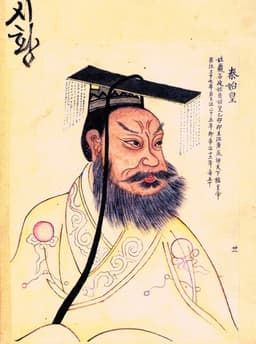
Qin Shi Huang
Emperor · Ancient
85.2Total
Basic Information
Born
1883
-259
Died
1967
-210
Era
Modern
Ancient
Nationality
United Kingdom
China
Occupation
Politician
Emperor
Civilization
Western
Eastern
Score Comparison
Military (10%)
50.0
80.0
Political (20%)
85.0
90.0
Influence (20%)
68.0
85.0
Legacy (20%)
68.0
90.0
Leadership (15%)
82.0
78.0
Strategy (15%)
42.9
82.0
TOTAL
68.3
85.2
Clement Attlee — Complete Timeline
1945 AD
Became Prime Minister of the United KingdomPolitical Action◆ Major
Attlee led the Labour Party to a landslide victory in the general election, defeating Winston Churchill. He formed the first majority Labour government, with a mandate to implement sweeping social and economic reforms.
ElectionLabour GovernmentPost-War
Impact: nationalconstructive
1946 AD
Nationalized major industriesReform◆ Major
Attlee's government nationalized the Bank of England, coal mines, railways, road transport, and later steel and electricity. This created a mixed economy with state ownership of key industries, aiming to improve efficiency and public control.
NationalizationEconomySocialism
Impact: nationalconstructive
1947 AD
Granted independence to IndiaPolitical Action
Attlee's government passed the Indian Independence Act, ending British rule in India. The subcontinent was partitioned into India and Pakistan, leading to massive population transfers and violence. This marked the beginning of the end of the British Empire.
DecolonizationIndiaPartition
Impact: global
1948 AD
Established the National Health Service (NHS)Reform
Attlee's government passed the National Health Service Act, creating a publicly funded healthcare system providing free medical care to all residents. The NHS became a cornerstone of the British welfare state and a model for other countries.
HealthcareWelfare StateNHS
Impact: nationalprogressive
Oversaw the creation of the welfare stateReform◆ Major
Attlee's government implemented the recommendations of the Beveridge Report, establishing a comprehensive system of social insurance covering unemployment, sickness, and old age. This created a safety net for all citizens, a defining feature of post-war Britain.
Welfare StateSocial SecurityBeveridge
Impact: nationalprogressive
Qin Shi Huang — Complete Timeline
246 BC
Construction of the Mausoleum and Terracotta ArmyOther◆ Major
Qin Shi Huang commissioned a vast mausoleum complex near Xi'an, guarded by thousands of life-sized terracotta soldiers, horses, and chariots. The project employed hundreds of thousands of workers and reflected his obsession with immortality and imperial power.
Impact: global
230 BC
Conquest of the Six Warring StatesWar
From 230 to 221 BCE, Ying Zheng led the Qin state in a series of campaigns that conquered the Han, Zhao, Wei, Chu, Yan, and Qi states. This unified China under a single ruler for the first time, ending the Warring States period.
Impact: global
221 BC
Standardization of Writing, Currency, and MeasurementsReform◆ Major
Qin Shi Huang ordered the standardization of Chinese script, currency, and weights and measures across the unified empire. This facilitated administration, trade, and cultural integration, laying a foundation for future dynasties.
Impact: globalconstructive
Proclamation of the Qin DynastyPolitical Action
After conquering the last independent state, Ying Zheng declared himself Shi Huangdi (First Emperor), founding the Qin Dynasty. He adopted a new title to signify his supreme authority and initiated centralized imperial rule.
Impact: global
214 BC
Initiation of the Great Wall ConstructionOther◆ Major
Qin Shi Huang ordered the connection and extension of existing northern fortifications to create a unified defensive wall against nomadic Xiongnu raids. This project involved massive conscripted labor and became the precursor to the later Great Wall.
Impact: regional
213 BC
Burning of Books and Burying of ScholarsPolitical Action◆ Major
On the advice of Li Si, Qin Shi Huang ordered the burning of historical records and philosophical texts not aligned with Legalist doctrine. He also had 460 Confucian scholars buried alive to suppress dissent and consolidate ideological control.
Impact: nationaldestructive
Expert Analysis
clement-attlee-vs-qin-shi-huang
# The Emperor and the Reformer
On a cold morning in 1945, Clement Attlee walked into 10 Downing Street as the man who had just defeated Winston Churchill. Across the centuries and continents, in 221 BC, Ying Zheng stood before the conquered kingdoms of China and declared himself Shi Huangdi—the First Emperor. Both men aimed to reshape their worlds from the ground up. One built an empire of terracotta and tyranny; the other, a welfare state of compassion and bureaucracy. What drove these two leaders, so different in time and temperament, to leave such indelible marks on history?
Origins
Qin Shi Huang was born into war. China in the 3rd century BC was a patchwork of seven warring states, and Ying Zheng's Qin kingdom was the most ruthless of them all. His father was a prince, his mother a concubine, and his childhood was spent in a court thick with intrigue and assassination plots. By the time he became king at thirteen, he had learned that power was something to be seized and held with an iron fist. The era demanded a conqueror, and the chaos of the Warring States period shaped a man who saw unity as the only alternative to endless bloodshed.
Clement Attlee, by contrast, grew up in the quiet certainty of Victorian England. Born in 1883 to a prosperous lawyer, he attended Haileybury and Oxford, where he studied history and law. But the comfortable path of a barrister was not for him. After working in London's East End slums, he saw poverty up close—children with rickets, families crammed into damp rooms, the elderly dying without care. That experience, not ambition or conquest, set his course. The modern era, with its industrial scars and democratic hopes, demanded a reformer.
Rise to Power
Ying Zheng's path was swift and brutal. In 230 BC, he launched the first of a series of campaigns that would, within nine years, crush all six rival states. He did not negotiate; he annihilated. Armies were slaughtered, cities razed, and kings taken in chains. By 221 BC, at just thirty-eight, he stood as master of all China, a feat no one had achieved before. His rise was a military conquest, pure and simple.
Attlee's ascent was slower and quieter. He served as a major in World War I, then entered Parliament in 1922. He climbed through Labour Party ranks—Deputy Leader, Leader of the Opposition, and finally, in 1945, Prime Minister. The turning point was not a battle but a ballot box. Britain, exhausted by war and hungry for change, rejected Churchill's grand conservatism and chose Attlee's promise of security. His rise was democratic, gradual, and almost unassuming.
Leadership & Governance
Qin Shi Huang governed like a machine. He standardized writing, currency, and measurements across his empire—a feat of administrative genius that made China coherent for two millennia. He connected the northern walls into the Great Wall, a project that cost countless lives. He burned books and buried scholars alive to enforce ideological unity. His rule was absolute, efficient, and terrifying. There was no dissent, only obedience.
Attlee governed like a builder. His government nationalized the Bank of England, coal, railways, and steel. In 1948, he created the National Health Service—a system where healthcare was free at the point of use, funded by taxes. He passed the Indian Independence Act in 1947, ending British rule in India and accepting the partition that followed. His welfare state, based on the Beveridge Report, aimed to slay the "five giants" of Want, Disease, Ignorance, Squalor, and Idleness. His rule was democratic, gradual, and transformative.
Triumph & Tragedy
Qin Shi Huang's greatest triumph was unification itself. He created a single China from a fractured land, a legacy that outlasted his dynasty. But his tragedy was equally vast. His obsession with immortality—sending expeditions for the elixir of life, building a mausoleum guarded by the Terracotta Army—could not save him. He died in 210 BC, probably from mercury poisoning, and his dynasty collapsed within four years. His empire survived, but his methods were too harsh to endure.
Attlee's triumph was the welfare state. The NHS remains a cornerstone of British identity, and the social safety net he built has protected generations. But his tragedy was subtler. The post-war economy struggled, rationing continued, and Britain's imperial decline accelerated. India's partition led to horrific violence. His reforms were incomplete, and critics argued they created dependency. Yet his vision of a just society, unlike Qin's iron fist, proved durable.
Character & Destiny
Qin Shi Huang was paranoid, brilliant, and ruthless. He trusted no one, not even his own family. His personality drove him to control everything—thought, speech, even history itself. He believed that order could be imposed by force, and that unity required uniformity. That belief shaped his destiny: he built an empire, but he could not make it last.
Attlee was modest, methodical, and unflappable. He spoke little and acted quietly. Colleagues described him as "a sparrow among the peacocks." He did not seek glory; he sought results. His personality allowed him to push through radical reforms without drama, but it also meant he lacked the charisma to inspire devotion. His destiny was to build a new Britain, brick by brick, while the world changed around him.
Legacy
Qin Shi Huang is remembered as the First Emperor—a titan who forged China's unity. His Terracotta Army stands as a symbol of his ambition, and his standardization of writing and currency shaped Chinese civilization. But he is also a cautionary tale about tyranny. In China, he is both revered and reviled.
Attlee is remembered as the father of the welfare state. The NHS, the social security system, and the post-war consensus all bear his mark. He is not a dramatic figure—no battles, no grand speeches—but his quiet revolution changed millions of lives. In Britain, he is honored as a prime minister who made a difference without making a spectacle.
Conclusion
What drives a man to reshape the world? For Qin Shi Huang, it was a vision of order through absolute power, born of war and chaos. For Clement Attlee, it was a vision of justice through democratic reform, born of poverty and compassion. One built with swords and stone; the other with laws and institutions. One left a legacy of awe; the other, of care. History does not judge them equally—it cannot, for they answered different questions. But both understood that to lead is to change, and that change, whether forged in blood or ballot, leaves a mark that outlasts the hand that made it.
Rankings
🥇
Qin Shi HuangLeader
Mil: 80.0Pol: 90.0Inf: 85.0
85.2
🥈
Clement Attlee
Mil: 50.0Pol: 85.0Inf: 68.0
68.3
+16.9 behind
How This Comparison Works
Algorithm
Each figure is scored on 6 dimensions (0—100 scale) based on structured historical data: Military (10%), Political (20%), Influence (20%), Legacy (20%), Leadership (15%), Strategy (15%). The weighted total produces the final ranking.
Data Sources
Scores are computed from structured sub-indicators in the database. Scale factors adjust for era (Ancient ×0.85, Modern ×1.0) and civilization size (Eastern ×1.05, Other ×0.80) to account for differences in population and military scale.
Maximum 3 Figures
Comparisons are limited to 2—3 figures to ensure readability and statistical meaningfulness.
Error Margins
±5 points per dimension — Sub-scores are derived from historical records with inherent uncertainty. Two figures within 5 points on a dimension should be considered roughly equivalent in that area.
Total Score Accuracy
±3 points overall — The weighted combination of 6 dimensions produces a total score with approximately ±3 points of uncertainty. Differences of less than 3 points are not statistically significant— the figures are effectively tied.
Known Limitations
- Historical records are incomplete and uneven across civilizations
- Figures from oral-tradition societies may be underrepresented
- Occupation labels can misclassify multi-role figures
- Scores measure capability and impact, not moral character
- Quantitative scoring is a comparison tool, not absolute truth
Capability Radar
Military (10%) — Battles & Warfare
Battles
28
85
Win Rate
31
90
Expansion
32
90
Political (20%) — Governance & Reform
Reform
90
95
Diplomacy
75
75
Economy
70
90
Influence (20%) — Cultural & Global Reach
Cultural
60
95
Global
70
85
Legacy (20%) — Historical Impact
Historical
80
95
Longevity
70
95
Leadership (15%) — Power & Stability
Tenure
65
70
Stability
80
65
Strategy (15%) — Tactics & Innovation
Strategy
40
85
Tactics
42
80
Reform
43
95
Similar Comparisons
Comments & Discussion
IronFistIsOverrated6/17/2026
Attlee's NHS is more impressive than Qin's terracotta army. One provides life, the other commemorates death. The First Emperor wasted resources on eternal vanity; Attlee invested in real human progress. Plus, standardizing chariot axles isn't exactly visionary—every decent empire did that. Give me a welfare state over a tomb complex any day.
兵马俑愤青6/17/2026
秦始皇统一文字度量衡固然伟大,但坑儒四百六十余人太狠。艾德礼首相不费一兵一卒,用贝弗里奇报告重塑英国社会,这才是真正的"革命"。一个靠恐怖统治,一个靠民主立法,高下立判!
AxeGrinderAnalyst6/17/2026
Data says: Qin Shi Huang's unification doubled China's agricultural output in 20 years due to standard irrigation and road networks. Attlee's nationalizations boosted UK GDP by 8% over five years but blew out public debt to 250% of GDP. Both were economic gambles, but the Emperor's ROI on brutal centralization was faster and more durable. Attlee's bank bailouts just delayed Thatcher's reckoning.
考据派酸儒6/17/2026
某些人别尬吹标准化了!秦"书同文"实际上是消灭东方六国文字,导致齐鲁文献大量失传。艾德礼搞的全民医疗,1948年牙科人均花销超过军费预算,这叫效率?两个都是理想主义的赌徒,只不过赌注和时代不同罢了。
CompassionOverConquest6/17/2026
Attlee gave Britain its soul back after the war. The NHS, free education, council housing—these are the marks of a civilization. Qin Shi Huang built walls to keep people in and tombs to feed his ego. The terracotta warriors are just 8,000 statues of insecurity. Give me the quiet socialist with the pipe over the paranoid emperor with the army of clay.
铁血统一论6/17/2026
没有秦始皇的车同轨书同文,中国早像欧洲一样分裂成几十个小国。艾德礼那套福利国家不过是战后中产幻觉,1970年代就被撒切尔打回原形。而秦制延续两千年至今,谁更能经得起时间考验?这不言自明。