Loading...
Aman Andom vs Julius Caesar
Julius Caesar leads by 44.8 pts · 2 figures compared
…
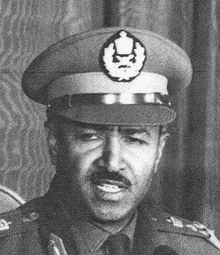
Aman Andom
General · Modern
38.0Total

Julius Caesar
General · Ancient
82.8Total
Basic Information
Born
1924
-100
Died
—
-44
Era
Modern
Ancient
Nationality
Ethiopia
Roman Republic
Occupation
General
General
Civilization
Other
Western
Score Comparison
Military (10%)
22.6
88.0
Political (20%)
29.3
78.0
Influence (20%)
52.5
85.0
Legacy (20%)
40.0
82.0
Leadership (15%)
34.6
80.0
Strategy (15%)
30.3
85.0
TOTAL
38.0
82.8
Aman Andom — Complete Timeline
1974 AD
Appointed Head of State after Haile Selassie's overthrowPolitical Action◆ Major
Following the Derg's coup that deposed Emperor Haile Selassie, Aman Andom was appointed as the first post-imperial head of state of Ethiopia. He served as Chairman of the Provisional Military Administrative Council (Derg) for a brief period.
Ethiopian RevolutionDergTransition
Impact: national
Conflict with the Derg over execution of former officialsPolitical Action◆ Major
Aman Andom opposed the Derg's decision to execute 60 former imperial officials without trial. His refusal to authorize the executions led to a power struggle within the military council, isolating him from the radical faction led by Mengistu Haile Mariam.
DergPolitical PurgeHuman Rights
Impact: nationaldestructive
Killed during a confrontation with Derg forcesPolitical Action◆ Major
After being dismissed from his position, Aman Andom barricaded himself in his home. Derg forces stormed the residence, and Andom was killed in the ensuing gunfight. His death marked the consolidation of power by the radical faction of the Derg.
DergPolitical ViolenceDeath
Impact: nationaltragic
Julius Caesar — Complete Timeline
58 BC
Gallic WarsWar◆ Major
Caesar, as proconsul of Gaul, launched a series of campaigns that conquered all of Gaul (modern France, Belgium, and parts of Switzerland). He fought numerous battles, including against the Helvetii, the Belgae, and the Gallic chieftain Vercingetorix. The wars brought immense wealth and a loyal army to Caesar.
Gallic WarsConquestRoman Expansion
Impact: regional
49 BC
Crossing the RubiconPolitical Action◆ Major
Caesar led Legio XIII across the Rubicon River into Italy, defying the Roman Senate's order to disband his army. This act triggered a civil war against Pompey and the Optimates, ultimately leading to Caesar's dictatorship and the end of the Roman Republic.
Roman Civil WarEnd of RepublicPower Struggle
Impact: global
48 BC
Battle of PharsalusWar◆ Major
Caesar's outnumbered army defeated the larger forces of Pompey the Great at Pharsalus in Greece. Caesar's tactical use of a reserve line to counter Pompey's cavalry charge proved decisive. Pompey fled to Egypt, where he was assassinated, leaving Caesar as the undisputed master of the Roman world.
Roman Civil WarBattleDecisive Victory
Impact: regional
44 BC
Appointment as Dictator for LifePolitical Action◆ Major
The Roman Senate appointed Caesar dictator perpetuo (dictator for life), granting him unprecedented personal power. This move concentrated military, legislative, and judicial authority in one person, effectively ending the Roman Republic's traditional system of checks and balances and alarming many senators.
DictatorshipEnd of RepublicPower Consolidation
Impact: regionaldestructive
Assassination on the Ides of MarchPolitical Action◆ Major
A group of Roman senators, led by Marcus Junius Brutus and Gaius Cassius Longinus, stabbed Caesar to death at a meeting of the Senate in the Theatre of Pompey. The assassination was intended to restore the Republic, but instead triggered another civil war that led to the rise of the Roman Empire.
AssassinationRoman PoliticsEnd of Republic
Impact: globaldestructive
Expert Analysis
aman-andom-vs-julius-caesar
### The Rubicon and the Barricade
On a cold January night in 49 BCE, a Roman general stood at the edge of a small river, contemplating an act of treason. His name was Julius Caesar, and by crossing the Rubicon with his army, he would plunge the Republic into civil war and change the course of Western history. Over two thousand years later, in a very different corner of the world, another general faced his own Rubicon. In November 1974, Aman Andom, a decorated Ethiopian soldier, barricaded himself inside his home in Addis Ababa, refusing to sign death warrants for sixty former imperial officials. Unlike Caesar, Andom’s defiance did not lead to empire—it led to a hail of bullets and an obscure footnote in history. Why did one man reshape the world while the other vanished into it? The answer lies not just in their talents, but in the currents of their times.
### Origins: Two Worlds Apart
Julius Caesar was born into a patrician family at the height of the Roman Republic’s power, a time of intense political rivalry and expansion. His uncle by marriage was Gaius Marius, the great general who had reformed the army. From childhood, Caesar breathed the air of ambition, learning that glory was won on the battlefield and in the Forum. He was a product of a civilization that prized rhetoric, strategy, and the ruthless pursuit of *dignitas*—personal honor and status.
Aman Andom, by contrast, emerged from a very different soil. Born in 1924 in what was then Abyssinia, he grew up under the feudal rule of Emperor Haile Selassie. Ethiopia was one of the few African nations never fully colonized, but it was a land of ancient traditions, deep poverty, and simmering resentment against a monarchy that had grown distant and corrupt. Andom was a modern soldier in a traditional society, educated in British military schools, and shaped by the post-World War II era of decolonization and Cold War tensions. His world was not one of conquering Gaul, but of navigating the fragile independence of a nation caught between empires.
### Rise to Power: Paths of Glory
Caesar’s rise was a masterclass in calculated risk. He climbed the Roman political ladder—the *cursus honorum*—through military command in Spain, a crucial alliance with the wealthy Crassus and the popular general Pompey (the First Triumvirate), and a spectacular conquest of Gaul from 58 to 50 BCE. His *Commentaries on the Gallic War* were not just military reports; they were propaganda, broadcasting his genius to Rome. Each victory made him richer, more popular, and more dangerous to the Senate.
Aman Andom’s ascent was less a climb than a sudden thrust into the spotlight. When the Derg—a committee of low-ranking military officers—overthrew Haile Selassie in September 1974, they needed a figurehead. Andom was a respected general, a war hero from the border conflicts with Somalia, and he had no ties to the old imperial elite. They appointed him the first head of state of the new Ethiopia. It was a role he did not seek, and one he would hold for barely two months. He was not the architect of a revolution; he was a placeholder for a storm he could not control.
### Leadership & Governance: The Architect vs. The Reluctant Reformer
Caesar, once in power, governed with audacious efficiency. As dictator, he reformed the calendar (the Julian calendar, used for 1,600 years), granted citizenship to provincials, initiated public works, and centralized the state. His military genius was matched by his political wisdom: he knew that clemency—pardoning former enemies—could win loyalty where brutality would breed resentment. Yet his ambition was his flaw. He refused to give up his power, and his reforms, however brilliant, were imposed from above, destroying the Republic’s delicate balance.
Andom, in his brief tenure, attempted a different kind of reform. He tried to moderate the Derg’s radicalism. He opposed the execution of the sixty imperial officials, arguing for due process. He sought to negotiate with Eritrean rebels rather than crush them. These were the actions of a man who believed in law, not revolution. But the Derg was a committee of Marxists and hardliners, led by the ruthless Mengistu Haile Mariam. They saw Andom’s moderation as weakness. Where Caesar used political wisdom to consolidate power, Andom’s wisdom was his undoing. He tried to steer a ship that had no captain, and the crew mutinied.
### Triumph & Tragedy: The Ides of March and the Barricaded Home
Caesar’s greatest triumph was his total victory in the civil war, culminating in his appointment as dictator for life in 44 BCE. He had conquered the known world and remade Rome in his image. His tragedy was the Ides of March, when a conspiracy of senators, men he had pardoned, stabbed him to death in the Senate chamber. His last moments—allegedly crying, “*Et tu, Brute?*”—became the archetype of betrayal.
Aman Andom’s triumph was smaller, but no less real. For a few weeks, he stood as a symbol of order in a chaotic revolution. His tragedy came on the night of November 23, 1974. After refusing to sign the execution orders, he was dismissed from his post. Derg forces surrounded his home. Andom, a soldier to the end, barricaded himself with a few loyal men. In the ensuing firefight, he was killed. The sixty officials he tried to save were executed anyway. His death was not a grand assassination that shook an empire; it was a purge, quickly forgotten amid the horrors of the Red Terror that followed.
### Character & Destiny: The Gambler and the Honorable Man
Caesar was a gambler who calculated every bet. He crossed the Rubicon knowing he would be branded a traitor, but he also knew his legions were loyal and his enemies divided. His personality—charming, ruthless, and endlessly ambitious—drove him to take risks that others would not. He shaped his destiny with his own hands, for better and for worse.
Andom was a man of principle in an age of expediency. He believed in the rule of law, military professionalism, and national unity. These were honorable traits, but they were useless against a revolutionary committee that saw law as an obstacle and unity as a mask for oppression. His character did not shape his destiny; his destiny was shaped by forces he could not overcome. He was a good soldier caught in a bad revolution.
### Legacy: The Colossus and the Ghost
Caesar’s legacy is monumental. His name became synonymous with power—*Kaiser* in German, *Tsar* in Russian. His assassination did not restore the Republic; it triggered a final civil war that ended with his adopted heir, Octavian, becoming the first Roman emperor. Caesar’s life was the bridge between Republic and Empire. He is remembered as a military genius, a political visionary, and a cautionary tale about ambition.
Aman Andom’s legacy is a ghost. In Ethiopia, he is a footnote, a brief pause between the monarchy and the brutal Marxist dictatorship of Mengistu. His name appears in history books as the first head of state of the Derg, but his story is often overshadowed by the 1974 executions and the famine of the 1980s. He is remembered, if at all, as a tragic figure who tried to do the right thing in an impossible situation.
### Conclusion: The River and the Room
One man crossed a river and changed the world. Another man barricaded a door and was erased by it. The difference between Julius Caesar and Aman Andom is not simply a matter of talent or ambition. It is a matter of context. Caesar lived in a world where a single, brilliant individual could seize the levers of a vast empire. Andom lived in a world where the levers were held by ideologies, committees, and the cold calculus of revolutionary violence. Caesar’s story reminds us that personality can bend history. Andom’s story reminds us that sometimes, history bends personality until it breaks. Both men died by violence, but one became a legend, while the other became a lesson. And in that difference lies the tragic, uneven fabric of history itself.
Rankings
🥇
Julius CaesarLeader
Mil: 88.0Pol: 78.0Inf: 85.0
82.8
🥈
Aman Andom
Mil: 22.6Pol: 29.3Inf: 52.5
38.0
+44.8 behind
How This Comparison Works
Algorithm
Each figure is scored on 6 dimensions (0—100 scale) based on structured historical data: Military (10%), Political (20%), Influence (20%), Legacy (20%), Leadership (15%), Strategy (15%). The weighted total produces the final ranking.
Data Sources
Scores are computed from structured sub-indicators in the database. Scale factors adjust for era (Ancient ×0.85, Modern ×1.0) and civilization size (Eastern ×1.05, Other ×0.80) to account for differences in population and military scale.
Maximum 3 Figures
Comparisons are limited to 2—3 figures to ensure readability and statistical meaningfulness.
Error Margins
±5 points per dimension — Sub-scores are derived from historical records with inherent uncertainty. Two figures within 5 points on a dimension should be considered roughly equivalent in that area.
Total Score Accuracy
±3 points overall — The weighted combination of 6 dimensions produces a total score with approximately ±3 points of uncertainty. Differences of less than 3 points are not statistically significant— the figures are effectively tied.
Known Limitations
- Historical records are incomplete and uneven across civilizations
- Figures from oral-tradition societies may be underrepresented
- Occupation labels can misclassify multi-role figures
- Scores measure capability and impact, not moral character
- Quantitative scoring is a comparison tool, not absolute truth
Capability Radar
Military (10%) — Battles & Warfare
Battles
10
95
Win Rate
10
92
Expansion
5
97
Political (20%) — Governance & Reform
Reform
10
90
Diplomacy
20
85
Economy
10
82
Influence (20%) — Cultural & Global Reach
Cultural
15
88
Global
10
94
Legacy (20%) — Historical Impact
Historical
20
95
Longevity
10
96
Leadership (15%) — Power & Stability
Tenure
15
75
Stability
5
60
Strategy (15%) — Tactics & Innovation
Strategy
15
94
Tactics
15
96
Reform
10
88
Similar Comparisons
Comments & Discussion
No comments yet. Be the first to share your thoughts!