Loading...
This comparison has not been analyzed yet.
One-time AI generation (~1 minute). Scores and timeline are already available below.
Amcazade Koprulu Huseyin vs Ruth Perry
Amcazade Koprulu Huseyin leads by 2.5 pts · 2 figures compared
…
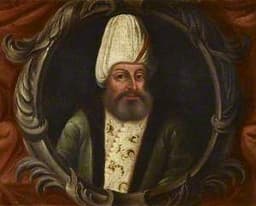
Amcazade Koprulu Huseyin
Politician · Modern
52.9Total

Ruth Perry
Politician · Modern
50.4Total
Basic Information
Born
1644
1939
Died
1702
—
Era
Modern
Modern
Nationality
Ottoman Empire
Liberia
Occupation
Politician
Politician
Civilization
Middle Eastern
Other
Score Comparison
Military (10%)
50.0
33.6
Political (20%)
45.0
43.7
Influence (20%)
58.0
60.0
Legacy (20%)
49.2
50.0
Leadership (15%)
66.0
58.8
Strategy (15%)
45.0
41.7
TOTAL
52.9
50.4
Amcazade Koprulu Huseyin — Complete Timeline
1697 AD
Appointment as Grand VizierPolitical Action◆ Major
Amcazade Köprülü Hüseyin was appointed Grand Vizier of the Ottoman Empire in 1697, succeeding his relative. He became the last prominent member of the Köprülü family to hold the office, tasked with ending the costly Great Turkish War.
AppointmentKöprülü EraOttoman Politics
Impact: national
1698 AD
Implementation of Fiscal ReformsReform◆ Major
Hüseyin implemented fiscal reforms to stabilize the Ottoman economy after the war. He reduced taxes on peasants, curbed corruption among tax collectors, and reorganized the treasury, but these measures faced resistance from entrenched interests.
Fiscal ReformEconomic PolicyOttoman Administration
Impact: nationalconstructive
1699 AD
Negotiation of the Treaty of KarlowitzPolitical Action
As Grand Vizier, H
TreatyTerritorial LossGreat Turkish War
Impact: regionaldestructive
1702 AD
Resignation from Grand VizieratePolitical Action
Amcazade Köprülü Hüseyin resigned as Grand Vizier in 1702 due to court intrigues and declining health. His departure ended the Köprülü family's dominance in Ottoman politics, and he died later that year.
ResignationKöprülü EraOttoman Politics
Impact: national
Ruth Perry — Complete Timeline
1996 AD
Appointed Chairperson of the Council of StatePolitical Action◆ Major
Ruth Perry was appointed Chairperson of the Council of State of Liberia in September 1996, becoming the first female African head of state in the modern era. She led the transitional government during the final stages of the First Liberian Civil War.
First Female Head of StateTransitionLiberia
Impact: nationalconstructive
1997 AD
Oversaw Peace Process and ElectionsPolitical Action◆ Major
Perry's government supervised the disarmament of warring factions and organized the 1997 general elections, which brought Charles Taylor to power. Despite criticisms of the election's fairness, Perry's leadership helped end the civil war and restore civilian rule.
Peace ProcessElectionsLiberia
Impact: nationalconstructive
Post-Presidency AdvocacyPolitical Action
After leaving office in 1997, Perry remained active in peacebuilding and women's rights advocacy. She worked with organizations such as the Liberian Women's Initiative, promoting reconciliation and gender equality in post-conflict Liberia.
AdvocacyWomen's RightsLiberia
Impact: nationalconstructive
This comparison has not been analyzed yet.
One-time AI generation (~1 minute). Scores and timeline are already available below.
Rankings
🥇
Amcazade Koprulu HuseyinLeader
Mil: 50.0Pol: 45.0Inf: 58.0
52.9
🥈
Ruth Perry
Mil: 33.6Pol: 43.7Inf: 60.0
50.4
+2.5 behind
How This Comparison Works
Algorithm
Each figure is scored on 6 dimensions (0—100 scale) based on structured historical data: Military (10%), Political (20%), Influence (20%), Legacy (20%), Leadership (15%), Strategy (15%). The weighted total produces the final ranking.
Data Sources
Scores are computed from structured sub-indicators in the database. Scale factors adjust for era (Ancient ×0.85, Modern ×1.0) and civilization size (Eastern ×1.05, Other ×0.80) to account for differences in population and military scale.
Maximum 3 Figures
Comparisons are limited to 2—3 figures to ensure readability and statistical meaningfulness.
Error Margins
±5 points per dimension — Sub-scores are derived from historical records with inherent uncertainty. Two figures within 5 points on a dimension should be considered roughly equivalent in that area.
Total Score Accuracy
±3 points overall — The weighted combination of 6 dimensions produces a total score with approximately ±3 points of uncertainty. Differences of less than 3 points are not statistically significant— the figures are effectively tied.
Known Limitations
- Historical records are incomplete and uneven across civilizations
- Figures from oral-tradition societies may be underrepresented
- Occupation labels can misclassify multi-role figures
- Scores measure capability and impact, not moral character
- Quantitative scoring is a comparison tool, not absolute truth
Capability Radar
Military (10%) — Battles & Warfare
Battles
30
21
Win Rate
40
25
Expansion
20
25
Political (20%) — Governance & Reform
Reform
55
40
Diplomacy
75
35
Economy
50
30
Influence (20%) — Cultural & Global Reach
Cultural
40
45
Global
50
45
Legacy (20%) — Historical Impact
Historical
55
50
Longevity
40
40
Leadership (15%) — Power & Stability
Tenure
60
30
Stability
55
25
Strategy (15%) — Tactics & Innovation
Strategy
50
32
Tactics
35
32
Reform
45
39
Similar Comparisons
Comments & Discussion
No comments yet. Be the first to share your thoughts!