Loading...
This comparison has not been analyzed yet.
One-time AI generation (~1 minute). Scores and timeline are already available below.
Ruth Perry vs Stanley Baldwin
Stanley Baldwin leads by 1.9 pts · 2 figures compared
…

Ruth Perry
Politician · Modern
50.4Total
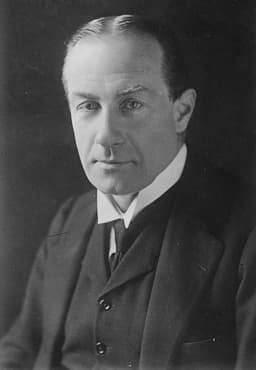
Stanley Baldwin
Politician · Modern
52.3Total
Basic Information
Born
1939
1867
Died
—
1947
Era
Modern
Modern
Nationality
Liberia
United Kingdom
Occupation
Politician
Politician
Civilization
Other
Western
Score Comparison
Military (10%)
33.6
19.0
Political (20%)
43.7
60.0
Influence (20%)
60.0
58.0
Legacy (20%)
50.0
49.2
Leadership (15%)
58.8
79.8
Strategy (15%)
41.7
26.5
TOTAL
50.4
52.3
Ruth Perry — Complete Timeline
1996 AD
Appointed Chairperson of the Council of StatePolitical Action◆ Major
Ruth Perry was appointed Chairperson of the Council of State of Liberia in September 1996, becoming the first female African head of state in the modern era. She led the transitional government during the final stages of the First Liberian Civil War.
First Female Head of StateTransitionLiberia
Impact: nationalconstructive
1997 AD
Oversaw Peace Process and ElectionsPolitical Action◆ Major
Perry's government supervised the disarmament of warring factions and organized the 1997 general elections, which brought Charles Taylor to power. Despite criticisms of the election's fairness, Perry's leadership helped end the civil war and restore civilian rule.
Peace ProcessElectionsLiberia
Impact: nationalconstructive
Post-Presidency AdvocacyPolitical Action
After leaving office in 1997, Perry remained active in peacebuilding and women's rights advocacy. She worked with organizations such as the Liberian Women's Initiative, promoting reconciliation and gender equality in post-conflict Liberia.
AdvocacyWomen's RightsLiberia
Impact: nationalconstructive
Stanley Baldwin — Complete Timeline
1926 AD
General Strike of 1926Political Action◆ Major
As Prime Minister, Baldwin faced the General Strike called by the Trades Union Congress in support of coal miners. Baldwin's government used emergency powers and propaganda to maintain essential services, and the strike collapsed after nine days, weakening the trade union movement.
General StrikeLabour RelationsConservative Government
Impact: national
1927 AD
Trade Disputes and Trade Unions Act 1927Political Action◆ Major
Baldwin's government passed the Trade Disputes and Trade Unions Act, which made general strikes illegal and restricted trade union political funds. The Act required union members to opt in to paying the political levy, reducing Labour Party funding.
Trade UnionsLegislationConservative Policy
Impact: nationaldestructive
1931 AD
Statute of Westminster 1931Political Action◆ Major
Baldwin's government enacted the Statute of Westminster, which granted legislative independence to the Dominions of the British Empire (Canada, Australia, New Zealand, South Africa, Irish Free State, Newfoundland). This established the legal basis for the modern Commonwealth.
CommonwealthDecolonizationConstitutional Law
Impact: globalconstructive
1935 AD
Re-armament ProgrammePolitical Action◆ Major
Baldwin's government initiated a major re-armament programme in response to German re-militarization, including expansion of the Royal Air Force and Royal Navy. This marked a shift from earlier disarmament policies, though critics argued it was too slow.
RearmamentDefence PolicyNazi Germany
Impact: national
1936 AD
Abdication Crisis of Edward VIIIPolitical Action
As Prime Minister, Baldwin managed the constitutional crisis caused by King Edward VIII's desire to marry Wallis Simpson, a divorced American. Baldwin insisted the King abdicate if he married Simpson, leading to Edward's abdication in December 1936 and the accession of George VI.
MonarchyConstitutional CrisisAbdication
Impact: national
This comparison has not been analyzed yet.
One-time AI generation (~1 minute). Scores and timeline are already available below.
Rankings
🥇
Stanley BaldwinLeader
Mil: 19.0Pol: 60.0Inf: 58.0
52.3
🥈
Ruth Perry
Mil: 33.6Pol: 43.7Inf: 60.0
50.4
+1.9 behind
How This Comparison Works
Algorithm
Each figure is scored on 6 dimensions (0—100 scale) based on structured historical data: Military (10%), Political (20%), Influence (20%), Legacy (20%), Leadership (15%), Strategy (15%). The weighted total produces the final ranking.
Data Sources
Scores are computed from structured sub-indicators in the database. Scale factors adjust for era (Ancient ×0.85, Modern ×1.0) and civilization size (Eastern ×1.05, Other ×0.80) to account for differences in population and military scale.
Maximum 3 Figures
Comparisons are limited to 2—3 figures to ensure readability and statistical meaningfulness.
Error Margins
±5 points per dimension — Sub-scores are derived from historical records with inherent uncertainty. Two figures within 5 points on a dimension should be considered roughly equivalent in that area.
Total Score Accuracy
±3 points overall — The weighted combination of 6 dimensions produces a total score with approximately ±3 points of uncertainty. Differences of less than 3 points are not statistically significant— the figures are effectively tied.
Known Limitations
- Historical records are incomplete and uneven across civilizations
- Figures from oral-tradition societies may be underrepresented
- Occupation labels can misclassify multi-role figures
- Scores measure capability and impact, not moral character
- Quantitative scoring is a comparison tool, not absolute truth
Capability Radar
Military (10%) — Battles & Warfare
Battles
21
8
Win Rate
25
12
Expansion
25
15
Political (20%) — Governance & Reform
Reform
40
60
Diplomacy
35
65
Economy
30
55
Influence (20%) — Cultural & Global Reach
Cultural
45
30
Global
45
50
Legacy (20%) — Historical Impact
Historical
50
55
Longevity
40
40
Leadership (15%) — Power & Stability
Tenure
30
70
Stability
25
60
Strategy (15%) — Tactics & Innovation
Strategy
32
17
Tactics
32
22
Reform
39
27
Similar Comparisons
Comments & Discussion
No comments yet. Be the first to share your thoughts!