Loading...
Amenemhat II vs Diocletian
Diocletian leads by 20.8 pts · 2 figures compared
…

Amenemhat II
Emperor · Ancient
48.8Total
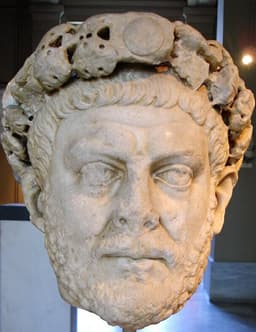
Diocletian
Emperor · Ancient
69.6Total
Basic Information
Born
-1895
244
Died
-1860
311
Era
Ancient
Ancient
Nationality
Middle Kingdom Egypt
Roman Empire
Occupation
Emperor
Emperor
Civilization
Middle Eastern
Western
Score Comparison
Military (10%)
25.9
65.0
Political (20%)
68.0
82.0
Influence (20%)
48.6
72.0
Legacy (20%)
40.0
55.0
Leadership (15%)
68.0
82.0
Strategy (15%)
36.8
67.2
TOTAL
48.8
69.6
Amenemhat II — Complete Timeline
1885 BC
Construction of the White Pyramid at DahshurCultural
Amenemhat II built his pyramid complex at Dahshur, known as the White Pyramid due to its limestone casing. Though now heavily eroded, it was a significant royal tomb of the 12th Dynasty, accompanied by subsidiary pyramids for queens and a mortuary temple.
PyramidArchitectureDahshur
Impact: nationalconstructive
1880 BC
Peaceful Trade Expansion to the LevantPolitical Action◆ Major
Amenemhat II pursued a policy of peaceful trade rather than military conquest, establishing commercial relations with Byblos and other Levantine cities. Egyptian goods, including papyrus and linen, were exchanged for cedar wood, silver, and other resources, enriching the state without warfare.
TradeDiplomacyLevant
Impact: regionalconstructive
1875 BC
Expedition to PuntPolitical Action
Amenemhat II dispatched a trading expedition to the land of Punt, likely located in the Horn of Africa. The mission brought back myrrh, frankincense, gold, and exotic animals, demonstrating Egypt's continued reach into the Red Sea trade network during his reign.
ExpeditionPuntTrade
Impact: regionalconstructive
Diocletian — Complete Timeline
293 AD
Establishment of the TetrarchyReform
Diocletian created the Tetrarchy, dividing the Roman Empire into four administrative regions ruled by two senior emperors (Augusti) and two junior emperors (Caesares). This system aimed to improve governance and defense, and stabilize imperial succession.
TetrarchyReformAdministration
Impact: globalconstructive
Administrative Reorganization of the EmpireReform◆ Major
Diocletian reorganized the Roman provinces into smaller units (dioceses) grouped into four prefectures, separating civilian and military authority. This reform improved tax collection and administration, but also increased bureaucracy.
AdministrationReformProvinces
Impact: globalconstructive
301 AD
Economic Reforms (Edict on Maximum Prices)Reform◆ Major
Diocletian issued the Edict on Maximum Prices, setting price ceilings on over 1,000 goods and services to combat inflation. The edict was largely ineffective and led to black markets, but demonstrated the state's attempt to control the economy.
Economic ReformPrice ControlsInflation
Impact: global
303 AD
Diocletianic Persecution of ChristiansPolitical Action◆ Major
Diocletian issued a series of edicts ordering the persecution of Christians throughout the Roman Empire. Churches were destroyed, scriptures burned, and Christians were executed or forced to sacrifice to Roman gods. This was the last and most severe state-sponsored persecution.
PersecutionChristianityReligion
Impact: globaldestructive
305 AD
Abdication of DiocletianPolitical Action
Diocletian voluntarily abdicated the throne, retiring to his palace in Split (modern Croatia). He forced his co-emperor Maximian to do the same, setting a precedent for orderly succession, though the Tetrarchy soon collapsed after his departure.
AbdicationRetirementTetrarchy
Impact: global
Expert Analysis
Origins
Amenemhat II, born around 1929 BC, was the third pharaoh of Egypt's 12th Dynasty, part of the Middle Kingdom. He was the son of Senusret I and Queen Neferu III. His upbringing in the royal court at Itjtawy prepared him for a reign focused on internal stability and economic prosperity. Little is known of his early life, but his father's successful military campaigns and administrative consolidation provided a strong foundation.
Diocletian, born Gaius Valerius Diocles around 244 AD in Dalmatia (modern Croatia), came from humble origins. His father was a scribe or freedman. Diocletian rose through the military ranks, serving under emperors like Aurelian and Probus. His early career was marked by competence in logistics and command, eventually becoming commander of the elite Protectores Augusti Nostri. His background as a soldier from the Illyrian provinces shaped his pragmatic and authoritarian approach.
Rise to Power
Amenemhat II ascended the throne around 1929 BC after the death of his father Senusret I. His succession was smooth, typical of the stable 12th Dynasty. He continued his father's policies, focusing on trade rather than military expansion. Key events include expeditions to the Levant and Punt, which enhanced Egypt's wealth without major conflict. His reign is considered peaceful, with no recorded wars, a rarity in ancient Egypt.
Diocletian's rise was more turbulent. After the assassination of Emperor Numerian in 284 AD, Diocletian was proclaimed emperor by his troops. He quickly defeated Carinus, Numerian's brother, at the Battle of the Margus in 285 AD. To manage the vast empire, he appointed Maximian as Caesar in 285 and later as Augustus in 286, dealing with revolts and external threats. His pivotal moment was the establishment of the Tetrarchy in 293 AD, dividing the empire into four regions ruled by two Augusti and two Caesars.
Leadership & Governance
Amenemhat II's governance was characterized by peaceful trade expansion. He sent expeditions to Byblos in the Levant and to the legendary land of Punt, bringing back luxury goods like myrrh and frankincense. He also built the White Pyramid at Dahshur, a testament to his focus on monumental construction. His leadership was conservative, maintaining the bureaucratic systems inherited from his father. He scored 68.0 in political and leadership categories, reflecting stability but limited innovation.
Diocletian's leadership was transformative. He reorganized the empire into 12 dioceses and four prefectures, separating civilian and military authority to reduce usurpation risks. His economic reforms included the Edict on Maximum Prices (301 AD), which set price ceilings on over 1,000 goods, though it largely failed due to black markets. He also initiated the Diocletianic Persecution of Christians (303-311 AD), destroying churches and scriptures. His political score of 82.0 and leadership of 82.0 reflect his decisive restructuring.
Triumph & Tragedy
Amenemhat II's greatest success was expanding Egypt's trade networks without war, enriching the state and ensuring stability. His pyramid, though now eroded, symbolized his reign's prosperity. However, his lack of military activity scored only 25.9, and his influence (48.6) and legacy (40.0) were modest compared to other pharaohs. His reign left little political innovation, and his pyramid was later plundered.
Diocletian's triumph was the Tetrarchy, which stabilized the empire for two decades, ending the Crisis of the Third Century. His voluntary abdication in 305 AD was unprecedented, setting a precedent for orderly succession. Yet his persecution of Christians failed to eradicate the faith, and the Edict on Maximum Prices exacerbated economic woes. His military score of 65.0 and strategy of 67.2 reflect competence but not genius. The Tetrarchy collapsed after his retirement due to internal rivalries.
Character & Destiny
Amenemhat II was likely a cautious, trade-oriented ruler, prioritizing prosperity over glory. His peaceful approach suited Egypt's needs after earlier expansions. His character led to a stable but unremarkable reign, with few dramatic events. He died around 1895 BC, succeeded by his son Senusret II.
Diocletian was autocratic, pragmatic, and reform-minded. His military background made him distrustful of senators and Christians, leading to rigid controls. His decision to abdicate was rational, aiming to secure succession, but it underestimated the ambitions of his successors. He died in 311 AD in his palace at Split, possibly by suicide or illness. His character combined visionary reform with harsh intolerance.
Legacy
Amenemhat II's legacy is limited to archaeological and economic history. His trade expeditions are documented in inscriptions, and his pyramid remains a monument of the 12th Dynasty. However, his influence on later pharaohs was minimal, as subsequent rulers focused on military campaigns. His total score of 48.8 reflects a minor figure in Egyptian history.
Diocletian's legacy is profound. The Tetrarchy influenced later imperial divisions, and his administrative reforms shaped the late Roman and Byzantine bureaucracies. The persecution of Christians, though brutal, ultimately failed and contributed to the faith's resilience. His palace at Split became a UNESCO World Heritage site. His total score of 69.6 marks him as a major reformer who reshaped the Roman state.
Conclusion
Diocletian had a greater impact on history than Amenemhat II. While Amenemhat maintained peace and trade, his changes were incremental. Diocletian's reforms restructured the Roman Empire, affecting governance, economy, and religion for centuries. His political score of 82.0 dwarfs Amenemhat's 68.0, and his influence (72.0 vs 48.6) was more widespread. Diocletian's decisions, though flawed, addressed the systemic crises of Rome, whereas Amenemhat's reign was a continuation of existing trends. Thus, Diocletian scores higher in overall historical significance.
Rankings
🥇
DiocletianLeader
Mil: 65.0Pol: 82.0Inf: 72.0
69.6
🥈
Amenemhat II
Mil: 25.9Pol: 68.0Inf: 48.6
48.8
+20.8 behind
How This Comparison Works
Algorithm
Each figure is scored on 6 dimensions (0—100 scale) based on structured historical data: Military (10%), Political (20%), Influence (20%), Legacy (20%), Leadership (15%), Strategy (15%). The weighted total produces the final ranking.
Data Sources
Scores are computed from structured sub-indicators in the database. Scale factors adjust for era (Ancient ×0.85, Modern ×1.0) and civilization size (Eastern ×1.05, Other ×0.80) to account for differences in population and military scale.
Maximum 3 Figures
Comparisons are limited to 2—3 figures to ensure readability and statistical meaningfulness.
Error Margins
±5 points per dimension — Sub-scores are derived from historical records with inherent uncertainty. Two figures within 5 points on a dimension should be considered roughly equivalent in that area.
Total Score Accuracy
±3 points overall — The weighted combination of 6 dimensions produces a total score with approximately ±3 points of uncertainty. Differences of less than 3 points are not statistically significant— the figures are effectively tied.
Known Limitations
- Historical records are incomplete and uneven across civilizations
- Figures from oral-tradition societies may be underrepresented
- Occupation labels can misclassify multi-role figures
- Scores measure capability and impact, not moral character
- Quantitative scoring is a comparison tool, not absolute truth
Capability Radar
Military (10%) — Battles & Warfare
Battles
10
65
Win Rate
10
70
Expansion
10
50
Political (20%) — Governance & Reform
Reform
40
95
Diplomacy
70
80
Economy
70
75
Influence (20%) — Cultural & Global Reach
Cultural
30
60
Global
20
75
Legacy (20%) — Historical Impact
Historical
30
85
Longevity
30
70
Leadership (15%) — Power & Stability
Tenure
60
85
Stability
65
80
Strategy (15%) — Tactics & Innovation
Strategy
10
75
Tactics
10
60
Reform
10
85
Similar Comparisons
Comments & Discussion
No comments yet. Be the first to share your thoughts!