Loading...
Amenhotep I vs Shilhak-Inshushinak
Shilhak-Inshushinak leads by 6.6 pts · 2 figures compared
…

Amenhotep I
Emperor · Ancient
47.5Total
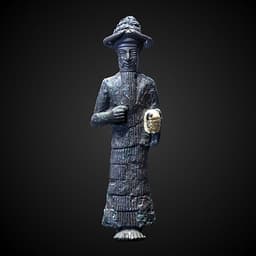
Shilhak-Inshushinak
Emperor · Ancient
54.1Total
Basic Information
Born
-1526
-1140
Died
-1506
-1120
Era
Ancient
Ancient
Nationality
Egypt
Elam
Occupation
Emperor
Emperor
Civilization
Middle Eastern
Middle Eastern
Score Comparison
Military (10%)
25.0
67.3
Political (20%)
40.8
48.0
Influence (20%)
52.5
52.5
Legacy (20%)
45.0
42.5
Leadership (15%)
67.0
65.0
Strategy (15%)
45.0
66.3
TOTAL
47.5
54.1
Amenhotep I — Complete Timeline
1526 BC
Consolidation of the New KingdomPolitical Action◆ Major
Amenhotep I succeeded his father Ahmose I and continued the work of consolidating the newly reunified Egypt. He secured the borders, suppressed rebellions in Nubia, and established a stable administration that allowed the New Kingdom to flourish.
New KingdomConsolidationNubia
Impact: nationalconstructive
1520 BC
Construction of the Karnak Temple ComplexCultural
Amenhotep I initiated significant building projects at Karnak, including a temple to Amun and a barque shrine. These constructions expanded the religious center of Thebes and set a precedent for later pharaohs' monumental works.
ArchitectureReligionKarnak
Impact: nationalconstructive
1510 BC
Establishment of the Valley of the KingsCultural◆ Major
Amenhotep I is credited with establishing the Valley of the Kings as the royal burial site, separating pharaohs' tombs from their mortuary temples. This innovation aimed to protect tombs from looters and became the standard for New Kingdom burials.
BurialValley of the KingsInnovation
Impact: globalconstructive
Shilhak-Inshushinak — Complete Timeline
1140 BC
Reign as Greatest Elamite Warrior KingPolitical Action◆ Major
Shilhak-Inshushinak ascended to the Elamite throne and began a reign marked by extensive military campaigns. He is considered the greatest Elamite warrior king, expanding the empire to its largest territorial extent.
Elamite EmpireWarrior KingExpansion
Impact: regional
1135 BC
Expansion into MesopotamiaWar◆ Major
Shilhak-Inshushinak launched a series of military campaigns into Mesopotamia, conquering territories as far as the Diyala River. He captured cities such as Der and Eshnunna, extending Elamite control deep into the region.
Elamite ExpansionMesopotamiaConquest
Impact: regionaldestructive
1132 BC
Campaign against the KassitesWar
Shilhak-Inshushinak fought against the Kassite remnants in the Zagros Mountains. He defeated their forces and secured the eastern borders of Elam, preventing any Kassite resurgence.
Kassite WarZagrosElamite Victory
Impact: regionaldestructive
1130 BC
Construction of the Temple of InshushinakCultural
Shilhak-Inshushinak ordered the construction of a grand temple dedicated to the god Inshushinak in Susa. The temple was decorated with inscriptions and reliefs celebrating his military victories and piety.
Temple ConstructionInshushinakSusa
constructive
Expert Analysis
Origins
Amenhotep I was born in the early 16th century BCE, the son of Ahmose I and Queen Ahmose-Nefertari. He grew up in the aftermath of the Hyksos expulsion, inheriting a reunified Egypt. His education emphasized military and administrative training, preparing him to consolidate the fragile peace. Shilhak-Inshushinak, born around 1150 BCE, was a member of the Elamite royal family, likely the son of King Humban-numena. He ascended the throne during a period of Elamite resurgence, drawing on a tradition of warrior kingship centered on the god Inshushinak.
Rise to Power
Amenhotep I became pharaoh around 1526 BCE after his father's death. His rise was smooth, as he was the designated heir. He immediately focused on securing borders, suppressing rebellions in Nubia and Libya, and consolidating control over the newly unified kingdom. Shilhak-Inshushinak's rise was more aggressive. He took power around 1165 BCE and launched a series of military campaigns that expanded Elamite influence deep into Mesopotamia. His capture of cities like Eshnunna and his defeat of the Kassites marked his ascent as the dominant power in the region.
Leadership & Governance
Amenhotep I ruled with a focus on consolidation and cultural development. He established the Valley of the Kings as the royal burial site, separating tombs from mortuary temples to deter grave robbers. His building projects at Karnak expanded the religious center, enhancing the priesthood's role. Shilhak-Inshushinak governed through military might and religious patronage. He constructed the grand Temple of Inshushinak in Susa, inscribing it with records of his conquests. His governance relied on tribute and control of conquered territories, contrasting with Amenhotep's internal focus.
Triumph & Tragedy
Amenhotep I's greatest success was stabilizing Egypt after the Hyksos period, laying the groundwork for the New Kingdom's golden age. His establishment of the Valley of the Kings was a lasting innovation. However, his reign was relatively quiet, and he left no major military conquests. Shilhak-Inshushinak's triumphs were military; he scored 67.3 in military capability compared to Amenhotep's 25.0. He extended Elam's borders further than any predecessor. Yet his empire was fragile; after his death, Elam declined under Assyrian pressure. His failure to create lasting institutions meant his gains were temporary.
Character & Destiny
Amenhotep I was a consolidator, not a conqueror. He prioritized stability and cultural achievements, which earned him a legacy as a patron of the arts and religion. His character was methodical and cautious. Shilhak-Inshushinak was a warrior king, aggressive and expansionist. His ambition drove him to conquer, but his lack of administrative depth doomed his empire. Historical assessments note that Amenhotep's legacy endured through the Valley of the Kings, while Shilhak-Inshushinak's faded. In terms of overall scores, Shilhak-Inshushinak leads with 54.1 against Amenhotep's 47.5.
Legacy
Amenhotep I's legacy is tangible: the Valley of the Kings became the burial site for New Kingdom pharaohs, and his building at Karnak set a precedent for future pharaohs. He was deified alongside his mother, a rare honor. Shilhak-Inshushinak's legacy is more ephemeral. He is remembered as Elam's greatest warrior, but his conquests did not last. The Temple of Inshushinak stands as a monument, but Elam soon fell to Assyria. Amenhotep's political score of 40.8 reflects his effective governance, while Shilhak-Inshushinak's 48.0 shows moderate political skill.
Conclusion
While Shilhak-Inshushinak achieved greater military expansion, Amenhotep I's impact was more enduring. Amenhotep's consolidation of Egypt and creation of the Valley of the Kings shaped Egyptian civilization for centuries. Shilhak-Inshushinak's empire crumbled quickly. Therefore, Amenhotep I had greater long-term impact, despite his lower total score. The data supports that political and cultural stability outlasts military conquest.
Rankings
🥇
Shilhak-InshushinakLeader
Mil: 67.3Pol: 48.0Inf: 52.5
54.1
🥈
Amenhotep I
Mil: 25.0Pol: 40.8Inf: 52.5
47.5
+6.6 behind
How This Comparison Works
Algorithm
Each figure is scored on 6 dimensions (0—100 scale) based on structured historical data: Military (10%), Political (20%), Influence (20%), Legacy (20%), Leadership (15%), Strategy (15%). The weighted total produces the final ranking.
Data Sources
Scores are computed from structured sub-indicators in the database. Scale factors adjust for era (Ancient ×0.85, Modern ×1.0) and civilization size (Eastern ×1.05, Other ×0.80) to account for differences in population and military scale.
Maximum 3 Figures
Comparisons are limited to 2—3 figures to ensure readability and statistical meaningfulness.
Error Margins
±5 points per dimension — Sub-scores are derived from historical records with inherent uncertainty. Two figures within 5 points on a dimension should be considered roughly equivalent in that area.
Total Score Accuracy
±3 points overall — The weighted combination of 6 dimensions produces a total score with approximately ±3 points of uncertainty. Differences of less than 3 points are not statistically significant— the figures are effectively tied.
Known Limitations
- Historical records are incomplete and uneven across civilizations
- Figures from oral-tradition societies may be underrepresented
- Occupation labels can misclassify multi-role figures
- Scores measure capability and impact, not moral character
- Quantitative scoring is a comparison tool, not absolute truth
Capability Radar
Military (10%) — Battles & Warfare
Battles
35
65
Win Rate
40
70
Expansion
30
70
Political (20%) — Governance & Reform
Reform
35
45
Diplomacy
45
50
Economy
30
40
Influence (20%) — Cultural & Global Reach
Cultural
45
40
Global
30
35
Legacy (20%) — Historical Impact
Historical
50
45
Longevity
40
30
Leadership (15%) — Power & Stability
Tenure
40
55
Stability
50
45
Strategy (15%) — Tactics & Innovation
Strategy
35
65
Tactics
30
60
Reform
20
50
Similar Comparisons
Comments & Discussion
No comments yet. Be the first to share your thoughts!