Loading...
Amenhotep I vs Tukulti-Ninurta I
Tukulti-Ninurta I leads by 11.8 pts · 2 figures compared
…

Amenhotep I
Emperor · Ancient
47.5Total
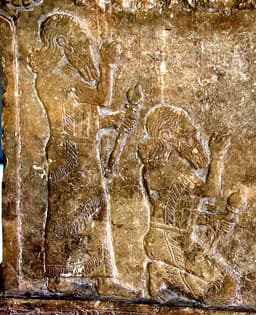
Tukulti-Ninurta I
Emperor · Ancient
59.3Total
Basic Information
Born
-1526
-1243
Died
-1506
-1207
Era
Ancient
Ancient
Nationality
Egypt
Assyria
Occupation
Emperor
Emperor
Civilization
Middle Eastern
Middle Eastern
Score Comparison
Military (10%)
25.0
74.0
Political (20%)
40.8
68.0
Influence (20%)
52.5
55.7
Legacy (20%)
45.0
45.8
Leadership (15%)
67.0
65.0
Strategy (15%)
45.0
65.4
TOTAL
47.5
59.3
Amenhotep I — Complete Timeline
1526 BC
Consolidation of the New KingdomPolitical Action◆ Major
Amenhotep I succeeded his father Ahmose I and continued the work of consolidating the newly reunified Egypt. He secured the borders, suppressed rebellions in Nubia, and established a stable administration that allowed the New Kingdom to flourish.
New KingdomConsolidationNubia
Impact: nationalconstructive
1520 BC
Construction of the Karnak Temple ComplexCultural
Amenhotep I initiated significant building projects at Karnak, including a temple to Amun and a barque shrine. These constructions expanded the religious center of Thebes and set a precedent for later pharaohs' monumental works.
ArchitectureReligionKarnak
Impact: nationalconstructive
1510 BC
Establishment of the Valley of the KingsCultural◆ Major
Amenhotep I is credited with establishing the Valley of the Kings as the royal burial site, separating pharaohs' tombs from their mortuary temples. This innovation aimed to protect tombs from looters and became the standard for New Kingdom burials.
BurialValley of the KingsInnovation
Impact: globalconstructive
Tukulti-Ninurta I — Complete Timeline
1235 BC
Sack of BabylonWar
Tukulti-Ninurta I led a successful campaign against Babylon, sacking the city and destroying its temples. He captured the Babylonian king Kashtiliash IV and carried the statue of Marduk to Assyria, asserting Assyrian supremacy over Mesopotamia.
Military CampaignBabylonSack
Impact: regionaldestructive
Adoption of the Title King of KingsPolitical Action◆ Major
Following his victory over Babylon, Tukulti-Ninurta I adopted the title 'King of Kings' (Shar Sharrani), a claim to universal sovereignty. This was the first known use of this title by an Assyrian ruler, setting a precedent for later emperors.
TitulatureImperial IdeologyAssyrian Empire
Impact: regional
1230 BC
Construction of Kar-Tukulti-NinurtaCultural◆ Major
Tukulti-Ninurta I founded a new capital city named Kar-Tukulti-Ninurta (Fort of Tukulti-Ninurta) across the Tigris from Ashur. The city featured a large palace and temple complex, intended to rival Ashur as the imperial center.
Urban PlanningCapital CityAssyrian Empire
Impact: regionalconstructive
1207 BC
Assassination by SonPolitical Action◆ Major
Tukulti-Ninurta I was assassinated in a palace coup led by his own son, Ashur-nadin-apli, and other nobles. His death marked the end of his reign and led to a period of instability in the Assyrian Empire.
AssassinationPalace CoupSuccession Crisis
Impact: nationaltragic
Expert Analysis
Origins
Amenhotep I, born around 1520 BCE, was the second pharaoh of Egypt's 18th Dynasty. He was the son of Ahmose I, who had expelled the Hyksos and reunified Egypt. His mother, Ahmose-Nefertari, was a powerful queen regent. Amenhotep inherited a kingdom in transition, needing stabilization after decades of war. His early life was steeped in the court of Thebes, where he received training in governance and religious rites.
Tukulti-Ninurta I, born around 1240 BCE, was a king of the Middle Assyrian Empire. He was the son of Shalmaneser I, a warrior king who expanded Assyrian borders. From a young age, Tukulti-Ninurta was groomed for military command, accompanying his father on campaigns. His upbringing focused on martial skills and the ideology of Assyrian dominance, which shaped his aggressive policies.
Rise to Power
Amenhotep I ascended to the throne around 1515 BCE following his father's death. His reign was initially overshadowed by his mother's influence, but he quickly asserted his authority. He faced no major external threats, allowing him to focus on internal consolidation. His key turning point was his decision to separate royal burials from mortuary temples, establishing the Valley of the Kings. This move centralized royal power and curbed the influence of powerful priesthoods.
Tukulti-Ninurta I became king around 1243 BCE after his father's death. His rise was marked by immediate military campaigns. His first major victory was against the Hittites, securing Assyrian control over the upper Tigris. The turning point was his war with Babylon. In 1235 BCE, he defeated the Kassite king Kashtiliash IV and sacked Babylon, a feat that elevated him from a regional king to a major power. He then adopted the title 'King of Kings', claiming supremacy over Mesopotamia.
Leadership & Governance
Amenhotep I's leadership was defined by consolidation and religious patronage. He secured Egypt's borders with Nubia and Libya, but his military score of 25.0 reflects a lack of aggressive expansion. Instead, he invested in infrastructure: he expanded the Karnak Temple complex, building a barque shrine for Amun, and initiated projects at Deir el-Medina. His governance was decentralized, relying on local nomarchs and a growing bureaucracy. He was a patron of the arts, commissioning statues and reliefs that emphasized his divine role.
Tukulti-Ninurta I was a militaristic ruler. His military score of 74.0 indicates his focus on conquest. He reorganized the Assyrian army, improving logistics and siege warfare. After sacking Babylon, he ruled through a governor and deported the statue of Marduk to Assyria, a controversial act that alienated Babylonian elites. His political score of 68.0 reflects his ability to control conquered territories, but his governance was harsh: he imposed heavy tribute and resettled populations. He founded a new capital, Kar-Tukulti-Ninurta, to centralize power, but this move strained resources and angered the traditional elite in Ashur.
Triumph & Tragedy
Amenhotep I's greatest triumph was the establishment of the Valley of the Kings, which became the standard for pharaonic burials for 500 years. This innovation protected royal tombs from looters, though it ultimately failed. He also secured peace during his reign, allowing Egypt to prosper. His tragedy was his limited military ambition; he left no major conquests, and his dynasty's expansion was carried out by successors. He died without a male heir, leading to a succession crisis.
Tukulti-Ninurta I's triumph was the sack of Babylon and the capture of its king, which brought Assyria to the forefront of Mesopotamian politics. He also built a grand capital and left inscriptions detailing his campaigns. His tragedy was his assassination by his own son and nobles in 1207 BCE, a direct result of his unpopular policies and the strain of his building projects. His death led to a period of decline for Assyria, and his capital was abandoned.
Character & Destiny
Amenhotep I was a cautious, methodical ruler. His leadership score of 67.0 reflects his ability to maintain stability, but his strategy score of 45.0 shows a lack of long-term planning for expansion. He was deeply religious, dedicating resources to temples and the cult of Amun. His character shaped a peaceful reign but limited his legacy to consolidation. Historians consider him a transitional figure, bridging the war of liberation under Ahmose I and the imperial expansion of Thutmose I.
Tukulti-Ninurta I was ambitious and ruthless. His strategy score of 65.4 indicates careful planning in his campaigns, but his arrogance led to overreach. By deporting Marduk's statue and demanding divine status, he provoked resentment. His character—proud, uncompromising—led to his downfall. Ancient texts describe him as a tyrant, and his son's coup was seen as justified by the elite.
Legacy
Amenhotep I's legacy is the Valley of the Kings, which became the burial site for pharaohs like Tutankhamun and Ramesses II. His building projects at Karnak set a precedent for later pharaohs. He was deified after his death, worshipped at Deir el-Medina. His political score of 40.8 and influence score of 52.5 reflect his moderate impact: he solidified the New Kingdom but did not expand it. His legacy score of 45.0 is balanced, as his innovations endured but his name is less known.
Tukulti-Ninurta I's legacy is the title 'King of Kings', later used by Persian and Babylonian rulers. His sack of Babylon set a pattern for Assyrian domination. However, his assassination and the abandonment of his capital diminished his immediate impact. His military score of 74.0 and total score of 59.3 place him above Amenhotep I (47.5 total). His influence score of 55.7 is higher, as his conquests reshaped the Near East, but his legacy score of 45.8 is similar due to his ignominious end.
Conclusion
Tukulti-Ninurta I had a greater immediate impact on the ancient world. His military conquests and adoption of the 'King of Kings' title changed the political landscape of Mesopotamia. Amenhotep I's achievements were more enduring in the long term—the Valley of the Kings remained in use for centuries—but his influence was confined to Egypt. Scoring 59.3 overall against 47.5, Tukulti-Ninurta I demonstrates a higher degree of military and political capability. However, his legacy is tainted by his failure to sustain his gains, while Amenhotep I's consolidation provided a foundation for Egypt's golden age. In terms of raw power and historical significance, Tukulti-Ninurta I surpasses Amenhotep I, but the latter's contributions to Egyptian civilization are more lasting. The data supports the higher-scored figure: Tukulti-Ninurta I.
Rankings
🥇
Tukulti-Ninurta ILeader
Mil: 74.0Pol: 68.0Inf: 55.7
59.3
🥈
Amenhotep I
Mil: 25.0Pol: 40.8Inf: 52.5
47.5
+11.8 behind
How This Comparison Works
Algorithm
Each figure is scored on 6 dimensions (0—100 scale) based on structured historical data: Military (10%), Political (20%), Influence (20%), Legacy (20%), Leadership (15%), Strategy (15%). The weighted total produces the final ranking.
Data Sources
Scores are computed from structured sub-indicators in the database. Scale factors adjust for era (Ancient ×0.85, Modern ×1.0) and civilization size (Eastern ×1.05, Other ×0.80) to account for differences in population and military scale.
Maximum 3 Figures
Comparisons are limited to 2—3 figures to ensure readability and statistical meaningfulness.
Error Margins
±5 points per dimension — Sub-scores are derived from historical records with inherent uncertainty. Two figures within 5 points on a dimension should be considered roughly equivalent in that area.
Total Score Accuracy
±3 points overall — The weighted combination of 6 dimensions produces a total score with approximately ±3 points of uncertainty. Differences of less than 3 points are not statistically significant— the figures are effectively tied.
Known Limitations
- Historical records are incomplete and uneven across civilizations
- Figures from oral-tradition societies may be underrepresented
- Occupation labels can misclassify multi-role figures
- Scores measure capability and impact, not moral character
- Quantitative scoring is a comparison tool, not absolute truth
Capability Radar
Military (10%) — Battles & Warfare
Battles
35
75
Win Rate
40
80
Expansion
30
80
Political (20%) — Governance & Reform
Reform
35
55
Diplomacy
45
50
Economy
30
45
Influence (20%) — Cultural & Global Reach
Cultural
45
50
Global
30
45
Legacy (20%) — Historical Impact
Historical
50
55
Longevity
40
40
Leadership (15%) — Power & Stability
Tenure
40
60
Stability
50
40
Strategy (15%) — Tactics & Innovation
Strategy
35
75
Tactics
30
70
Reform
20
65
Similar Comparisons
Comments & Discussion
No comments yet. Be the first to share your thoughts!