Loading...
This comparison has not been analyzed yet.
One-time AI generation (~1 minute). Scores and timeline are already available below.
Amoghavarsha I vs Boris I of Bulgaria
Boris I of Bulgaria leads by 16.1 pts · 2 figures compared
…
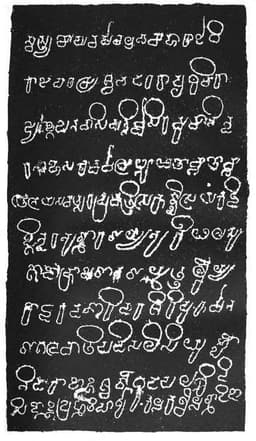
Amoghavarsha I
Emperor · Medieval
51.6Total
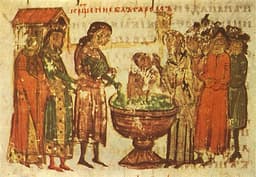
Boris I of Bulgaria
Emperor · Medieval
67.7Total
Basic Information
Born
814
828
Died
878
907
Era
Medieval
Medieval
Nationality
India
Bulgaria
Occupation
Emperor
Emperor
Civilization
Indian
Western
Score Comparison
Military (10%)
10.0
40.0
Political (20%)
45.0
70.3
Influence (20%)
61.0
65.0
Legacy (20%)
54.0
80.0
Leadership (15%)
72.0
78.0
Strategy (15%)
43.3
52.5
TOTAL
51.6
67.7
Amoghavarsha I — Complete Timeline
830 AD
Patronage of JainismCultural
Amoghavarsha I became a patron of Jainism, supporting Jain monasteries and scholars. He adopted Jain principles, including non-violence, and is credited with building several Jain temples and promoting religious tolerance.
JainismReligious PatronageTolerance
Impact: regionalconstructive
850 AD
Authorship of KavirajamargaCultural◆ Major
Amoghavarsha I authored the Kavirajamarga, the earliest extant work on Kannada poetics and rhetoric. The text served as a guide for poets and helped standardize the Kannada literary language, influencing subsequent literature.
Kannada LiteraturePoeticsLiterary Standard
Impact: regionalconstructive
860 AD
Construction of the Jain Basadi at ShravanabelagolaCultural
Amoghavarsha I is believed to have commissioned the construction of Jain basadis (temples) at Shravanabelagola, a major Jain pilgrimage site. These structures became important centers for Jain learning and worship.
Jain ArchitectureShravanabelagolaTemple
Impact: regionalconstructive
Boris I of Bulgaria — Complete Timeline
864 AD
Adoption of Christianity as state religionReform
Boris I accepted Christianity from the Byzantine Empire, baptizing himself and his court. This act aligned Bulgaria with Christian Europe, reduced Byzantine cultural pressure, and laid the foundation for the Bulgarian Orthodox Church.
ChristianizationState ReligionByzantine Influence
Impact: regionalconstructive
889 AD
Abdication and entry into monasteryPolitical Action◆ Major
Boris I abdicated the throne to become a monk. He later returned from the monastery in 893 to depose his son Vladimir-Rasate, who had reverted to paganism, and installed his younger son Simeon I as ruler.
AbdicationMonasticismDynastic Crisis
Impact: national
893 AD
Council of PreslavPolitical Action◆ Major
Boris I convened a council that replaced Greek with Old Church Slavonic as the official liturgical and literary language. This decision promoted Slavic culture and literacy, strengthening Bulgarian national identity.
Language ReformSlavic LiteracyCultural Policy
Impact: regionalconstructive
This comparison has not been analyzed yet.
One-time AI generation (~1 minute). Scores and timeline are already available below.
Rankings
🥇
Boris I of BulgariaLeader
Mil: 40.0Pol: 70.3Inf: 65.0
67.7
🥈
Amoghavarsha I
Mil: 10.0Pol: 45.0Inf: 61.0
51.6
+16.1 behind
How This Comparison Works
Algorithm
Each figure is scored on 6 dimensions (0—100 scale) based on structured historical data: Military (10%), Political (20%), Influence (20%), Legacy (20%), Leadership (15%), Strategy (15%). The weighted total produces the final ranking.
Data Sources
Scores are computed from structured sub-indicators in the database. Scale factors adjust for era (Ancient ×0.85, Modern ×1.0) and civilization size (Eastern ×1.05, Other ×0.80) to account for differences in population and military scale.
Maximum 3 Figures
Comparisons are limited to 2—3 figures to ensure readability and statistical meaningfulness.
Error Margins
±5 points per dimension — Sub-scores are derived from historical records with inherent uncertainty. Two figures within 5 points on a dimension should be considered roughly equivalent in that area.
Total Score Accuracy
±3 points overall — The weighted combination of 6 dimensions produces a total score with approximately ±3 points of uncertainty. Differences of less than 3 points are not statistically significant— the figures are effectively tied.
Known Limitations
- Historical records are incomplete and uneven across civilizations
- Figures from oral-tradition societies may be underrepresented
- Occupation labels can misclassify multi-role figures
- Scores measure capability and impact, not moral character
- Quantitative scoring is a comparison tool, not absolute truth
Capability Radar
Military (10%) — Battles & Warfare
Battles
40
45
Win Rate
45
50
Expansion
35
40
Political (20%) — Governance & Reform
Reform
60
95
Diplomacy
70
90
Economy
65
70
Influence (20%) — Cultural & Global Reach
Cultural
65
85
Global
40
70
Legacy (20%) — Historical Impact
Historical
60
90
Longevity
55
85
Leadership (15%) — Power & Stability
Tenure
75
85
Stability
70
80
Strategy (15%) — Tactics & Innovation
Strategy
40
55
Tactics
35
40
Reform
30
60
Similar Comparisons
Comments & Discussion
No comments yet. Be the first to share your thoughts!