Loading...
Amoghavarsha I vs Emperor Xuanzong of Tang
Emperor Xuanzong of Tang leads by 9.2 pts · 2 figures compared
…
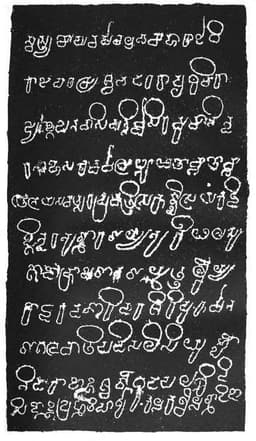
Amoghavarsha I
Emperor · Medieval
51.6Total
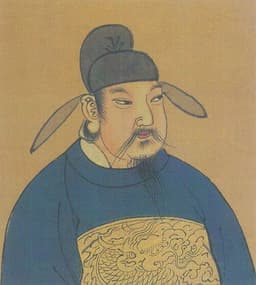
Emperor Xuanzong of Tang
Emperor · Medieval
60.8Total
Basic Information
Born
814
685
Died
878
762
Era
Medieval
Medieval
Nationality
India
China
Occupation
Emperor
Emperor
Civilization
Indian
Eastern
Score Comparison
Military (10%)
10.0
65.0
Political (20%)
45.0
82.0
Influence (20%)
61.0
40.0
Legacy (20%)
54.0
65.0
Leadership (15%)
72.0
68.0
Strategy (15%)
43.3
55.0
TOTAL
51.6
60.8
Amoghavarsha I — Complete Timeline
830 AD
Patronage of JainismCultural
Amoghavarsha I became a patron of Jainism, supporting Jain monasteries and scholars. He adopted Jain principles, including non-violence, and is credited with building several Jain temples and promoting religious tolerance.
JainismReligious PatronageTolerance
Impact: regionalconstructive
850 AD
Authorship of KavirajamargaCultural◆ Major
Amoghavarsha I authored the Kavirajamarga, the earliest extant work on Kannada poetics and rhetoric. The text served as a guide for poets and helped standardize the Kannada literary language, influencing subsequent literature.
Kannada LiteraturePoeticsLiterary Standard
Impact: regionalconstructive
860 AD
Construction of the Jain Basadi at ShravanabelagolaCultural
Amoghavarsha I is believed to have commissioned the construction of Jain basadis (temples) at Shravanabelagola, a major Jain pilgrimage site. These structures became important centers for Jain learning and worship.
Jain ArchitectureShravanabelagolaTemple
Impact: regionalconstructive
Emperor Xuanzong of Tang — Complete Timeline
713 AD
Kaiyuan Golden AgeCultural
Emperor Xuanzong initiated the Kaiyuan era, a period of political stability, economic prosperity, and cultural flourishing. He appointed capable ministers, reformed the bureaucracy, and promoted the arts. This era is considered the peak of the Tang dynasty.
Golden AgeProsperity
Impact: globalconstructive
720 AD
Reform of the Equal-Field SystemReform
Emperor Xuanzong implemented reforms to the Equal-Field System to address land concentration and tax evasion. These reforms temporarily stabilized the agrarian economy and increased state revenue, but they could not reverse the long-term decline of the system.
Land ReformEconomic Policy
Impact: nationalconstructive
755 AD
An Lushan RebellionWar
The general An Lushan launched a rebellion against Emperor Xuanzong, capturing the capital Chang'an. Xuanzong fled to Sichuan and was forced to abdicate. The rebellion lasted eight years, devastating the Tang empire and leading to its decline.
RebellionCivil War
Impact: globaltragic
756 AD
Abdication and Death of Yang GuifeiPolitical Action◆ Major
During the flight from Chang'an, Emperor Xuanzong's troops mutinied and forced him to order the execution of his beloved consort Yang Guifei, whom they blamed for the rebellion. Xuanzong then abdicated in favor of his son, Emperor Suzong.
AbdicationExecution
Impact: nationaltragic
Expert Analysis
Origins
Amoghavarsha I (c. 814–878 CE) was born into the Rashtrakuta dynasty of the Deccan region in India. His father, Emperor Govinda III, was a formidable ruler who expanded the empire through military campaigns. Amoghavarsha inherited a vast kingdom at a young age (around 14) after his father's death. He was initially raised under the regency of his maternal uncle, but later took control. His education included training in statecraft, literature, and Jain philosophy, which deeply influenced his reign.
Emperor Xuanzong of Tang (685–762 CE), born Li Longji, was a prince of the Tang dynasty in China. He was the grandson of Empress Wu Zetian and nephew of Emperor Zhongzong. His early life was marked by political intrigue; he helped overthrow Empress Wei (who had poisoned Zhongzong) in 710 CE. He then installed his father, Ruizong, as emperor, and later forced his abdication in 712 CE, ascending the throne himself. Xuanzong received a thorough Confucian education and was trained in military and administrative affairs.
Rise to Power
Amoghavarsha's rise was largely hereditary, but his early reign faced challenges. The Rashtrakuta empire was contested by neighboring kingdoms like the Eastern Chalukyas and the Pandyas. In 822 CE, a rebellion by his own feudatory, the Western Ganga king, was suppressed. Amoghavarsha consolidated power by forging alliances and promoting Jainism, which gained him support from influential monastic communities. His authorship of the Kavirajamarga (c. 850 CE) elevated his status as a scholar-king, enhancing his legitimacy.
Xuanzong's rise was more dramatic. After securing the throne, he eliminated potential rivals, including his aunt Princess Taiping. He appointed capable ministers like Yao Chong and Song Jing, who implemented reforms. The early part of his reign, the Kaiyuan era (713–741 CE), saw unprecedented stability and prosperity. Xuanzong personally oversaw military campaigns that expanded Tang influence into Central Asia, securing the Silk Road. By 730 CE, the Tang empire reached its territorial zenith.
Leadership & Governance
Amoghavarsha's leadership was characterized by a focus on cultural and religious patronage rather than military expansion. His military score of 10.0 reflects his limited martial achievements; he maintained his borders through diplomacy and occasional campaigns. Politically, he scored 45.0, indicating moderate effectiveness. He decentralized governance by granting autonomy to feudatories, which promoted stability but also reduced central control. His promotion of Jainism led to the construction of basadis (temples) at Shravanabelagola and support for Jain scholars. The Kavirajamarga standardized Kannada poetry, influencing literature for centuries.
Xuanzong's governance was more active and reformist. With a political score of 82.0, he implemented significant administrative reforms, including revising the equal-field system to address land concentration and tax evasion. He established the Hanlin Academy to recruit talent. However, his later years saw a decline: he became infatuated with his consort Yang Guifei, promoting her corrupt relatives, which led to the An Lushan Rebellion. His leadership score of 68.0 reflects both his early success and his disastrous later decisions.
Triumph & Tragedy
Amoghavarsha's greatest success was the cultural legacy of the Kavirajamarga and his patronage of Jainism, which influenced Kannada literature and religion. He also maintained peace in the Deccan for over 60 years. His tragedies include a lack of military expansion; the Rashtrakuta empire declined after his death. He also failed to integrate Jainism as a state religion, which limited its spread.
Xuanzong's triumph was the Kaiyuan golden age, a period of economic and cultural flourishing that saw the Tang become the world's most powerful empire. However, his tragedy was the An Lushan Rebellion (755–763 CE), which devastated the empire, caused millions of deaths, and forced his abdication. The execution of Yang Guifei, his beloved consort, was a personal and political catastrophe.
Character & Destiny
Amoghavarsha was a scholar-king, preferring literature and religion over warfare. His character was shaped by Jain principles of non-violence and tolerance, which led to a peaceful but less dynamic reign. His destiny was to preserve rather than expand his empire.
Xuanzong was initially a vigorous reformer and military strategist, but his later years revealed a hedonistic and indecisive nature. His character shift from competent to negligent directly caused the rebellion. His destiny was to be remembered as both a great emperor and a cautionary tale of decline.
Legacy
Amoghavarsha's legacy endures through the Kavirajamarga, which is studied by scholars of Kannada literature. His patronage of Jainism helped establish Shravanabelagola as a major pilgrimage site. However, his political impact was limited; the Rashtrakuta empire collapsed within a century of his death. His overall legacy score is 54.0.
Xuanzong's legacy is more complex. He is celebrated for the Kaiyuan era, which influenced Chinese culture and governance. The Tang dynasty's decline after the rebellion reshaped Chinese history. His influence score is 40.0, but his legacy score is 65.0. The rebellion exposed weaknesses in the Tang system, leading to later reforms.
Conclusion
Emperor Xuanzong of Tang had a greater impact on world history than Amoghavarsha I. Despite his catastrophic failure in the An Lushan Rebellion, Xuanzong's Kaiyuan golden age set standards for governance and culture that influenced subsequent Chinese dynasties. His total score of 60.8 surpasses Amoghavarsha's 51.6, reflecting his higher political and military achievements. Amoghavarsha's contributions were regionally significant, but Xuanzong's era shaped the trajectory of China, the world's largest empire at the time. Thus, Xuanzong's greater impact is clear.
Rankings
🥇
Emperor Xuanzong of TangLeader
Mil: 65.0Pol: 82.0Inf: 40.0
60.8
🥈
Amoghavarsha I
Mil: 10.0Pol: 45.0Inf: 61.0
51.6
+9.2 behind
How This Comparison Works
Algorithm
Each figure is scored on 6 dimensions (0—100 scale) based on structured historical data: Military (10%), Political (20%), Influence (20%), Legacy (20%), Leadership (15%), Strategy (15%). The weighted total produces the final ranking.
Data Sources
Scores are computed from structured sub-indicators in the database. Scale factors adjust for era (Ancient ×0.85, Modern ×1.0) and civilization size (Eastern ×1.05, Other ×0.80) to account for differences in population and military scale.
Maximum 3 Figures
Comparisons are limited to 2—3 figures to ensure readability and statistical meaningfulness.
Error Margins
±5 points per dimension — Sub-scores are derived from historical records with inherent uncertainty. Two figures within 5 points on a dimension should be considered roughly equivalent in that area.
Total Score Accuracy
±3 points overall — The weighted combination of 6 dimensions produces a total score with approximately ±3 points of uncertainty. Differences of less than 3 points are not statistically significant— the figures are effectively tied.
Known Limitations
- Historical records are incomplete and uneven across civilizations
- Figures from oral-tradition societies may be underrepresented
- Occupation labels can misclassify multi-role figures
- Scores measure capability and impact, not moral character
- Quantitative scoring is a comparison tool, not absolute truth
Capability Radar
Military (10%) — Battles & Warfare
Battles
40
65
Win Rate
45
60
Expansion
35
70
Political (20%) — Governance & Reform
Reform
60
90
Diplomacy
70
80
Economy
65
95
Influence (20%) — Cultural & Global Reach
Cultural
65
90
Global
40
75
Legacy (20%) — Historical Impact
Historical
60
85
Longevity
55
80
Leadership (15%) — Power & Stability
Tenure
75
85
Stability
70
40
Strategy (15%) — Tactics & Innovation
Strategy
40
70
Tactics
35
55
Reform
30
75
Similar Comparisons
Comments & Discussion
No comments yet. Be the first to share your thoughts!