Loading...
Amoghavarsha vs Maha Thammaracha I
Amoghavarsha leads by 7.5 pts · 2 figures compared
…
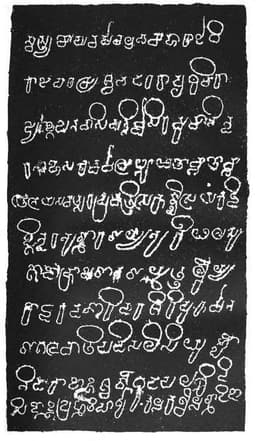
Amoghavarsha
Emperor · Medieval
60.3Total
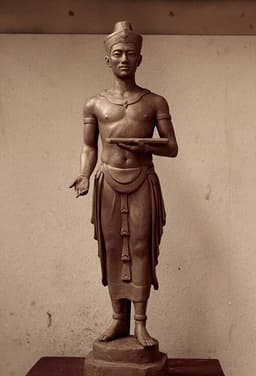
Maha Thammaracha I
Emperor · Medieval
52.8Total
Basic Information
Born
800
1300
Died
878
1368
Era
Medieval
Medieval
Nationality
India
Thailand
Occupation
Emperor
Emperor
Civilization
Indian
Eastern
Score Comparison
Military (10%)
55.0
50.0
Political (20%)
59.3
68.0
Influence (20%)
62.0
55.0
Legacy (20%)
58.0
54.0
Leadership (15%)
78.0
40.0
Strategy (15%)
41.7
43.7
TOTAL
60.3
52.8
Amoghavarsha — Complete Timeline
820 AD
Conversion to JainismCultural◆ Major
Amoghavarsha converted from Hinduism to Jainism under the influence of the Jain acharya Jinasena. He became a devout patron of Jainism, building temples and supporting Jain monasteries. This shaped his policies of religious tolerance.
Religious ConversionJainismPatronage
Impact: nationalconstructive
850 AD
Composition of the KavirajamargaCultural◆ Major
Amoghavarsha, with assistance from the scholar Srivijaya, composed the Kavirajamarga, the earliest extant work on Kannada poetics. This text standardized Kannada literary conventions and promoted the language as a medium for high culture.
LiteratureKannada LanguagePoetics
Impact: regionalconstructive
860 AD
Construction of the Jain Basadi at ShravanabelagolaCultural
Amoghavarsha commissioned the construction of Jain temples (basadi) at Shravanabelagola, a major Jain pilgrimage site. He also erected a statue of the Jain tirthankara Mahavira. This solidified his legacy as a Jain patron.
Temple BuildingJain PilgrimageArchitecture
constructive
878 AD
Abdication and AsceticismPolitical Action◆ Major
Amoghavarsha abdicated the throne in favor of his son Krishna II. He then adopted the life of a Jain ascetic, practicing sallekhana (fasting unto death) at Shravanabelagola. This act reflected his deep religious devotion.
AbdicationAsceticismJain Practice
Impact: national
Maha Thammaracha I — Complete Timeline
1340 AD
Establishment of Theravada Buddhism in SukhothaiCultural◆ Major
Maha Thammaracha I, as king of Sukhothai, promoted Theravada Buddhism as the state religion. He invited monks from Sri Lanka to reform the Buddhist order and built numerous temples, establishing the religious foundation for Thai Buddhism.
BuddhismReligious ReformThai Culture
Impact: regionalconstructive
1345 AD
Writing of the Trai Phum Phra RuangCultural◆ Major
Maha Thammaracha I authored the Trai Phum Phra Ruang, a cosmological treatise describing the three worlds of Buddhist cosmology. The text became a foundational work of Thai literature and religious thought.
LiteratureBuddhist CosmologyThai Philosophy
Impact: nationalconstructive
1350 AD
Expansion of Sukhothai TerritoryWar
Maha Thammaracha I expanded the Sukhothai Kingdom through military campaigns, extending its influence over neighboring principalities. His conquests consolidated Sukhothai's power in central Thailand before the rise of Ayutthaya.
Territorial ExpansionMilitary CampaignSukhothai
Impact: regionalconstructive
Expert Analysis
Origins
Amoghavarsha (c. 800–878 CE) was born into the Rashtrakuta dynasty of south-central India. His father, Emperor Govinda III, died when Amoghavarsha was young, leading to a regency under his cousin Karka. Amoghavarsha was initially raised in a Hindu tradition but later converted to Jainism under the influence of the Jain acharya Jinasena. He received a comprehensive education in statecraft, literature, and religion, which shaped his identity as a scholar-king. His early life was marked by political instability, including a revolt by his cousin Karka, which he eventually suppressed.
Maha Thammaracha I (c. 1310–1368 CE), also known as Lithai, was a prince of the Sukhothai Kingdom in present-day Thailand. He was the son of King Loe Thai and was educated in Buddhist scriptures. His early life was spent in the monastic tradition, studying Theravada Buddhism under the guidance of monks from Sri Lanka. This religious education deeply influenced his later policies, including his promotion of Buddhism as a unifying force. Unlike Amoghavarsha, Maha Thammaracha I did not face significant early challenges to his succession, ascending the throne around 1347 CE.
Rise to Power
Amoghavarsha became emperor in 814 CE as a child, but his early reign was plagued by rebellions. The most serious was led by his cousin Karka, who had been regent. Amoghavarsha, with the help of loyal generals, defeated Karka around 821 CE. He then consolidated his rule through diplomacy and patronage of Jainism, which helped him gain support from Jain merchants and scholars. His rise was marked by a strategic shift from military expansion to cultural and religious patronage, scoring 59.3 in political and 41.7 in strategy.
Maha Thammaracha I rose to power peacefully, inheriting the Sukhothai throne around 1347 CE. His reign built upon the foundations laid by his grandfather Ram Khamhaeng, who had expanded the kingdom. Maha Thammaracha I focused on religious reform rather than military conquest, scoring 68.0 in political but only 40.0 in leadership. He invited Sri Lankan monks to purify the Buddhist order and wrote the Trai Phum Phra Ruang, a cosmological work that became a key text for Thai Buddhism.
Leadership & Governance
Amoghavarsha's leadership style was that of a scholar-king. He devoted his reign to cultural and religious development, composing the Kavirajamarga (the earliest Kannada poetics text) and patronizing Jain scholars. He built Jain basadi at Shravanabelagola and erected a statue of the Jain saint Gommateshvara. Politically, he maintained stability through alliances and religious patronage, scoring 78.0 in leadership. However, his military score of 55.0 reflects his limited territorial expansion.
Maha Thammaracha I governed as a pious Buddhist monarch. He made Theravada Buddhism the state religion, standardized monastic practices, and promoted education through monasteries. His governance was decentralized, allowing local lords autonomy as long as they adhered to Buddhist principles. His political score (68.0) reflects his ability to unify the kingdom under a religious banner, but his low leadership score (40.0) suggests he was more a philosopher than an administrator. He expanded the kingdom modestly, scoring 50.0 in military.
Triumph & Tragedy
Amoghavarsha's greatest triumph was his cultural legacy: the Kavirajamarga standardized Kannada literature, and his patronage made Shravanabelagola a major Jain center. He successfully converted to Jainism and promoted religious tolerance. His tragedy was his abdication and asceticism; he practiced sallekhana (fasting unto death) in 878 CE, possibly due to political pressure or personal piety. This ended his reign prematurely, leaving his son Krishna II to handle a declining empire.
Maha Thammaracha I's triumph was the establishment of Theravada Buddhism in Sukhothai, which shaped Thai identity for centuries. His Trai Phum Phra Ruang became a foundational text. However, his tragedy was the gradual decline of Sukhothai's power under his rule. He failed to maintain the territorial gains of his predecessors, and after his death, the kingdom became a vassal of Ayutthaya. His military score of 50.0 reflects his inability to defend the kingdom.
Character & Destiny
Amoghavarsha was a contemplative and scholarly ruler, more interested in literature and religion than conquest. His decision to abdicate and become an ascetic shows a deep commitment to Jain principles of non-attachment. Historians view him as a patron of culture rather than a warrior. His total score of 60.3 reflects his balanced but non-aggressive rule.
Maha Thammaracha I was a devout Buddhist philosopher-king. His writing of the Trai Phum Phra Ruang demonstrates his intellectual depth. However, his lack of military ambition and decentralized governance led to Sukhothai's decline. His total score of 52.8 indicates a less impactful reign compared to Amoghavarsha.
Legacy
Amoghavarsha's legacy endures in Kannada literature and Jain history. The Kavirajamarga is still studied, and Shravanabelagola remains a pilgrimage site. His influence score of 62.0 reflects his cultural impact. Maha Thammaracha I's legacy is the establishment of Theravada Buddhism as a central pillar of Thai culture. The Trai Phum Phra Ruang influenced Thai art and cosmology. However, his political legacy was weaker, as Sukhothai soon faded into obscurity.
Conclusion
Amoghavarsha had a greater impact than Maha Thammaracha I, as evidenced by his higher total score (60.3 vs 52.8). While Maha Thammaracha I shaped Thai Buddhism, Amoghavarsha's contributions to Kannada literature and Jainism were more enduring and original. He composed a foundational text in a language that continues to be spoken by millions, whereas Maha Thammaracha I's work, though important, was part of a broader Buddhist tradition. Amoghavarsha's cultural patronage also had a longer-lasting effect, as Jainism continued to thrive in Karnataka. Therefore, Amoghavarsha's legacy is more significant.
Rankings
🥇
AmoghavarshaLeader
Mil: 55.0Pol: 59.3Inf: 62.0
60.3
🥈
Maha Thammaracha I
Mil: 50.0Pol: 68.0Inf: 55.0
52.8
+7.5 behind
How This Comparison Works
Algorithm
Each figure is scored on 6 dimensions (0—100 scale) based on structured historical data: Military (10%), Political (20%), Influence (20%), Legacy (20%), Leadership (15%), Strategy (15%). The weighted total produces the final ranking.
Data Sources
Scores are computed from structured sub-indicators in the database. Scale factors adjust for era (Ancient ×0.85, Modern ×1.0) and civilization size (Eastern ×1.05, Other ×0.80) to account for differences in population and military scale.
Maximum 3 Figures
Comparisons are limited to 2—3 figures to ensure readability and statistical meaningfulness.
Error Margins
±5 points per dimension — Sub-scores are derived from historical records with inherent uncertainty. Two figures within 5 points on a dimension should be considered roughly equivalent in that area.
Total Score Accuracy
±3 points overall — The weighted combination of 6 dimensions produces a total score with approximately ±3 points of uncertainty. Differences of less than 3 points are not statistically significant— the figures are effectively tied.
Known Limitations
- Historical records are incomplete and uneven across civilizations
- Figures from oral-tradition societies may be underrepresented
- Occupation labels can misclassify multi-role figures
- Scores measure capability and impact, not moral character
- Quantitative scoring is a comparison tool, not absolute truth
Capability Radar
Military (10%) — Battles & Warfare
Battles
30
20
Win Rate
35
25
Expansion
25
20
Political (20%) — Governance & Reform
Reform
70
60
Diplomacy
75
50
Economy
80
55
Influence (20%) — Cultural & Global Reach
Cultural
70
65
Global
40
40
Legacy (20%) — Historical Impact
Historical
65
60
Longevity
60
55
Leadership (15%) — Power & Stability
Tenure
80
55
Stability
85
60
Strategy (15%) — Tactics & Innovation
Strategy
30
20
Tactics
25
20
Reform
20
15
Similar Comparisons
Comments & Discussion
No comments yet. Be the first to share your thoughts!