Loading...
This comparison has not been analyzed yet.
One-time AI generation (~1 minute). Scores and timeline are already available below.
Maha Thammaracha I vs Muawiyah I
Muawiyah I leads by 23.5 pts · 2 figures compared
…
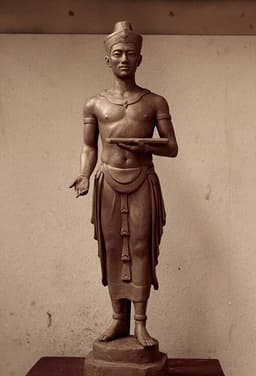
Maha Thammaracha I
Emperor · Medieval
52.8Total
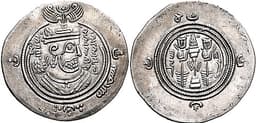
Muawiyah I
Emperor · Medieval
76.3Total
Basic Information
Born
1300
602
Died
1368
680
Era
Medieval
Medieval
Nationality
Thailand
Umayyad Caliphate
Occupation
Emperor
Emperor
Civilization
Eastern
Middle Eastern
Score Comparison
Military (10%)
50.0
76.0
Political (20%)
68.0
75.0
Influence (20%)
55.0
75.0
Legacy (20%)
54.0
80.0
Leadership (15%)
40.0
78.0
Strategy (15%)
43.7
70.0
TOTAL
52.8
76.3
Maha Thammaracha I — Complete Timeline
1340 AD
Establishment of Theravada Buddhism in SukhothaiCultural◆ Major
Maha Thammaracha I, as king of Sukhothai, promoted Theravada Buddhism as the state religion. He invited monks from Sri Lanka to reform the Buddhist order and built numerous temples, establishing the religious foundation for Thai Buddhism.
BuddhismReligious ReformThai Culture
Impact: regionalconstructive
1345 AD
Writing of the Trai Phum Phra RuangCultural◆ Major
Maha Thammaracha I authored the Trai Phum Phra Ruang, a cosmological treatise describing the three worlds of Buddhist cosmology. The text became a foundational work of Thai literature and religious thought.
LiteratureBuddhist CosmologyThai Philosophy
Impact: nationalconstructive
1350 AD
Expansion of Sukhothai TerritoryWar
Maha Thammaracha I expanded the Sukhothai Kingdom through military campaigns, extending its influence over neighboring principalities. His conquests consolidated Sukhothai's power in central Thailand before the rise of Ayutthaya.
Territorial ExpansionMilitary CampaignSukhothai
Impact: regionalconstructive
Muawiyah I — Complete Timeline
640 AD
Governorship of SyriaPolitical Action◆ Major
Muawiyah I was appointed governor of Syria by Caliph Umar. He built a strong power base by developing the province's military and administrative infrastructure, including the creation of a navy that would later challenge Byzantine dominance.
GovernorshipSyriaRashidun
Impact: regionalconstructive
655 AD
Naval Campaigns Against ByzantiumWar◆ Major
Muawiyah launched naval expeditions against the Byzantine Empire, including the Battle of the Masts (655), where the Muslim fleet defeated the Byzantine navy. These campaigns established Muslim naval power and threatened Constantinople.
Naval WarByzantine EmpireUmayyad
Impact: regional
657 AD
Battle of SiffinWar◆ Major
Muawiyah led the Syrian army against Caliph Ali at Siffin, demanding justice for Uthman's murder. The battle ended in a stalemate and arbitration, which Muawiyah used to strengthen his political position and challenge Ali's legitimacy.
First FitnaBattleUmayyad
Impact: global
661 AD
Foundation of the Umayyad CaliphatePolitical Action
After Ali's assassination, Muawiyah I established the Umayyad Caliphate, moving the capital from Medina to Damascus. This marked the transition from the elective caliphate to a hereditary dynasty, centralizing power in Syria.
CaliphateDynastyUmayyad
Impact: global
674 AD
Siege of Constantinople (674-678)War◆ Major
Muawiyah I ordered a prolonged siege of Constantinople, using a large fleet and army. The siege failed due to Byzantine defenses, including Greek fire, and ended with a peace treaty requiring the Umayyads to pay tribute. It was a rare setback.
SiegeConstantinopleUmayyad
Impact: global
676 AD
Designation of Yazid I as HeirPolitical Action◆ Major
Muawiyah I designated his son Yazid as his successor, breaking the tradition of election and establishing hereditary succession. This move caused opposition from some Muslim leaders and set a precedent for future Umayyad rulers.
SuccessionHereditaryUmayyad
Impact: global
This comparison has not been analyzed yet.
One-time AI generation (~1 minute). Scores and timeline are already available below.
Rankings
🥇
Muawiyah ILeader
Mil: 76.0Pol: 75.0Inf: 75.0
76.3
🥈
Maha Thammaracha I
Mil: 50.0Pol: 68.0Inf: 55.0
52.8
+23.5 behind
How This Comparison Works
Algorithm
Each figure is scored on 6 dimensions (0—100 scale) based on structured historical data: Military (10%), Political (20%), Influence (20%), Legacy (20%), Leadership (15%), Strategy (15%). The weighted total produces the final ranking.
Data Sources
Scores are computed from structured sub-indicators in the database. Scale factors adjust for era (Ancient ×0.85, Modern ×1.0) and civilization size (Eastern ×1.05, Other ×0.80) to account for differences in population and military scale.
Maximum 3 Figures
Comparisons are limited to 2—3 figures to ensure readability and statistical meaningfulness.
Error Margins
±5 points per dimension — Sub-scores are derived from historical records with inherent uncertainty. Two figures within 5 points on a dimension should be considered roughly equivalent in that area.
Total Score Accuracy
±3 points overall — The weighted combination of 6 dimensions produces a total score with approximately ±3 points of uncertainty. Differences of less than 3 points are not statistically significant— the figures are effectively tied.
Known Limitations
- Historical records are incomplete and uneven across civilizations
- Figures from oral-tradition societies may be underrepresented
- Occupation labels can misclassify multi-role figures
- Scores measure capability and impact, not moral character
- Quantitative scoring is a comparison tool, not absolute truth
Capability Radar
Military (10%) — Battles & Warfare
Battles
20
75
Win Rate
25
80
Expansion
20
85
Political (20%) — Governance & Reform
Reform
60
90
Diplomacy
50
95
Economy
55
85
Influence (20%) — Cultural & Global Reach
Cultural
65
75
Global
40
75
Legacy (20%) — Historical Impact
Historical
60
85
Longevity
55
80
Leadership (15%) — Power & Stability
Tenure
55
85
Stability
60
80
Strategy (15%) — Tactics & Innovation
Strategy
20
85
Tactics
20
70
Reform
15
80
Similar Comparisons
Comments & Discussion
No comments yet. Be the first to share your thoughts!