Loading...
This comparison has not been analyzed yet.
One-time AI generation (~1 minute). Scores and timeline are already available below.
Amr Moussa vs Haruo Remeliik
Amr Moussa leads by 13.6 pts · 2 figures compared
…

Amr Moussa
Politician · Modern
55.4Total
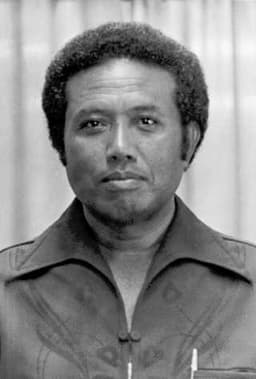
Haruo Remeliik
Politician · Modern
41.8Total
Basic Information
Born
1936
1933
Died
—
—
Era
Modern
Modern
Nationality
Egypt
Palau
Occupation
Politician
Politician
Civilization
Middle Eastern
Other
Score Comparison
Military (10%)
32.2
42.8
Political (20%)
68.0
35.1
Influence (20%)
55.0
48.6
Legacy (20%)
50.0
38.3
Leadership (15%)
72.0
41.5
Strategy (15%)
48.8
43.4
TOTAL
55.4
41.8
Amr Moussa — Complete Timeline
2001 AD
Appointed Secretary-General of the Arab LeaguePolitical Action◆ Major
Amr Moussa became Secretary-General of the Arab League in May 2001, succeeding Dr. Ahmad Esmat Abdel Meguid. He served two five-year terms until 2011. During his tenure, he advocated for Arab unity and reform within the League, and was a vocal critic of US policies in the Middle East, particularly the Iraq War.
Arab LeagueDiplomacyMiddle East
Impact: regional
2002 AD
Arab Peace Initiative ProposalPolitical Action◆ Major
Under Moussa's leadership, the Arab League adopted the Arab Peace Initiative at the 2002 Beirut Summit. The initiative offered Israel full normalization of relations with Arab states in exchange for withdrawal from occupied territories and a just solution for Palestinian refugees. It became a cornerstone of Arab diplomatic efforts.
Arab-Israeli ConflictPeace InitiativeDiplomacy
Impact: regionalconstructive
2012 AD
Presidential Candidacy in EgyptPolitical Action
After leaving the Arab League, Moussa ran as a candidate in the 2012 Egyptian presidential election. He positioned himself as a secular, experienced statesman. He finished fifth in the first round with 11.1% of the vote, failing to advance to the runoff. His campaign was seen as representing the old regime establishment.
Presidential ElectionEgyptSecular Politics
Impact: national
Haruo Remeliik — Complete Timeline
1981 AD
Elected first President of PalauPolitical Action
Haruo Remeliik was elected as the first President of Palau in 1981, following the adoption of the country's constitution. He led the nation during its transition from a Trust Territory to self-government, overseeing the establishment of democratic institutions.
IndependenceFoundingDemocracy
Impact: nationalconstructive
1984 AD
Re-elected to a second termPolitical Action
Remeliik was re-elected as President in 1984, defeating challenger Roman Tmetuchl. His second term focused on economic development and negotiations with the United States over the Compact of Free Association, which he supported.
Re-electionCompact Negotiations
Impact: national
1985 AD
AssassinatedOther◆ Major
Haruo Remeliik was assassinated on June 30, 1985, outside his home in Koror. The murder shocked the nation and remained unsolved for years, with several suspects tried and acquitted. His death created a political crisis and led to a period of instability.
AssassinationPolitical ViolenceUnsolved
Impact: nationaltragic
This comparison has not been analyzed yet.
One-time AI generation (~1 minute). Scores and timeline are already available below.
Rankings
🥇
Amr MoussaLeader
Mil: 32.2Pol: 68.0Inf: 55.0
55.4
🥈
Haruo Remeliik
Mil: 42.8Pol: 35.1Inf: 48.6
41.8
+13.6 behind
How This Comparison Works
Algorithm
Each figure is scored on 6 dimensions (0—100 scale) based on structured historical data: Military (10%), Political (20%), Influence (20%), Legacy (20%), Leadership (15%), Strategy (15%). The weighted total produces the final ranking.
Data Sources
Scores are computed from structured sub-indicators in the database. Scale factors adjust for era (Ancient ×0.85, Modern ×1.0) and civilization size (Eastern ×1.05, Other ×0.80) to account for differences in population and military scale.
Maximum 3 Figures
Comparisons are limited to 2—3 figures to ensure readability and statistical meaningfulness.
Error Margins
±5 points per dimension — Sub-scores are derived from historical records with inherent uncertainty. Two figures within 5 points on a dimension should be considered roughly equivalent in that area.
Total Score Accuracy
±3 points overall — The weighted combination of 6 dimensions produces a total score with approximately ±3 points of uncertainty. Differences of less than 3 points are not statistically significant— the figures are effectively tied.
Known Limitations
- Historical records are incomplete and uneven across civilizations
- Figures from oral-tradition societies may be underrepresented
- Occupation labels can misclassify multi-role figures
- Scores measure capability and impact, not moral character
- Quantitative scoring is a comparison tool, not absolute truth
Capability Radar
Military (10%) — Battles & Warfare
Battles
19
24
Win Rate
26
23
Expansion
26
27
Political (20%) — Governance & Reform
Reform
55
25
Diplomacy
70
30
Economy
40
20
Influence (20%) — Cultural & Global Reach
Cultural
45
15
Global
55
15
Legacy (20%) — Historical Impact
Historical
50
20
Longevity
40
10
Leadership (15%) — Power & Stability
Tenure
60
20
Stability
50
10
Strategy (15%) — Tactics & Innovation
Strategy
31
28
Tactics
35
36
Reform
34
36
Similar Comparisons
Comments & Discussion
No comments yet. Be the first to share your thoughts!