Loading...
Anacaona vs John of England
John of England leads by 5.0 pts · 2 figures compared
…

Anacaona
Emperor · Medieval
46.9Total
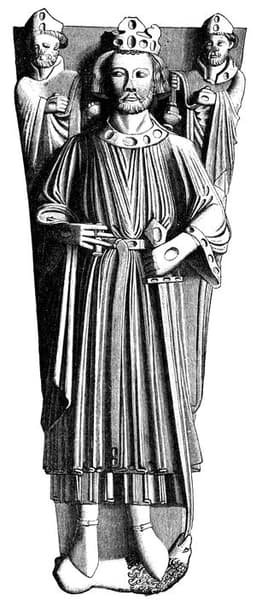
John of England
Emperor · Medieval
51.9Total
Basic Information
Born
1474
1166
Died
1503
1216
Era
Medieval
Medieval
Nationality
Taino
England
Occupation
Emperor
Emperor
Civilization
Other
Western
Score Comparison
Military (10%)
34.8
50.0
Political (20%)
36.5
39.4
Influence (20%)
54.1
62.0
Legacy (20%)
42.5
55.0
Leadership (15%)
51.9
45.0
Strategy (15%)
60.0
50.0
TOTAL
46.9
51.9
Anacaona — Complete Timeline
1495 AD
Ruled as Cacique of XaraguaPolitical Action◆ Major
Anacaona became the cacique (chief) of the Taino chiefdom of Xaragua in Hispaniola after the death of her brother. She ruled over a large territory and was known for her poetry and diplomacy, maintaining peaceful relations with the Spanish initially.
Taino LeadershipDiplomacyXaragua
Impact: regional
1503 AD
Organized Taino Resistance Against SpanishPolitical Action◆ Major
After Spanish abuses increased, Anacaona organized a Taino rebellion in Xaragua. She coordinated with other caciques to resist Spanish demands for tribute and labor. The rebellion was short-lived due to Spanish military superiority.
Taino RebellionResistanceXaragua
Impact: regional
Captured and Hanged by SpanishPolitical Action
Anacaona was captured by Spanish governor Nicol
ExecutionSpanish ConquestMartyrdom
Impact: regionaltragic
John of England — Complete Timeline
1204 AD
Loss of NormandyWar◆ Major
King John lost the Duchy of Normandy to King Philip II of France after the fall of Ch
Territorial LossFranceAngevin Empire
Impact: regionaldestructive
1208 AD
Interdict on EnglandPolitical Action◆ Major
Pope Innocent III placed England under interdict after John refused to accept Stephen Langton as Archbishop of Canterbury. This suspended church services, causing widespread discontent and leading to John's excommunication.
Church ConflictPapal InterdictExcommunication
Impact: nationaldestructive
1215 AD
First Barons' WarWar◆ Major
After repudiating Magna Carta, John faced the First Barons' War, where rebel barons invited Prince Louis of France to take the English throne. John fought to retain control, leading to widespread devastation.
Civil WarBaronial RevoltFrench Invasion
Impact: nationaldestructive
Signing of Magna CartaPolitical Action
Under pressure from rebellious barons, John signed Magna Carta at Runnymede. The charter limited royal power, established legal rights, and influenced constitutional law, though John later repudiated it.
CharterConstitutionalBaronial Revolt
Impact: globalconstructive
1216 AD
Death from DysenteryOther◆ Major
John died of dysentery at Newark Castle during the First Barons' War. His death allowed his young son Henry III to succeed, and the war ended with the Treaty of Lambeth.
DeathDisease
Impact: nationaltragic
Expert Analysis
Origins
Anacaona was born around 1474 into the Taino nobility of Xaragua, a chiefdom on the island of Hispaniola. She was the sister of Bohechío, the cacique (chief) of Xaragua, and was educated in the Taino traditions of poetry and governance. Her name means 'golden flower' in the Taino language, reflecting her esteemed status. John of England was born on December 24, 1166, at Beaumont Palace in Oxford, the youngest son of King Henry II and Eleanor of Aquitaine. He was not expected to inherit the throne, but after the death of his brother Richard the Lionheart, he became king in 1199. John received a formal education in Latin, law, and military tactics, but was known for his erratic temperament from an early age.
Rise to Power
Anacaona rose to power after the death of her brother Bohechío around 1500. As cacica, she ruled Xaragua, one of the most populous and prosperous Taino chiefdoms. She initially sought peaceful coexistence with the Spanish, who had arrived in 1492. However, after witnessing Spanish brutality and demands for tribute, she began coordinating resistance among Taino leaders. John's rise was marked by conflict. He attempted to seize the throne while Richard was imprisoned, leading to his exile. Upon Richard's death in 1199, John became king, but faced immediate challenges from the French king Philip II, who supported John's nephew Arthur of Brittany as the rightful heir. John's military campaigns in France were largely unsuccessful, leading to the loss of Normandy in 1204.
Leadership & Governance
Anacaona's leadership style was diplomatic and cultural. She promoted Taino traditions, including the areíto ceremonies that combined dance, music, and poetry. She attempted to negotiate with the Spanish governor Nicolás de Ovando, but was betrayed during a peace meeting in 1503. Her governance focused on maintaining Taino autonomy, but she lacked the military strength to resist Spanish conquest. John's governance was authoritarian and financially extractive. He raised taxes to fund his wars, alienating his barons. His conflict with the Church over the appointment of Stephen Langton as Archbishop led to a papal interdict in 1208, which suspended church services in England. John eventually submitted to the pope in 1213, making England a papal fief. His political score of 39.4 reflects his inability to maintain stable alliances.
Triumph & Tragedy
Anacaona's greatest triumph was her role in organizing Taino resistance, which delayed Spanish control over Xaragua. She is remembered as a symbol of indigenous resistance. Her tragedy was her execution: captured during a peace negotiation, she was tried for rebellion and hanged publicly in 1504. Her death marked the end of organized Taino resistance in Hispaniola. John's greatest triumph was the signing of the Magna Carta in 1215, which limited royal power and established legal rights. However, he repudiated the charter, leading to the First Barons' War. His tragedy was his death from dysentery in 1216, leaving a kingdom in chaos. The loss of Normandy and the interdict were also major failures. John's military score of 50.0 reflects his mixed success, while Anacaona's 34.8 shows her limited martial capacity.
Character & Destiny
Anacaona was characterized by her diplomatic skill and cultural pride. She trusted Spanish promises of peace, which led to her capture. Her destiny was shaped by the overwhelming force of Spanish colonization. John was known for his cunning but also his cruelty and paranoia. He alienated his barons through arbitrary rule and excessive taxation. His character led to the baronial rebellion that forced the Magna Carta. Historians often view John as a failed king, but his signing of the Magna Carta had unintended long-term benefits. Anacaona's legacy as a poet and resistance leader gives her a moral influence that transcends her military and political scores.
Legacy
Anacaona's legacy endures as a symbol of indigenous resistance against European colonization. She is celebrated in Dominican Republic and Puerto Rico through poetry, songs, and cultural festivals. Her influence score of 54.1 reflects her symbolic power. John's legacy is more concrete: the Magna Carta influenced the development of constitutional law in England and beyond. His legacy score of 55.0 acknowledges this. However, John's personal reputation is poor; he is often ranked as one of the worst English monarchs. Anacaona's legacy, while less tangible in legal terms, is emotionally and culturally significant.
Conclusion
Despite John's higher total score (51.9 vs 46.9), Anacaona's impact as a symbol of resistance against oppression arguably carries greater moral weight. John's signing of the Magna Carta was a pivotal moment in legal history, but it was forced upon him, and he promptly repudiated it. Anacaona's resistance, though unsuccessful, represents a stand against colonial injustice that resonates today. In terms of lasting influence on world history, the Magna Carta has shaped governance structures globally, giving John a tangible edge. However, for cultural and inspirational impact, Anacaona's story endures. Thus, while John's legacy is more institutionally significant, Anacaona's legacy is more universally human.
Rankings
🥇
John of EnglandLeader
Mil: 50.0Pol: 39.4Inf: 62.0
51.9
🥈
Anacaona
Mil: 34.8Pol: 36.5Inf: 54.1
46.9
+5.0 behind
How This Comparison Works
Algorithm
Each figure is scored on 6 dimensions (0—100 scale) based on structured historical data: Military (10%), Political (20%), Influence (20%), Legacy (20%), Leadership (15%), Strategy (15%). The weighted total produces the final ranking.
Data Sources
Scores are computed from structured sub-indicators in the database. Scale factors adjust for era (Ancient ×0.85, Modern ×1.0) and civilization size (Eastern ×1.05, Other ×0.80) to account for differences in population and military scale.
Maximum 3 Figures
Comparisons are limited to 2—3 figures to ensure readability and statistical meaningfulness.
Error Margins
±5 points per dimension — Sub-scores are derived from historical records with inherent uncertainty. Two figures within 5 points on a dimension should be considered roughly equivalent in that area.
Total Score Accuracy
±3 points overall — The weighted combination of 6 dimensions produces a total score with approximately ±3 points of uncertainty. Differences of less than 3 points are not statistically significant— the figures are effectively tied.
Known Limitations
- Historical records are incomplete and uneven across civilizations
- Figures from oral-tradition societies may be underrepresented
- Occupation labels can misclassify multi-role figures
- Scores measure capability and impact, not moral character
- Quantitative scoring is a comparison tool, not absolute truth
Capability Radar
Military (10%) — Battles & Warfare
Battles
30
25
Win Rate
36
20
Expansion
36
10
Political (20%) — Governance & Reform
Reform
20
60
Diplomacy
25
20
Economy
20
25
Influence (20%) — Cultural & Global Reach
Cultural
35
45
Global
20
65
Legacy (20%) — Historical Impact
Historical
30
75
Longevity
25
70
Leadership (15%) — Power & Stability
Tenure
30
40
Stability
15
15
Strategy (15%) — Tactics & Innovation
Strategy
42
25
Tactics
44
30
Reform
47
15
Similar Comparisons
Comments & Discussion
No comments yet. Be the first to share your thoughts!