Loading...
John of England vs Shah Rukh
Shah Rukh leads by 7.6 pts · 2 figures compared
…
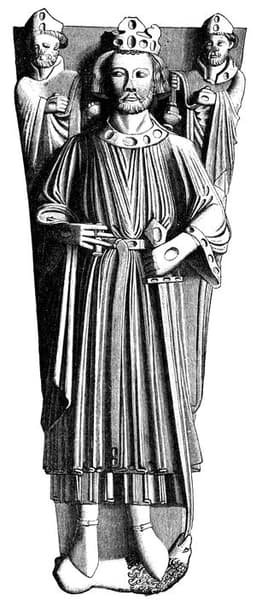
John of England
Emperor · Medieval
51.9Total
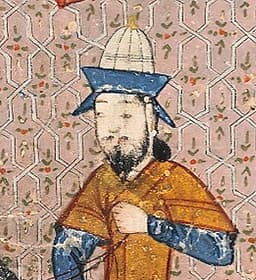
Shah Rukh
Emperor · Medieval
59.5Total
Basic Information
Born
1166
1377
Died
1216
1447
Era
Medieval
Medieval
Nationality
England
Timurid Empire
Occupation
Emperor
Emperor
Civilization
Western
Middle Eastern
Score Comparison
Military (10%)
50.0
65.0
Political (20%)
39.4
70.0
Influence (20%)
62.0
65.0
Legacy (20%)
55.0
40.0
Leadership (15%)
45.0
72.0
Strategy (15%)
50.0
55.0
TOTAL
51.9
59.5
John of England — Complete Timeline
1204 AD
Loss of NormandyWar◆ Major
King John lost the Duchy of Normandy to King Philip II of France after the fall of Ch
Territorial LossFranceAngevin Empire
Impact: regionaldestructive
1208 AD
Interdict on EnglandPolitical Action◆ Major
Pope Innocent III placed England under interdict after John refused to accept Stephen Langton as Archbishop of Canterbury. This suspended church services, causing widespread discontent and leading to John's excommunication.
Church ConflictPapal InterdictExcommunication
Impact: nationaldestructive
1215 AD
First Barons' WarWar◆ Major
After repudiating Magna Carta, John faced the First Barons' War, where rebel barons invited Prince Louis of France to take the English throne. John fought to retain control, leading to widespread devastation.
Civil WarBaronial RevoltFrench Invasion
Impact: nationaldestructive
Signing of Magna CartaPolitical Action
Under pressure from rebellious barons, John signed Magna Carta at Runnymede. The charter limited royal power, established legal rights, and influenced constitutional law, though John later repudiated it.
CharterConstitutionalBaronial Revolt
Impact: globalconstructive
1216 AD
Death from DysenteryOther◆ Major
John died of dysentery at Newark Castle during the First Barons' War. His death allowed his young son Henry III to succeed, and the war ended with the Treaty of Lambeth.
DeathDisease
Impact: nationaltragic
Shah Rukh — Complete Timeline
1409 AD
Accession to the Timurid ThronePolitical Action
After Tamerlane's death and a period of civil war, Shah Rukh emerged as the ruler of the Timurid Empire, based in Herat. He defeated his rivals, including his nephew Khalil Sultan, and consolidated control over Persia and Central Asia.
SuccessionTimurid EmpireHerat
Impact: regional
1410 AD
Patronage of the Timurid RenaissanceCultural◆ Major
Shah Rukh patronized the arts, architecture, and literature, making Herat a center of the Timurid Renaissance. He commissioned the construction of mosques, madrasas, and libraries, and supported artists like the miniaturist Kamal-ud-din Behzad.
CulturePatronageTimurid Renaissance
Impact: regionalconstructive
1415 AD
Restoration of the Silk Road TradePolitical Action
Shah Rukh reestablished diplomatic and trade relations with Ming China, sending embassies and restoring the Silk Road. This facilitated cultural and economic exchange between the Timurid Empire and East Asia.
TradeSilk RoadMing China
Impact: globalconstructive
1420 AD
Campaigns against the Qara QoyunluWar
Shah Rukh led multiple campaigns against the Qara Qoyunlu (Black Sheep Turkomans) in western Persia and Iraq. He defeated them at the Battle of Alashkert in 1421, but the conflict continued intermittently, draining Timurid resources.
WarQara QoyunluPersia
Impact: regional
1447 AD
Death and SuccessionPolitical Action◆ Major
Shah Rukh died in 1447, leading to a succession struggle among his sons, including Ulugh Beg. His death marked the beginning of the decline of the Timurid Empire, which fragmented into smaller states.
DeathSuccessionTimurid Decline
Impact: regionaltragic
Expert Analysis
Origins
John of England was born in 1166, the youngest son of King Henry II and Eleanor of Aquitaine. His upbringing was overshadowed by his older brothers, and he lacked a substantial inheritance, earning him the nickname 'John Lackland'. He received a good education but was known for his erratic temperament. Shah Rukh was born in 1377 in Samarkand, the fourth son of Timur (Tamerlane). He grew up in the shadow of his father's vast conquests and was trained in military and administrative affairs. Unlike John, Shah Rukh inherited a stable base in Khorasan.
Rise to Power
John became King of England in 1199 after the death of his brother Richard the Lionheart. His claim was disputed by his nephew Arthur of Brittany, leading to war with France. John's early reign was marked by the loss of Normandy in 1204 to Philip II, a major blow to English prestige. He also clashed with Pope Innocent III over the appointment of the Archbishop of Canterbury, resulting in England being placed under interdict from 1208 to 1213. Shah Rukh's rise was more gradual. After Timur's death in 1405, a civil war erupted among his sons and grandsons. Shah Rukh, governing Khorasan from Herat, consolidated power and by 1409 had defeated his rivals, becoming the sole ruler of the Timurid Empire. He secured his position by focusing on stability rather than expansion.
Leadership & Governance
John's leadership was authoritarian and distrustful. He imposed heavy taxes to fund his military campaigns, alienating his barons. His governance was marked by arbitrary justice and favoritism, leading to widespread rebellion. In contrast, Shah Rukh ruled through a decentralized system, delegating authority to his sons and local governors. He promoted trade and diplomacy, restoring the Silk Road by sending embassies to Ming China. While John's political score is 39.4, Shah Rukh's is 70.0, reflecting his more effective governance.
Triumph & Tragedy
John's greatest triumph was signing the Magna Carta in 1215, which established the principle that the king was subject to law. However, he repudiated it immediately, leading to the First Barons' War. His death in 1216 from dysentery allowed his son Henry III to succeed, and the Magna Carta was reissued. John's score of 50.0 in military reflects his mixed record. Shah Rukh's triumphs include the patronage of the Timurid Renaissance, making Herat a cultural center with magnificent architecture and arts. He also successfully campaigned against the Qara Qoyunlu, securing his western borders. His tragedy lies in the succession crisis after his death in 1447, which led to the empire's decline. Shah Rukh scores 65.0 in military and 72.0 in leadership.
Character & Destiny
John was paranoid, cruel, and untrustworthy, which alienated his nobility and led to his downfall. His character directly caused the baronial revolt. Shah Rukh was patient, diplomatic, and culturally inclined. His character fostered stability and prosperity. Historians view John as a failed king, while Shah Rukh is seen as a capable ruler who preserved his father's legacy.
Legacy
John's legacy is overwhelmingly tied to the Magna Carta, which influenced constitutional law worldwide. However, his immediate impact was negative. Shah Rukh's legacy is the Timurid Renaissance, which influenced Islamic art and architecture. His score of 40.0 in legacy is lower due to the short-lived nature of his dynasty, but his cultural impact was profound.
Conclusion
While John's Magna Carta had a lasting impact on legal systems, Shah Rukh's overall governance and cultural patronage make him the more effective leader. With a total score of 59.5 versus John's 51.9, Shah Rukh outperforms John in political, leadership, and military categories. John's failures overshadow his one major achievement. Therefore, Shah Rukh had greater impact in his time and beyond.
Rankings
🥇
Shah RukhLeader
Mil: 65.0Pol: 70.0Inf: 65.0
59.5
🥈
John of England
Mil: 50.0Pol: 39.4Inf: 62.0
51.9
+7.6 behind
How This Comparison Works
Algorithm
Each figure is scored on 6 dimensions (0—100 scale) based on structured historical data: Military (10%), Political (20%), Influence (20%), Legacy (20%), Leadership (15%), Strategy (15%). The weighted total produces the final ranking.
Data Sources
Scores are computed from structured sub-indicators in the database. Scale factors adjust for era (Ancient ×0.85, Modern ×1.0) and civilization size (Eastern ×1.05, Other ×0.80) to account for differences in population and military scale.
Maximum 3 Figures
Comparisons are limited to 2—3 figures to ensure readability and statistical meaningfulness.
Error Margins
±5 points per dimension — Sub-scores are derived from historical records with inherent uncertainty. Two figures within 5 points on a dimension should be considered roughly equivalent in that area.
Total Score Accuracy
±3 points overall — The weighted combination of 6 dimensions produces a total score with approximately ±3 points of uncertainty. Differences of less than 3 points are not statistically significant— the figures are effectively tied.
Known Limitations
- Historical records are incomplete and uneven across civilizations
- Figures from oral-tradition societies may be underrepresented
- Occupation labels can misclassify multi-role figures
- Scores measure capability and impact, not moral character
- Quantitative scoring is a comparison tool, not absolute truth
Capability Radar
Military (10%) — Battles & Warfare
Battles
25
65
Win Rate
20
70
Expansion
10
60
Political (20%) — Governance & Reform
Reform
60
75
Diplomacy
20
80
Economy
25
80
Influence (20%) — Cultural & Global Reach
Cultural
45
85
Global
65
70
Legacy (20%) — Historical Impact
Historical
75
80
Longevity
70
75
Leadership (15%) — Power & Stability
Tenure
40
85
Stability
15
85
Strategy (15%) — Tactics & Innovation
Strategy
25
75
Tactics
30
60
Reform
15
55
Similar Comparisons
Comments & Discussion
No comments yet. Be the first to share your thoughts!