Loading...
Anami Korechika vs Julius Caesar
Julius Caesar leads by 40.3 pts · 2 figures compared
…
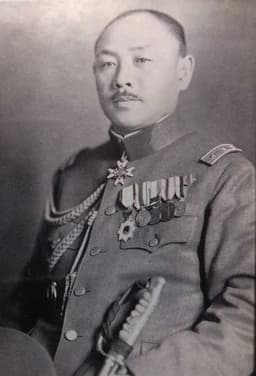
Anami Korechika
General · Modern
42.5Total

Julius Caesar
General · Ancient
82.8Total
Basic Information
Born
1887
-100
Died
1945
-44
Era
Modern
Ancient
Nationality
Japan
Roman Republic
Occupation
General
General
Civilization
Eastern
Western
Score Comparison
Military (10%)
25.9
88.0
Political (20%)
30.8
78.0
Influence (20%)
49.4
85.0
Legacy (20%)
43.3
82.0
Leadership (15%)
51.9
80.0
Strategy (15%)
43.7
85.0
TOTAL
42.5
82.8
Anami Korechika — Complete Timeline
1945 AD
Appointed War MinisterPolitical Action◆ Major
Anami Korechika was appointed Minister of War in the cabinet of Prime Minister Kantaro Suzuki in April 1945. He was a key figure in the Japanese government during the final months of World War II, advocating for continued resistance against the Allies.
World War IIJapanese GovernmentMilitary Leadership
Impact: national
Opposed Surrender DecisionPolitical Action◆ Major
In August 1945, Anami opposed the Potsdam Declaration and advocated for a final decisive battle on the Japanese home islands. He argued against unconditional surrender, contributing to the deadlock in the Supreme War Council.
World War IISurrender DebateMilitary Faction
Impact: nationaldestructive
Committed SeppukuOther◆ Major
On August 15, 1945, after Emperor Hirohito announced Japan's surrender, Anami Korechika committed seppuku (ritual suicide) at his residence. He left a death poem and expressed regret for his role in the war, choosing death over surrender.
World War IIRitual SuicideEnd of War
Impact: nationaltragic
Julius Caesar — Complete Timeline
58 BC
Gallic WarsWar◆ Major
Caesar, as proconsul of Gaul, launched a series of campaigns that conquered all of Gaul (modern France, Belgium, and parts of Switzerland). He fought numerous battles, including against the Helvetii, the Belgae, and the Gallic chieftain Vercingetorix. The wars brought immense wealth and a loyal army to Caesar.
Gallic WarsConquestRoman Expansion
Impact: regional
49 BC
Crossing the RubiconPolitical Action◆ Major
Caesar led Legio XIII across the Rubicon River into Italy, defying the Roman Senate's order to disband his army. This act triggered a civil war against Pompey and the Optimates, ultimately leading to Caesar's dictatorship and the end of the Roman Republic.
Roman Civil WarEnd of RepublicPower Struggle
Impact: global
48 BC
Battle of PharsalusWar◆ Major
Caesar's outnumbered army defeated the larger forces of Pompey the Great at Pharsalus in Greece. Caesar's tactical use of a reserve line to counter Pompey's cavalry charge proved decisive. Pompey fled to Egypt, where he was assassinated, leaving Caesar as the undisputed master of the Roman world.
Roman Civil WarBattleDecisive Victory
Impact: regional
44 BC
Appointment as Dictator for LifePolitical Action◆ Major
The Roman Senate appointed Caesar dictator perpetuo (dictator for life), granting him unprecedented personal power. This move concentrated military, legislative, and judicial authority in one person, effectively ending the Roman Republic's traditional system of checks and balances and alarming many senators.
DictatorshipEnd of RepublicPower Consolidation
Impact: regionaldestructive
Assassination on the Ides of MarchPolitical Action◆ Major
A group of Roman senators, led by Marcus Junius Brutus and Gaius Cassius Longinus, stabbed Caesar to death at a meeting of the Senate in the Theatre of Pompey. The assassination was intended to restore the Republic, but instead triggered another civil war that led to the rise of the Roman Empire.
AssassinationRoman PoliticsEnd of Republic
Impact: globaldestructive
Expert Analysis
anami-korechika-vs-julius-caesar
# The General and the Samurai
On the Ides of March, 44 BCE, Julius Caesar fell beneath twenty-three dagger strokes in the Senate chamber of Rome. His blood pooled on the marble floor as his assassins, men he had pardoned and promoted, stood over him. One thousand nine hundred and eighty-nine years later, on August 15, 1945, General Anami Korechika knelt in his Tokyo home, drew a short blade across his abdomen, and allowed a colleague to sever his head. Both men died by violence. But Caesar died because he had seized too much power; Anami died because he had failed to seize enough. The contrast between these two generals—one who remade the world, the other who could not save his own nation—reveals how deeply character, culture, and historical moment determine the arc of a life.
Origins
Julius Caesar was born into a patrician family in 100 BCE, during the twilight of the Roman Republic. His lineage was ancient but impoverished, and his aunt had married Gaius Marius, the great populist general. From childhood, Caesar breathed the air of civil conflict—the rivalry between Marius and Sulla, the proscriptions, the sense that the old order was cracking. He was ambitious, charming, and ruthlessly calculating. When Sulla ordered him to divorce his wife, Caesar refused and fled, beginning a life of calculated risk.
Anami Korechika, born in 1887, came of age in a very different world: Meiji Japan, a nation hurtling toward modernization while clinging to its samurai soul. The son of a former samurai, Anami was educated in the cult of imperial loyalty and military honor. He attended the Imperial Japanese Army Academy, where discipline was absolute and the emperor was divine. Where Caesar learned that politics was a game of alliances and betrayals, Anami learned that duty was a sacred obligation. These two men were products not only of their genes but of their civilizations—Rome, where the individual could reshape the state; Japan, where the state consumed the individual.
Rise to Power
Caesar’s path was a masterclass in opportunism. He borrowed fortunes to fund public spectacles, won election as Pontifex Maximus, and forged the First Triumvirate with Pompey and Crassus. His command in Gaul from 58 to 50 BCE gave him an army loyal to him personally, not to the Republic. When the Senate ordered him to disband his legions, he crossed the Rubicon River in 49 BCE, declaring war on his own government. Within four years, he was dictator for life.
Anami’s rise was quieter, more institutional. He served as a military attaché in Europe, commanded troops in China, and climbed the ranks of the Imperial Army through competence and conformity. By 1945, when Prime Minister Suzuki appointed him War Minister, Anami was 58 years old, a man of principle in a government of chaos. He did not seize power; power was handed to him at the moment of Japan’s collapse. His key turning point was not a river crossing but a radio broadcast: the emperor’s surrender announcement.
Leadership & Governance
Caesar governed with audacity and genius. He reformed the calendar, extended citizenship to provincials, initiated public works, and centralized authority in his own hands. His military strategy in Gaul—siege warfare at Alesia, rapid marches, dividing enemies—remains studied today. His political wisdom was pragmatic: he pardoned rivals, packed the Senate with his supporters, and understood that clemency could neutralize opposition. Yet his strategic blindness was fatal. He underestimated the hatred of the old aristocracy.
Anami’s leadership was defined by paralysis. As War Minister, he faced an impossible choice: surrender or annihilation. He opposed the Potsdam Declaration in August 1945, calling for a final decisive battle on the home islands. He knew Japan was defeated, but he believed honor required resistance. His political score of 63.9 reflects his inability to navigate the crisis. Unlike Caesar, who bent the state to his will, Anami was bent by the state. He could not imagine a world where the emperor was not divine, where the military did not rule, where surrender was not shame.
Triumph & Tragedy
Caesar’s greatest moment was his triumph over Gaul—the conquest of a million enemies, the display of gold and captives through Rome. His tragedy was that he won everything and lost his life. He had no son, no plan for succession, and his assassination plunged Rome into another civil war. His legacy would be the Empire, but he never ruled it.
Anami’s tragedy was that his greatest moment was also his last. On the morning of August 15, he wrote a death poem, performed seppuku, and died believing he had atoned for Japan’s defeat. His military score of 44.6 reflects a general who never won a decisive battle; his strategy score of 35.3 suggests a man outmatched by history. Where Caesar died because he was too powerful, Anami died because he was powerless.
Character & Destiny
Caesar was a gambler. He crossed the Rubicon, risked everything, and won—until he didn’t. His personality was magnetic, his ambition limitless, his cruelty reserved for enemies. He could forgive, but he could not forget. His decisions were driven by a desire for glory, for a name that would outlast Rome.
Anami was a stoic. He did not gamble; he obeyed. His decision to commit seppuku was not defiance but submission—to the emperor, to tradition, to the code of bushido. He wrote in his final note: “I believe I have done my duty.” Where Caesar’s destiny was to change the world, Anami’s was to be crushed by it.
Legacy
Caesar’s legacy is everywhere. The name “Caesar” became a title for emperors, kaisers, and tsars. His writings, his reforms, his assassination—all shaped Western civilization. He is remembered as a genius and a tyrant, a man who destroyed a republic and built an empire.
Anami’s legacy is narrow, confined to Japan. To some, he is a symbol of samurai honor; to others, a tragic figure who could not prevent the destruction of his country. His scores—influence 69.8, legacy 60.8—suggest a man remembered but not revered. He did not conquer, reform, or inspire. He simply followed the path of duty to its end.
Conclusion
Standing at the edge of history, Caesar and Anami faced the same question: What does a general do when the old order collapses? Caesar answered by building a new one, with himself at its center. Anami answered by kneeling, drawing his blade, and disappearing. One man shaped the future; the other could not escape the past. Their lives remind us that leadership is not merely about power—it is about imagination, the ability to see beyond the world as it is and create the world as it could be. Caesar had that imagination. Anami, bound by honor and tradition, did not. In the end, the difference between a legend and a footnote is the courage to cross the Rubicon.
Rankings
🥇
Julius CaesarLeader
Mil: 88.0Pol: 78.0Inf: 85.0
82.8
🥈
Anami Korechika
Mil: 25.9Pol: 30.8Inf: 49.4
42.5
+40.3 behind
How This Comparison Works
Algorithm
Each figure is scored on 6 dimensions (0—100 scale) based on structured historical data: Military (10%), Political (20%), Influence (20%), Legacy (20%), Leadership (15%), Strategy (15%). The weighted total produces the final ranking.
Data Sources
Scores are computed from structured sub-indicators in the database. Scale factors adjust for era (Ancient ×0.85, Modern ×1.0) and civilization size (Eastern ×1.05, Other ×0.80) to account for differences in population and military scale.
Maximum 3 Figures
Comparisons are limited to 2—3 figures to ensure readability and statistical meaningfulness.
Error Margins
±5 points per dimension — Sub-scores are derived from historical records with inherent uncertainty. Two figures within 5 points on a dimension should be considered roughly equivalent in that area.
Total Score Accuracy
±3 points overall — The weighted combination of 6 dimensions produces a total score with approximately ±3 points of uncertainty. Differences of less than 3 points are not statistically significant— the figures are effectively tied.
Known Limitations
- Historical records are incomplete and uneven across civilizations
- Figures from oral-tradition societies may be underrepresented
- Occupation labels can misclassify multi-role figures
- Scores measure capability and impact, not moral character
- Quantitative scoring is a comparison tool, not absolute truth
Capability Radar
Military (10%) — Battles & Warfare
Battles
15
95
Win Rate
10
92
Expansion
5
97
Political (20%) — Governance & Reform
Reform
15
90
Diplomacy
20
85
Economy
10
82
Influence (20%) — Cultural & Global Reach
Cultural
15
88
Global
10
94
Legacy (20%) — Historical Impact
Historical
30
95
Longevity
20
96
Leadership (15%) — Power & Stability
Tenure
40
75
Stability
5
60
Strategy (15%) — Tactics & Innovation
Strategy
25
94
Tactics
20
96
Reform
10
88
Similar Comparisons
Comments & Discussion
Caesar’s Ghost6/17/2026
Caesar died like a Roman: surrounded by enemies he thought he’d tamed, proving that power without loyalty is just a borrowed throne. Anami died like a samurai, purposefully failing to stop a war he knew was lost. Two generals, one fatal flaw: Caesar believed he could outsmart fate, Anami believed honor would outlast defeat. History doesn’t crown good men—it crowns decisive ones.
东瀛刀锋6/17/2026
凯撒是政治家里的将军,阿南是将军里的政治家。一个想独吞天下,一个想独守忠诚。凯撒跨过卢比孔河时,阿南还在琢磨怎样不丢武士的脸。一个死了,帝国诞生;一个死了,国家投降。说到底,一个太敢,一个太不敢。