Loading...
Anastasius I vs Cassander
Anastasius I leads by 6.1 pts · 2 figures compared
…

Anastasius I
Emperor · Ancient
55.8Total
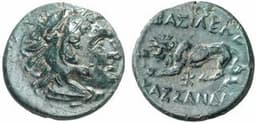
Cassander
Emperor · Ancient
49.7Total
Basic Information
Born
431
-355
Died
518
-297
Era
Ancient
Ancient
Nationality
Byzantine Empire
Macedon
Occupation
Emperor
Emperor
Civilization
Western
Western
Score Comparison
Military (10%)
47.5
47.5
Political (20%)
62.7
54.7
Influence (20%)
55.7
46.3
Legacy (20%)
45.8
38.3
Leadership (15%)
79.8
64.0
Strategy (15%)
43.3
60.0
TOTAL
55.8
49.7
Anastasius I — Complete Timeline
498 AD
Suppressed the Isaurian RevoltWar◆ Major
Anastasius defeated the Isaurian rebels who had opposed his accession. The war ended with the capture and execution of the rebel leaders, and the Isaurians were forcibly resettled, ending their threat to imperial authority.
RebellionCivil WarByzantine Empire
Impact: national
Abolished the chrysargyron taxReform◆ Major
Emperor Anastasius I abolished the chrysargyron, a highly unpopular tax on trade and commerce that was collected every four years. This reform, along with others, improved the financial stability of the empire and left a substantial surplus in the treasury upon his death.
Tax ReformEconomic PolicyByzantine Empire
Impact: nationalprogressive
Reformed the coinage systemReform◆ Major
Anastasius introduced a new system of bronze coinage, including the follis and its fractions. This reform stabilized the currency and facilitated trade, becoming a standard for Byzantine coinage for centuries.
Currency ReformEconomic PolicyByzantine Empire
Impact: regionalconstructive
507 AD
Built the Anastasian WallOther
Anastasius ordered the construction of a long defensive wall, the Anastasian Wall, stretching from the Sea of Marmara to the Black Sea. The wall was intended to protect Constantinople from barbarian incursions, but it proved difficult to maintain and was eventually abandoned.
FortificationDefenseByzantine Empire
Cassander — Complete Timeline
316 BC
Foundation of CassandreiaCultural
Cassander founded the city of Cassandreia on the site of the destroyed city of Potidaea in Chalcidice. The city became a major urban center in Macedonia and served as a symbol of his power and Hellenistic patronage.
MacedonCity FoundationHellenistic
constructive
Rebuilding of ThebesCultural
Cassander ordered the rebuilding of Thebes, which had been destroyed by Alexander the Great in 335 BC. This act was intended to gain favor with the Greek city-states and to counter the legacy of Alexander, but it also demonstrated Cassander's political ambitions.
MacedonGreeceReconstruction
Impact: regionalconstructive
309 BC
Execution of Alexander IV and RoxanaPolitical Action◆ Major
Cassander ordered the murder of Alexander IV, the son of Alexander the Great, and his mother Roxana. This act eliminated the last Argead heirs and allowed Cassander to claim the throne of Macedonia, though he faced opposition from other Diadochi.
DiadochiMacedonDynastic Murder
Impact: regionaldestructive
301 BC
Battle of IpsusWar◆ Major
Cassander participated in the coalition against Antigonus I at Ipsus. His forces contributed to the victory, but he did not gain significant territory. The battle secured his position in Macedonia and Greece, though he died a few years later.
DiadochiBattleMacedon
Impact: regional
Expert Analysis
Origins
Anastasius I (born c. 430 AD) was a native of Dyrrhachium in the Roman province of Epirus Nova. He came from a modest family, his father being a minor official. He served as a silentiary (a court usher) before being elevated to the throne. His early career was administrative, giving him expertise in fiscal matters.
Cassander (c. 355–297 BC) was the son of Antipater, a trusted general of Philip II and Alexander the Great. Born into the Macedonian elite, he was educated in the arts of war and politics. After Antipater's death in 319 BC, Cassander inherited his father's position in Macedonia, but faced immediate challenges from rival generals.
Rise to Power
Anastasius I rose to power in 491 AD after the death of Emperor Zeno. He was chosen by Empress Ariadne, who married him to secure her position. His accession was contested by the Isaurian faction, which had supported Zeno. Anastasius suppressed the Isaurian Revolt (492–497 AD) with military force, defeating the rebels and exiling them to Thrace.
Cassander's rise was more brutal. After Antipater's death, Cassander allied with Ptolemy and Lysimachus against Polyperchon, who had been appointed regent. He seized control of Macedonia in 317 BC, executing Olympias, Alexander's mother. By 310 BC, he ordered the murder of Alexander IV and Roxana, eliminating the last Argead heirs. This allowed him to claim the throne, though he never fully legitimized his rule.
Leadership & Governance
Anastasius I was a reformer focused on fiscal stability. He abolished the chrysargyron tax (498 AD), a burdensome tax on trade, which stimulated commerce. He reformed the bronze coinage, introducing the follis, which standardized currency and reduced inflation. His administrative improvements left the treasury with a surplus of 320,000 pounds of gold at his death. In foreign policy, he fortified the empire by building the Anastasian Wall (c. 500 AD) to protect Constantinople from barbarian incursions.
Cassander's governance was pragmatic but ruthless. He rebuilt Thebes (316 BC) to gain Greek favor, founding Cassandreia (316 BC) as a new city. He maintained control through military garrisons and alliances. However, his rule was marked by instability; he failed to establish a durable dynasty. His political score of 54.7 reflects his ability to hold power but lack of lasting reforms.
Triumph & Tragedy
Anastasius I's greatest success was his financial reform, which stabilized the Byzantine economy for decades. His abolition of the chrysargyron was widely popular. However, his religious policy caused turmoil: he supported Monophysitism, leading to the Acacian Schism with Rome (484–519 AD) and the Revolt of Vitalian (513–515 AD). His military score of 47.5 is modest, as his campaigns were defensive.
Cassander's triumph was his survival in the chaotic Wars of the Diadochi. He participated in the Battle of Ipsus (301 BC), which defeated Antigonus I. His tragedy was his legacy of violence: the execution of Alexander IV and Roxana stained his reputation. He founded a city but failed to secure his dynasty—his sons were soon overthrown after his death (297 BC). His legacy score of 38.3 is low.
Character & Destiny
Anastasius I was cautious and fiscally prudent, earning the nickname "Anastasius the Administrator." His character favored stability over expansion, which limited his military achievements but ensured a prosperous reign. He died naturally at age 88, a rare peaceful end for a Byzantine emperor.
Cassander was ambitious and ruthless, willing to murder children to secure power. His character made him effective in the short term but isolated him from allies. He died of illness at around 58, his kingdom soon fractured. His strategic score of 60.0 shows tactical acumen, but his political score of 54.7 reflects his failure to build lasting institutions.
Legacy
Anastasius I's coinage reforms influenced Byzantine currency for centuries. The Anastasian Wall remained a defensive line until the 7th century. His fiscal policies enabled Justinian I's later conquests. He is remembered as a capable administrator who left the empire stronger.
Cassander's legacy is overshadowed by his crimes. The destruction of the Argead dynasty ended the lineage of Alexander the Great. His city foundations, like Cassandreia, survived but his name became synonymous with usurpation. Historians often rank him as a minor figure among the Diadochi.
Conclusion
Anastasius I had greater impact due to his lasting reforms and stable governance. While Cassander's actions shaped the Hellenistic period, his negative legacy and short-lived dynasty limit his influence. Anastasius's total score of 55.8 surpasses Cassander's 49.7, reflecting superior leadership and legacy. The reformist emperor's financial and administrative achievements outshine the Macedonian's brutal power plays.
Rankings
🥇
Anastasius ILeader
Mil: 47.5Pol: 62.7Inf: 55.7
55.8
🥈
Cassander
Mil: 47.5Pol: 54.7Inf: 46.3
49.7
+6.1 behind
How This Comparison Works
Algorithm
Each figure is scored on 6 dimensions (0—100 scale) based on structured historical data: Military (10%), Political (20%), Influence (20%), Legacy (20%), Leadership (15%), Strategy (15%). The weighted total produces the final ranking.
Data Sources
Scores are computed from structured sub-indicators in the database. Scale factors adjust for era (Ancient ×0.85, Modern ×1.0) and civilization size (Eastern ×1.05, Other ×0.80) to account for differences in population and military scale.
Maximum 3 Figures
Comparisons are limited to 2—3 figures to ensure readability and statistical meaningfulness.
Error Margins
±5 points per dimension — Sub-scores are derived from historical records with inherent uncertainty. Two figures within 5 points on a dimension should be considered roughly equivalent in that area.
Total Score Accuracy
±3 points overall — The weighted combination of 6 dimensions produces a total score with approximately ±3 points of uncertainty. Differences of less than 3 points are not statistically significant— the figures are effectively tied.
Known Limitations
- Historical records are incomplete and uneven across civilizations
- Figures from oral-tradition societies may be underrepresented
- Occupation labels can misclassify multi-role figures
- Scores measure capability and impact, not moral character
- Quantitative scoring is a comparison tool, not absolute truth
Capability Radar
Military (10%) — Battles & Warfare
Battles
20
55
Win Rate
25
50
Expansion
15
40
Political (20%) — Governance & Reform
Reform
85
40
Diplomacy
75
55
Economy
90
45
Influence (20%) — Cultural & Global Reach
Cultural
50
20
Global
45
15
Legacy (20%) — Historical Impact
Historical
55
30
Longevity
40
20
Leadership (15%) — Power & Stability
Tenure
70
60
Stability
80
35
Strategy (15%) — Tactics & Innovation
Strategy
35
50
Tactics
30
45
Reform
40
30
Similar Comparisons
Comments & Discussion
No comments yet. Be the first to share your thoughts!