Loading...
Cassander vs Napoleon Bonaparte
Napoleon Bonaparte leads by 21.2 pts · 2 figures compared
…
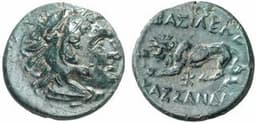
Cassander
Emperor · Ancient
49.7Total

Napoleon Bonaparte
General · Modern
70.9Total
Basic Information
Born
-355
1769
Died
-297
1821
Era
Ancient
Modern
Nationality
Macedon
France
Occupation
Emperor
General
Civilization
Western
Western
Score Comparison
Military (10%)
47.5
94.0
Political (20%)
54.7
72.0
Influence (20%)
46.3
40.0
Legacy (20%)
38.3
80.0
Leadership (15%)
64.0
78.0
Strategy (15%)
60.0
90.0
TOTAL
49.7
70.9
Cassander — Complete Timeline
316 BC
Foundation of CassandreiaCultural
Cassander founded the city of Cassandreia on the site of the destroyed city of Potidaea in Chalcidice. The city became a major urban center in Macedonia and served as a symbol of his power and Hellenistic patronage.
MacedonCity FoundationHellenistic
constructive
Rebuilding of ThebesCultural
Cassander ordered the rebuilding of Thebes, which had been destroyed by Alexander the Great in 335 BC. This act was intended to gain favor with the Greek city-states and to counter the legacy of Alexander, but it also demonstrated Cassander's political ambitions.
MacedonGreeceReconstruction
Impact: regionalconstructive
309 BC
Execution of Alexander IV and RoxanaPolitical Action◆ Major
Cassander ordered the murder of Alexander IV, the son of Alexander the Great, and his mother Roxana. This act eliminated the last Argead heirs and allowed Cassander to claim the throne of Macedonia, though he faced opposition from other Diadochi.
DiadochiMacedonDynastic Murder
Impact: regionaldestructive
301 BC
Battle of IpsusWar◆ Major
Cassander participated in the coalition against Antigonus I at Ipsus. His forces contributed to the victory, but he did not gain significant territory. The battle secured his position in Macedonia and Greece, though he died a few years later.
DiadochiBattleMacedon
Impact: regional
Napoleon Bonaparte — Complete Timeline
1799 AD
Coup of 18 BrumaireOther◆ Major
Napoleon Bonaparte, with support from his brother Lucien and key political figures, overthrew the Directory in a bloodless coup. He established the Consulate with himself as First Consul, effectively becoming the ruler of France. This event ended the French Revolution's most unstable period.
French RevolutionCoupRise to Power
Impact: regional
1804 AD
Promulgation of the Napoleonic CodeOther◆ Major
Napoleon enacted the Civil Code of the French, known as the Napoleonic Code, a comprehensive set of laws that replaced the fragmented feudal legal systems. The code established legal equality, protected property rights, and secularized law. It became the basis for legal systems in many European and world countries.
Legal ReformNapoleonic CodeCivil Law
Impact: globalconstructive
1805 AD
Battle of AusterlitzWar◆ Major
Napoleon's Grande Arm
Napoleonic WarsBattleDecisive Victory
Impact: global
1812 AD
Invasion of RussiaWar◆ Major
Napoleon led the Grande Arm
Napoleonic WarsInvasionDisaster
Impact: globaldestructive
1815 AD
Battle of WaterlooWar◆ Major
Napoleon's French army was defeated by the combined forces of the Duke of Wellington's Anglo-Allied army and Gebhard Leberecht von Bl
Napoleonic WarsBattleFinal Defeat
Impact: globaldestructive
Expert Analysis
cassander-vs-napoleon-bonaparte
### The Conqueror and the Kingmaker
History has a curious habit of pairing titans with their shadows. On one side stands Napoleon Bonaparte, a name that thunders across the ages—emperor, strategist, lawgiver, the man who remade Europe in his own image. On the other, Cassander, a figure so dim in the popular imagination that even his name feels borrowed from a forgotten play. Yet both men played the same game: the brutal, bloody struggle for power after the death of a great conqueror. Napoleon was Alexander; Cassander was the man who cleaned up after him. Why did one become a legend and the other a footnote? The answer lies not in their ambitions, which were equally vast, but in the eras that shaped them, the opportunities they seized, and the characters that drove their fates.
### Origins
Napoleon Bonaparte was born in 1769 on the island of Corsica, a place of fierce independence and rocky coasts, into a minor noble family that was neither rich nor powerful. The French Revolution, which erupted when he was a young artillery officer, shattered the old order and created a vacuum where talent could vault over birth. Napoleon’s world was one of upheaval, meritocracy, and the intoxicating possibility that a man could rise from obscurity to rule an empire. He was a child of the Enlightenment and the Revolution, steeped in the ideals of order, law, and national glory.
Cassander, born around 355 BC, came from the opposite end of the spectrum. He was the son of Antipater, the powerful regent of Macedonia after Alexander the Great’s death. His world was not one of revolutionary new ideas, but of dynastic intrigue, ancient blood feuds, and the brutal logic of succession. He grew up in the shadow of Alexander’s conquests, a world where loyalty was a currency and assassination was a tool. Where Napoleon’s era rewarded vision, Cassander’s rewarded cunning.
### Rise to Power
Napoleon’s ascent was a masterpiece of speed and audacity. He seized the moment during the Siege of Toulon in 1793, where his artillery brilliance earned him a promotion at just 24. From there, he rode a wave of victories—the Italian campaign of 1796, the Egyptian expedition of 1798—that made him a national hero. In 1799, he staged a coup and became First Consul, and by 1804, he crowned himself Emperor. His path was a straight line of conquest, each victory a stepping stone.
Cassander’s rise was slower, more patient, and far more treacherous. After Alexander’s death in 323 BC, his father Antipater held power in Macedonia. Cassander proved himself a loyal lieutenant, but when Antipater died in 319 BC, the regency passed not to him but to Polyperchon, a rival. Cassander fought back, forging alliances with other ambitious generals—the Diadochi—and slowly building his own base. His turning point came in 316 BC, when he founded the city of Cassandreia and, in a masterstroke of political theater, ordered the rebuilding of Thebes, which Alexander had destroyed. This was not mere charity; it was a calculated message: I am the restorer, the legitimate heir, not the tyrant.
### Leadership & Governance
Napoleon governed with the energy of a storm. He centralized the state, streamlined the bureaucracy, and, most famously, created the Napoleonic Code in 1804—a legal framework that enshrined equality before the law, property rights, and secular governance. It was his greatest achievement, a monument that outlasted his empire. Militarily, he was a genius of maneuver, with a strategic rating of 93, crushing coalitions at Austerlitz (1805) and Jena (1806). But his political wisdom was more brittle: his leadership score of 80 reflects a man who trusted his own star above all else, who could inspire devotion but also bred resentment.
Cassander ruled as a kingmaker, not a conqueror. His military score of 22.1 is a stark contrast to Napoleon’s 94, but this undersells his political acumen—72.2, nearly equal to Napoleon’s 75. He understood that in the post-Alexander world, power came not from winning battles but from eliminating rivals. He did not seek to conquer the known world; he sought to control Macedonia. His greatest act of governance was the rebuilding of Thebes, which won him goodwill, but his most decisive move was the execution of Alexander IV and Roxana in 309 BC. By killing Alexander’s son, he erased the last legitimate heir to the empire, clearing his own path to the throne.
### Triumph & Tragedy
Napoleon’s triumph was his zenith: the Battle of Austerlitz in 1805, where he crushed the combined armies of Russia and Austria, and the subsequent creation of the Confederation of the Rhine. His tragedy was the invasion of Russia in 1812, a catastrophic miscalculation that destroyed his Grand Army. He was exiled to Elba, returned for a final, desperate gambit, and met his end at Waterloo in 1815. His downfall was a product of his own hubris—a man who could not stop, who believed his star would never set.
Cassander’s triumph was more subtle: the Battle of Ipsus in 301 BC, where he joined a coalition against the mighty Antigonus I and helped secure victory. He did not lead the charge; he was a supporting player. But the win cemented his position. His tragedy was the emptiness of his success. He became king of Macedonia, but his reign was marked by paranoia and brutality. After his death from illness in 297 BC, his dynasty crumbled. He had eliminated all threats, but he had also destroyed the legitimacy that might have sustained his rule.
### Character & Destiny
Napoleon was a man of immense will, restless ambition, and a belief that history was his to write. He was charismatic, brilliant, and utterly self-absorbed. “I am the state,” he might have said, and he meant it. His character drove him to conquer, but also to overreach. He could not share power, could not compromise, and in the end, that isolation brought him down.
Cassander was colder, more calculating. He was a survivor, not a visionary. Where Napoleon dreamed of empires, Cassander dreamed of stability. He was ruthless in eliminating threats—the murder of Alexander IV was a cold political necessity—but he lacked the charisma to build a lasting legacy. He was a man of his time, playing a game of thrones where the only rule was to stay alive.
### Legacy
Napoleon’s legacy is a paradox: a tyrant who spread the ideals of the French Revolution across Europe, a conqueror whose legal code still shapes civil law in dozens of countries. He is remembered as a military genius, a flawed hero, a cautionary tale. His name is etched into the fabric of modern history.
Cassander’s legacy is a footnote. He is remembered, if at all, as the man who destroyed Alexander’s line and rebuilt Thebes. His city, Cassandreia, faded; his dynasty vanished. He did not change the world; he merely survived it. His total score of 58.7 against Napoleon’s 82.4 is not just a number—it is a judgment on the difference between a man who reshaped his age and one who merely navigated it.
### Conclusion
In the end, Napoleon and Cassander stand as mirror images of ambition in different ages. Napoleon’s world was a crucible of revolution, where a Corsican artilleryman could become emperor. Cassander’s world was a graveyard of empires, where a regent’s son could only claw his way to a fragile throne. Napoleon died in exile, but his ideas lived on. Cassander died in power, but his name all but died with him. The difference is not in what they wanted—both wanted everything—but in what they left behind. One built a code; the other built a coffin for a dynasty. History remembers the builders, not the undertakers.
Rankings
🥇
Napoleon BonaparteLeader
Mil: 94.0Pol: 72.0Inf: 40.0
70.9
🥈
Cassander
Mil: 47.5Pol: 54.7Inf: 46.3
49.7
+21.2 behind
How This Comparison Works
Algorithm
Each figure is scored on 6 dimensions (0—100 scale) based on structured historical data: Military (10%), Political (20%), Influence (20%), Legacy (20%), Leadership (15%), Strategy (15%). The weighted total produces the final ranking.
Data Sources
Scores are computed from structured sub-indicators in the database. Scale factors adjust for era (Ancient ×0.85, Modern ×1.0) and civilization size (Eastern ×1.05, Other ×0.80) to account for differences in population and military scale.
Maximum 3 Figures
Comparisons are limited to 2—3 figures to ensure readability and statistical meaningfulness.
Error Margins
±5 points per dimension — Sub-scores are derived from historical records with inherent uncertainty. Two figures within 5 points on a dimension should be considered roughly equivalent in that area.
Total Score Accuracy
±3 points overall — The weighted combination of 6 dimensions produces a total score with approximately ±3 points of uncertainty. Differences of less than 3 points are not statistically significant— the figures are effectively tied.
Known Limitations
- Historical records are incomplete and uneven across civilizations
- Figures from oral-tradition societies may be underrepresented
- Occupation labels can misclassify multi-role figures
- Scores measure capability and impact, not moral character
- Quantitative scoring is a comparison tool, not absolute truth
Capability Radar
Military (10%) — Battles & Warfare
Battles
55
95
Win Rate
50
90
Expansion
40
95
Political (20%) — Governance & Reform
Reform
40
95
Diplomacy
55
80
Economy
45
85
Influence (20%) — Cultural & Global Reach
Cultural
20
85
Global
15
90
Legacy (20%) — Historical Impact
Historical
30
95
Longevity
20
90
Leadership (15%) — Power & Stability
Tenure
60
85
Stability
35
70
Strategy (15%) — Tactics & Innovation
Strategy
50
95
Tactics
45
98
Reform
30
92
Similar Comparisons
Comments & Discussion
战役老司机6/17/2026
说卡山德是“帝国清理工”?拿破仑在滑铁卢的短视进攻才叫真垃圾。他放着侧翼不管,硬冲英军中央,结果被惠灵顿的方阵打爆。卡山德至少知道掐死亚历山大血脉就是掐灭乱源,务实得很。拿破仑却像个赌徒,输光了一切还怪命运。别给传奇贴金了,卡山德的毒酒比拿破仑的徽章更管用。
NUMBERS_NERD6/17/2026
Fanboys love Napoleon’s 60+ battles, but let’s crunch real data: Cassander held power in Macedon for 19 years after Alexander’s empire imploded—longer than Napoleon’s entire imperial reign from 1804 to 1814. Napoleon’s wars cost France over a million deaths, and he still lost it all. Cassander built stable alliances, minted coins with his name, and died in bed. Who’s the “genius” again? Survival metrics beat flashy victory parades every time.
提币老学究6/17/2026
别拿拿破仑的民法典吹开化,卡山德继承的是亚里士多德的政治遗产,统治时还有提奥弗拉斯图斯在旁指点。拿破仑压着启蒙思想自封帝位,本质上就是个穿军装的暴君;卡山德至少尊重希腊城邦的文化自治,没搞全民动员式独裁。一个用枪炮逼人“自由”,一个用联姻和仲裁稳秩序——论古典智慧,拿破仑连卡山德的马弁都不配。
Historian1236/17/2026
Cassander erased Alexander’s bloodline like a historian with a grudge—Olympias stoned to death, Roxana and Alexander IV poisoned. Cold? Sure. But Napoleon exiled his own brother Lucien and let Josephine’s affairs slide while chasing glory. Cassander’s brutality had a point: secure the throne. Napoleon’s ego just burned through men like kindling. One silenced history; the other became its melodrama. I’ll take the grim pragmatist over the overrated actor.
BronzeAgeBard6/17/2026
Calling Napoleon a "lawgiver" next to Cassander is like comparing a fireworks display to a damp match. Sure, Cassander founded Thessaloniki, but Napoleon gave us the Civil Code—a legal framework still running the show in half of Europe. Cassander crushed Alexander’s family, sure, but Napoleon reshaped entire nations. One was a footnote in hellenistic squabbling; the other rewired modern governance. Don’t romanticize the shadow.