Loading...
Andrea Doria vs Raymond of Toulouse
Andrea Doria leads by 11.2 pts · 2 figures compared
…

Andrea Doria
General · Medieval
62.7Total
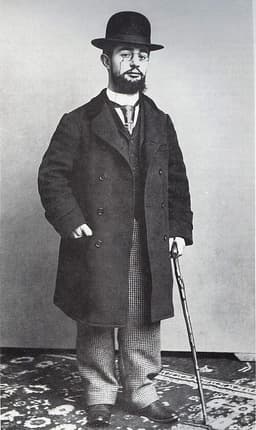
Raymond of Toulouse
General · Medieval
51.5Total
Basic Information
Born
1466
1041
Died
1560
1105
Era
Medieval
Medieval
Nationality
Italy
France
Occupation
General
General
Civilization
Western
Western
Score Comparison
Military (10%)
67.3
70.0
Political (20%)
72.0
40.8
Influence (20%)
58.3
51.0
Legacy (20%)
52.0
44.2
Leadership (15%)
72.0
62.0
Strategy (15%)
67.8
52.5
TOTAL
62.7
51.5
Andrea Doria — Complete Timeline
1528 AD
Reestablishment of Genoese independencePolitical Action
Doria switched allegiance from France to the Holy Roman Empire, using his fleet to expel the French from Genoa. He reestablished the Genoese Republic under a new constitution, becoming its de facto ruler.
GenoaIndependenceConstitution
Impact: regionalconstructive
1532 AD
Naval campaign against the Ottoman EmpireWar◆ Major
Doria led a combined Spanish-Genoese fleet against the Ottoman admiral Hayreddin Barbarossa. He captured several fortresses in Greece, but failed to defeat Barbarossa decisively. The campaign was a mixed success.
Ottoman WarsNaval CampaignBarbarossa
Impact: regional
1535 AD
Capture of TunisWar◆ Major
Doria commanded the fleet for Emperor Charles V's expedition to capture Tunis from the Ottoman corsair Barbarossa. The city was taken and sacked, temporarily securing the central Mediterranean for Christian powers.
Ottoman WarsTunisExpedition
Impact: regional
Raymond of Toulouse — Complete Timeline
1096 AD
Leadership of the First CrusadeWar◆ Major
Raymond of Toulouse was a principal leader of the First Crusade, commanding a large army from southern France. He participated in the siege of Nicaea and the Battle of Dorylaeum, and was a key figure in the capture of Antioch in 1098.
CrusadeMilitary Campaign
Impact: regional
1098 AD
Siege of AntiochWar◆ Major
Raymond played a leading role in the siege of Antioch, which lasted from October 1097 to June 1098. After the city's capture, he claimed the citadel but was outmaneuvered by Bohemond, who became Prince of Antioch.
CrusadeSiege
Impact: regional
1099 AD
Refusal of the Crown of JerusalemPolitical Action◆ Major
After the capture of Jerusalem in July 1099, Raymond was offered the crown but refused, reportedly out of piety. Godfrey of Bouillon was elected instead, taking the title 'Advocate of the Holy Sepulchre.'
Crusader StatesPolitics
Impact: regional
1102 AD
Siege of TripoliWar◆ Major
Raymond began the siege of Tripoli in 1102, establishing a fortified camp called Mount Pilgrim. He died in 1105 before the city fell, but his efforts laid the groundwork for the creation of the County of Tripoli under his son.
CrusadeSiegeCrusader States
Impact: regional
Expert Analysis
Origins
Andrea Doria was born in 1466 into an aristocratic Genoese family. Orphaned early, he became a mercenary soldier and later a naval commander. His early career included service under Pope Innocent VIII and various Italian princes, which gave him experience in both land and sea warfare.
Raymond of Toulouse was born around 1041 as the son of Count Pons of Toulouse and Almodis de la Marche. He inherited the county of Toulouse in 1094 and was one of the most powerful nobles in southern France. His background as a territorial lord shaped his approach to leadership.
Rise to Power
Doria's rise came through his naval prowess. In 1528, he switched allegiance from France to the Holy Roman Empire, using his fleet to expel the French from Genoa. This act reestablished the Genoese Republic and made Doria its effective ruler. He was appointed admiral of the Imperial fleet and became a key ally of Emperor Charles V.
Raymond rose to prominence as a leader of the First Crusade after Pope Urban II's call in 1095. He was one of the first to take the cross and led a large army from Provence to the East. His wealth and status made him a natural leader among the crusader princes.
Leadership & Governance
Doria governed Genoa as a behind-the-scenes power, reforming its constitution to create a stable oligarchy. He maintained Genoa's independence through careful diplomacy, balancing between France and the Empire. His leadership style was pragmatic and focused on preserving his own influence.
Raymond's leadership was marked by piety and ambition. He refused the crown of Jerusalem in 1099, reportedly out of humility, but he was also a shrewd politician who sought to establish his own principality in the East. His governance of Toulouse was traditional feudal rule.
Triumph & Tragedy
Doria's greatest triumph was the reestablishment of Genoese independence and his role in the Battle of Lepanto (1571), where he commanded the right wing. However, his tactical decisions at Lepanto were criticized for creating a gap that allowed Ottomans to break through. His capture of Tunis in 1535 was a success but temporary.
Raymond's triumph was his leadership during the First Crusade, especially at the siege of Antioch (1097-1098). His tragedy was his failure to secure the crown of Jerusalem and his death in 1105 before capturing Tripoli, a goal he had pursued for years.
Character & Destiny
Doria was calculating and patient, living to age 94. His character allowed him to navigate the treacherous politics of Renaissance Italy. Raymond was devout but prideful, often clashing with other crusader leaders. His refusal of the Jerusalem crown may have been genuine piety or political miscalculation.
Legacy
Doria's legacy is as the restorer of Genoese liberty and a naval reformer. The Doria family remained powerful for centuries. His scores reflect a strong political (72.0) and leadership (72.0) impact, but lower influence (58.3) and legacy (52.0).
Raymond is remembered as a key crusader leader. The County of Tripoli, established by his heirs, lasted until 1289. His military score (70.0) is higher than Doria's (67.3), but his political (40.8) and legacy (44.2) scores are lower.
Conclusion
While Raymond of Toulouse was a pivotal figure in the First Crusade, Andrea Doria had a greater overall impact. Doria's total score of 62.7 exceeds Raymond's 51.5 by 11.2 points. Doria's political and leadership skills allowed him to shape Genoa's destiny for decades, whereas Raymond's influence was more localized and short-lived. Doria's legacy as a statesman and admiral endures, making him the more significant historical figure.
Rankings
🥇
Andrea DoriaLeader
Mil: 67.3Pol: 72.0Inf: 58.3
62.7
🥈
Raymond of Toulouse
Mil: 70.0Pol: 40.8Inf: 51.0
51.5
+11.2 behind
How This Comparison Works
Algorithm
Each figure is scored on 6 dimensions (0—100 scale) based on structured historical data: Military (10%), Political (20%), Influence (20%), Legacy (20%), Leadership (15%), Strategy (15%). The weighted total produces the final ranking.
Data Sources
Scores are computed from structured sub-indicators in the database. Scale factors adjust for era (Ancient ×0.85, Modern ×1.0) and civilization size (Eastern ×1.05, Other ×0.80) to account for differences in population and military scale.
Maximum 3 Figures
Comparisons are limited to 2—3 figures to ensure readability and statistical meaningfulness.
Error Margins
±5 points per dimension — Sub-scores are derived from historical records with inherent uncertainty. Two figures within 5 points on a dimension should be considered roughly equivalent in that area.
Total Score Accuracy
±3 points overall — The weighted combination of 6 dimensions produces a total score with approximately ±3 points of uncertainty. Differences of less than 3 points are not statistically significant— the figures are effectively tied.
Known Limitations
- Historical records are incomplete and uneven across civilizations
- Figures from oral-tradition societies may be underrepresented
- Occupation labels can misclassify multi-role figures
- Scores measure capability and impact, not moral character
- Quantitative scoring is a comparison tool, not absolute truth
Capability Radar
Military (10%) — Battles & Warfare
Battles
75
55
Win Rate
70
50
Expansion
60
50
Political (20%) — Governance & Reform
Reform
55
30
Diplomacy
75
55
Economy
60
40
Influence (20%) — Cultural & Global Reach
Cultural
55
40
Global
55
35
Legacy (20%) — Historical Impact
Historical
60
55
Longevity
50
40
Leadership (15%) — Power & Stability
Tenure
70
60
Stability
50
45
Strategy (15%) — Tactics & Innovation
Strategy
78
60
Tactics
80
45
Reform
65
20
Similar Comparisons
Comments & Discussion
No comments yet. Be the first to share your thoughts!