Loading...
Minamoto no Yoritomo vs Raymond of Toulouse
Minamoto no Yoritomo leads by 11.8 pts · 2 figures compared
…

Minamoto no Yoritomo
General · Medieval
63.3Total
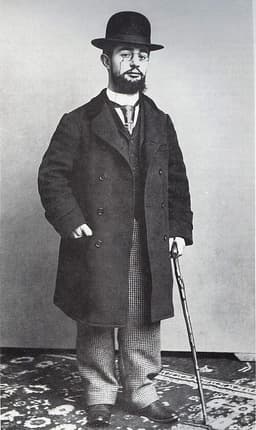
Raymond of Toulouse
General · Medieval
51.5Total
Basic Information
Born
1147
1041
Died
1199
1105
Era
Medieval
Medieval
Nationality
Japan
France
Occupation
General
General
Civilization
Eastern
Western
Score Comparison
Military (10%)
67.5
70.0
Political (20%)
60.0
40.8
Influence (20%)
55.0
51.0
Legacy (20%)
72.0
44.2
Leadership (15%)
62.0
62.0
Strategy (15%)
65.4
52.5
TOTAL
63.3
51.5
Minamoto no Yoritomo — Complete Timeline
1180 AD
Genpei War LeadershipWar
Minamoto no Yoritomo emerged as the leader of the Minamoto clan during the Genpei War against the Taira. He raised an army in the Kant
Genpei WarKamakuraMinamoto
Impact: national
1185 AD
Appointment of Shugo and JitōReform◆ Major
Yoritomo appointed shugo (military governors) and jit
FeudalismShugoJitō
Impact: nationalconstructive
Establishment of the Kamakura ShogunatePolitical Action
After the Genpei War, Yoritomo established the Kamakura shogunate, a military government based in Kamakura. He received the title of sh
ShogunateKamakuraMilitary Government
Impact: nationalconstructive
Exile of Minamoto no YoshitsunePolitical Action◆ Major
Yoritomo ordered the pursuit and eventual death of his brother Minamoto no Yoshitsune, who had been a key general in the Genpei War. Yoritomo viewed Yoshitsune as a political rival and used his authority to eliminate him, consolidating his own power within the Minamoto clan.
Brother ConflictYoshitsunePower Consolidation
Impact: nationaldestructive
1199 AD
Death from Horse FallOther◆ Major
Minamoto no Yoritomo died after falling from his horse during a ceremony. His death led to a power struggle within the Kamakura shogunate, as his sons were young and inexperienced. The H
DeathHōjō RegencyMinamoto Decline
Impact: nationaltragic
Raymond of Toulouse — Complete Timeline
1096 AD
Leadership of the First CrusadeWar◆ Major
Raymond of Toulouse was a principal leader of the First Crusade, commanding a large army from southern France. He participated in the siege of Nicaea and the Battle of Dorylaeum, and was a key figure in the capture of Antioch in 1098.
CrusadeMilitary Campaign
Impact: regional
1098 AD
Siege of AntiochWar◆ Major
Raymond played a leading role in the siege of Antioch, which lasted from October 1097 to June 1098. After the city's capture, he claimed the citadel but was outmaneuvered by Bohemond, who became Prince of Antioch.
CrusadeSiege
Impact: regional
1099 AD
Refusal of the Crown of JerusalemPolitical Action◆ Major
After the capture of Jerusalem in July 1099, Raymond was offered the crown but refused, reportedly out of piety. Godfrey of Bouillon was elected instead, taking the title 'Advocate of the Holy Sepulchre.'
Crusader StatesPolitics
Impact: regional
1102 AD
Siege of TripoliWar◆ Major
Raymond began the siege of Tripoli in 1102, establishing a fortified camp called Mount Pilgrim. He died in 1105 before the city fell, but his efforts laid the groundwork for the creation of the County of Tripoli under his son.
CrusadeSiegeCrusader States
Impact: regional
Expert Analysis
Origins
Minamoto no Yoritomo was born in 1147 into the Minamoto clan, a powerful samurai family in Heian-era Japan. His father, Minamoto no Yoshitomo, was killed in the Heiji Rebellion of 1160, forcing young Yoritomo into exile in Izu Province under the protection of the Hōjō clan. His formative years were spent in relative obscurity, but he absorbed the martial traditions of the samurai and developed a network of allies among the eastern warrior families. In contrast, Raymond of Toulouse was born around 1041 into the House of Toulouse, one of the most powerful noble families in southern France. He inherited the County of Toulouse in 1094, controlling vast lands from the Rhône to the Pyrenees. Raymond was deeply influenced by the Gregorian Reform and the Cluniac movement, which shaped his piety and his decision to join the First Crusade. His upbringing was that of a feudal lord, with experience in local conflicts but little exposure to large-scale warfare.
Rise to Power
Yoritomo's rise began in 1180 when he answered Prince Mochihito's call to overthrow the Taira clan. He raised an army in the Kantō region and established a base at Kamakura. The Genpei War (1180-1185) saw Yoritomo emerge as the supreme leader of the Minamoto, but his path was marked by ruthless consolidation. He eliminated rivals within his own family, most notably his brother Yoshitsune, whose military brilliance had won key battles like Ichinotani (1184) and Dan-no-ura (1185). By 1185, Yoritomo controlled Japan's military apparatus, and in 1192 he received the title of shōgun from the emperor. Raymond's rise to prominence came through the First Crusade, which he joined in 1096. As one of the wealthiest and most experienced crusader leaders, he commanded the largest contingent from southern France. He participated in the siege of Nicaea (1097) and played a key role at the Battle of Dorylaeum. His leadership at the siege of Antioch (1097-1098) was crucial, though he clashed with other crusader leaders like Bohemond of Taranto. After Antioch's capture, Raymond claimed the citadel but was forced to yield it to Bohemond. His refusal of the crown of Jerusalem in 1099, citing piety, and his subsequent focus on Tripoli, where he began a siege in 1102, defined his later career.
Leadership & Governance
Yoritomo's leadership style was autocratic and pragmatic. He established the Kamakura shogunate, a military government that centralized power through the appointment of shugo (military governors) and jitō (stewards) to provinces and estates. This system allowed the samurai class to gain administrative control, collecting taxes and maintaining order. Yoritomo's political score of 60.0 reflects his effective but often brutal consolidation. He eliminated potential threats, including his own brothers, and relied on the Hōjō clan as regents for his sons. In contrast, Raymond's governance was more feudal and less institutional. As count of Toulouse, he ruled through traditional vassal relationships. On crusade, his leadership was charismatic but often contentious; he struggled to maintain unity among the crusader factions. His refusal of the Jerusalem crown showed a preference for piety over political ambition, but his establishment of the County of Tripoli (after his death) laid the foundation for a crusader state. Raymond's political score of 40.8 reflects his limited long-term governance impact compared to Yoritomo's systemic reforms.
Triumph & Tragedy
Yoritomo's greatest triumph was founding the Kamakura shogunate, which lasted until 1333 and defined Japan's medieval period. His military score of 67.5 reflects his success in the Genpei War, but his true strength was political consolidation. His greatest tragedy was his death from a horse fall in 1199, which led to power struggles and the eventual decline of his direct line. His sons were weak rulers, and the Hōjō regents took effective control. Raymond's triumph was his leadership in the First Crusade, particularly at Antioch and Jerusalem. His military score of 70.0 is slightly higher than Yoritomo's, reflecting his battlefield experience. However, his refusal of the Jerusalem crown and his failure to secure Tripoli before his death in 1105 limited his achievements. His greatest tragedy was dying before completing the siege of Tripoli, leaving the city to be captured later by others. Both men faced betrayal and internal conflict: Yoritomo from his brother Yoshitsune, Raymond from fellow crusaders like Bohemond.
Character & Destiny
Yoritomo was calculating, suspicious, and ruthless. He systematically eliminated rivals, including family members, to secure his power. His decision to exile and kill Yoshitsune, despite his brother's crucial role in the Genpei War, shows his priority of stability over loyalty. This paranoia ultimately shaped his legacy as a founder but also led to the Hōjō usurpation. Historical assessments often view him as a political genius but a cold pragmatist. Raymond was pious, stubborn, and ambitious but constrained by his religious ideals. His refusal of the Jerusalem crown was likely sincere, but it also reflected his inability to compromise with other leaders. His character led to a legacy of incomplete achievements: he was a key figure in the Crusade but never became king. His destiny was to be remembered as a crusader leader, not a founder of a lasting state. In terms of leadership scores, both earned 62.0, indicating similar effectiveness but in different contexts.
Legacy
Yoritomo's legacy is immense. He established the samurai as the ruling class for nearly 700 years, and his shogunate system evolved into the Tokugawa shogunate. The shugo and jitō system became the basis of feudal governance in Japan. His influence score of 55.0 and legacy score of 72.0 reflect his enduring impact. Raymond's legacy is more modest. He is remembered as a leader of the First Crusade, but his contributions were often overshadowed by Godfrey of Bouillon and Bohemond. The County of Tripoli, established after his death, lasted until 1289. His legacy score of 44.2 shows his limited long-term influence. Both men shaped medieval history, but Yoritomo's institutional changes had a deeper and longer-lasting effect.
Conclusion
Minamoto no Yoritomo had a greater impact than Raymond of Toulouse. His total score of 63.3 versus 51.5 reflects his superior political and legacy scores. While Raymond's military score (70.0) slightly edges Yoritomo's (67.5), Yoritomo's establishment of the Kamakura shogunate fundamentally transformed Japan's political structure, creating a military government that lasted centuries. Raymond's contributions to the Crusades were significant but did not create a lasting system. Yoritomo's legacy of samurai rule and feudal governance is a cornerstone of Japanese history, while Raymond's achievements are part of a broader, shorter-lived crusader movement. The data supports the conclusion that Yoritomo's influence was more profound and enduring.
Rankings
🥇
Minamoto no YoritomoLeader
Mil: 67.5Pol: 60.0Inf: 55.0
63.3
🥈
Raymond of Toulouse
Mil: 70.0Pol: 40.8Inf: 51.0
51.5
+11.8 behind
How This Comparison Works
Algorithm
Each figure is scored on 6 dimensions (0—100 scale) based on structured historical data: Military (10%), Political (20%), Influence (20%), Legacy (20%), Leadership (15%), Strategy (15%). The weighted total produces the final ranking.
Data Sources
Scores are computed from structured sub-indicators in the database. Scale factors adjust for era (Ancient ×0.85, Modern ×1.0) and civilization size (Eastern ×1.05, Other ×0.80) to account for differences in population and military scale.
Maximum 3 Figures
Comparisons are limited to 2—3 figures to ensure readability and statistical meaningfulness.
Error Margins
±5 points per dimension — Sub-scores are derived from historical records with inherent uncertainty. Two figures within 5 points on a dimension should be considered roughly equivalent in that area.
Total Score Accuracy
±3 points overall — The weighted combination of 6 dimensions produces a total score with approximately ±3 points of uncertainty. Differences of less than 3 points are not statistically significant— the figures are effectively tied.
Known Limitations
- Historical records are incomplete and uneven across civilizations
- Figures from oral-tradition societies may be underrepresented
- Occupation labels can misclassify multi-role figures
- Scores measure capability and impact, not moral character
- Quantitative scoring is a comparison tool, not absolute truth
Capability Radar
Military (10%) — Battles & Warfare
Battles
45
55
Win Rate
55
50
Expansion
60
50
Political (20%) — Governance & Reform
Reform
85
30
Diplomacy
75
55
Economy
65
40
Influence (20%) — Cultural & Global Reach
Cultural
80
40
Global
70
35
Legacy (20%) — Historical Impact
Historical
85
55
Longevity
85
40
Leadership (15%) — Power & Stability
Tenure
70
60
Stability
60
45
Strategy (15%) — Tactics & Innovation
Strategy
65
60
Tactics
40
45
Reform
75
20
Similar Comparisons
Comments & Discussion
No comments yet. Be the first to share your thoughts!