Loading...
Andrej Plenkovic vs Julius Caesar
Julius Caesar leads by 33.2 pts · 2 figures compared
…
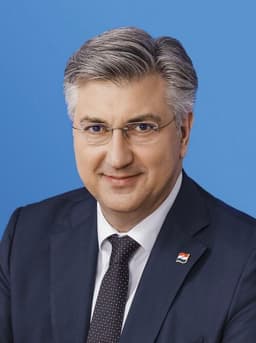
Andrej Plenkovic
Politician · Modern
49.6Total

Julius Caesar
General · Ancient
82.8Total
Basic Information
Born
1970
-100
Died
—
-44
Era
Modern
Ancient
Nationality
Croatia
Roman Republic
Occupation
Politician
General
Civilization
Western
Western
Score Comparison
Military (10%)
49.3
88.0
Political (20%)
62.7
78.0
Influence (20%)
47.9
85.0
Legacy (20%)
36.7
82.0
Leadership (15%)
66.0
80.0
Strategy (15%)
42.6
85.0
TOTAL
49.6
82.8
Andrej Plenkovic — Complete Timeline
2016 AD
Appointed Prime Minister of CroatiaPolitical Action◆ Major
Plenkovic was appointed as the Prime Minister of Croatia, leading a coalition government of the Croatian Democratic Union (HDZ) and the Bridge of Independent Lists (Most). His government focused on economic recovery, tax reform, and EU integration.
AppointmentPrime MinisterCoalition
Impact: national
2020 AD
Croatia assumed the rotating presidency of the Council of the European UnionPolitical Action◆ Major
Under Plenkovic's leadership, Croatia held the rotating presidency of the Council of the EU. The presidency managed the EU's response to the COVID-19 pandemic, including the adoption of the NextGenerationEU recovery fund.
EU PresidencyCOVID-19Recovery Fund
Impact: regionalconstructive
Re-elected Prime Minister of CroatiaPolitical Action◆ Major
Plenkovic was re-elected as Prime Minister after the HDZ won the parliamentary election. He formed a new government with the support of minority parties, continuing his focus on economic recovery and EU funds.
Re-electionPrime MinisterEU Funds
Impact: national
2023 AD
Croatia adopted the euro as its currencyPolitical Action
Under Plenkovic's government, Croatia adopted the euro as its official currency, replacing the kuna. This was a major step in economic integration with the EU, facilitating trade and travel.
Euro AdoptionEconomic IntegrationEU
Impact: regionalconstructive
Julius Caesar — Complete Timeline
58 BC
Gallic WarsWar◆ Major
Caesar, as proconsul of Gaul, launched a series of campaigns that conquered all of Gaul (modern France, Belgium, and parts of Switzerland). He fought numerous battles, including against the Helvetii, the Belgae, and the Gallic chieftain Vercingetorix. The wars brought immense wealth and a loyal army to Caesar.
Gallic WarsConquestRoman Expansion
Impact: regional
49 BC
Crossing the RubiconPolitical Action◆ Major
Caesar led Legio XIII across the Rubicon River into Italy, defying the Roman Senate's order to disband his army. This act triggered a civil war against Pompey and the Optimates, ultimately leading to Caesar's dictatorship and the end of the Roman Republic.
Roman Civil WarEnd of RepublicPower Struggle
Impact: global
48 BC
Battle of PharsalusWar◆ Major
Caesar's outnumbered army defeated the larger forces of Pompey the Great at Pharsalus in Greece. Caesar's tactical use of a reserve line to counter Pompey's cavalry charge proved decisive. Pompey fled to Egypt, where he was assassinated, leaving Caesar as the undisputed master of the Roman world.
Roman Civil WarBattleDecisive Victory
Impact: regional
44 BC
Appointment as Dictator for LifePolitical Action◆ Major
The Roman Senate appointed Caesar dictator perpetuo (dictator for life), granting him unprecedented personal power. This move concentrated military, legislative, and judicial authority in one person, effectively ending the Roman Republic's traditional system of checks and balances and alarming many senators.
DictatorshipEnd of RepublicPower Consolidation
Impact: regionaldestructive
Assassination on the Ides of MarchPolitical Action◆ Major
A group of Roman senators, led by Marcus Junius Brutus and Gaius Cassius Longinus, stabbed Caesar to death at a meeting of the Senate in the Theatre of Pompey. The assassination was intended to restore the Republic, but instead triggered another civil war that led to the rise of the Roman Empire.
AssassinationRoman PoliticsEnd of Republic
Impact: globaldestructive
Expert Analysis
andrej-plenkovic-vs-julius-caesar
### The Rubicon and the Euro: Two Paths to Power
On a winter day in January, 49 BCE, Julius Caesar stood at the banks of a small river in northern Italy. The Rubicon was little more than a stream, but crossing it meant civil war, the end of the Roman Republic, and the beginning of an empire. He hesitated, then gave the order. Twenty centuries later, on a crisp January morning in 2023, Andrej Plenkovic stood in a square in Zagreb as Croatia officially adopted the euro. There was no army behind him, no bloodshed, only the quiet clinking of new coins. Both men crossed a line that day, but the lines were drawn in vastly different materials: one in ambition and iron, the other in economic policy and treaty negotiations. How did two leaders from the same Western civilization, separated by two thousand years, come to reshape their worlds so differently?
### Origins
Julius Caesar was born into the chaos of the late Roman Republic, a world of crumbling aristocratic norms and endless civil strife. His family, the Julii, claimed descent from the goddess Venus, but they were not among the wealthiest or most powerful. His father died when Caesar was sixteen, leaving him to navigate a society where a man's worth was measured by his military conquests, his oratory, and his ability to forge alliances. The republic was a battlefield of ambition, and Caesar learned early that survival meant mastering both the sword and the word.
Andrej Plenkovic was born in 1970 in Zagreb, then part of socialist Yugoslavia. His father was a diplomat, which gave the young Plenkovic a cosmopolitan upbringing, but his world was one of bureaucratic stability, not martial glory. By the time he entered politics, Yugoslavia had dissolved in a brutal war, and Croatia was a small, independent nation seeking its place in a European Union still healing from its own divisions. Plenkovic came of age in an era where power was measured not by legions but by parliamentary seats, not by conquest but by consensus.
### Rise to Power
Caesar's rise was a masterclass in audacity. He borrowed enormous sums to fund lavish games and bribe key supporters, then secured a governorship in Gaul. There, over eight years, he fought more than thirty battles, conquered a territory larger than Italy, and built a loyal army that worshipped him. When the Senate ordered him to disband his forces, he chose the Rubicon. The gamble paid off: within four years, he was dictator for life.
Plenkovic’s ascent was quieter but no less strategic. He studied law, joined the Croatian diplomatic service, and spent years in Brussels as a Member of the European Parliament. When the Croatian Democratic Union (HDZ) needed a leader after a corruption scandal, Plenkovic emerged as a clean, technocratic figure who could navigate the labyrinth of EU politics. In 2016, he became Prime Minister, not by crossing a river with an army, but by building a coalition and winning a vote of confidence.
### Leadership & Governance
Caesar governed as a revolutionary reformer. He centralized the Roman state, reformed the calendar, granted citizenship to provincials, and launched massive public works. His military genius was undeniable—he defeated Pompey’s larger forces at Pharsalus and crushed the remnants of the old order. But his rule was autocratic. He appointed himself dictator for ten years, then for life, and packed the Senate with his supporters. The old republic’s institutions became a hollow shell.
Plenkovic governs as a manager of a modern European state. His leadership style is cautious, consensus-driven, and deeply institutional. Under his watch, Croatia joined the Schengen Area and adopted the euro in 2023, milestones that required years of negotiation, budget discipline, and bureaucratic patience. His military score is low—37.5—because his world has no room for triumphal marches. Instead, his strategy is one of incremental integration. Where Caesar conquered Gaul, Plenkovic conquered the Maastricht criteria.
### Triumph & Tragedy
Caesar’s greatest triumph was the conquest of Gaul, which he chronicled in his own *Commentaries*—a work of propaganda as much as history. His tragedy came on the Ides of March, 44 BCE, when senators he had pardoned stabbed him to death. He died believing he was saving Rome; his assassination plunged the republic into another civil war and gave birth to the empire he had sought to prevent.
Plenkovic’s triumph is more abstract but no less real: the adoption of the euro, a symbol of Croatia’s full integration into the European mainstream. His tragedy is the slow erosion of democratic norms in Croatia—rising corruption scandals, media pressure, and a political system that often feels stagnant. There is no dramatic assassination, only a gradual disillusionment. The Ides of March have been replaced by the slow drip of opinion polls.
### Character & Destiny
Caesar was driven by an insatiable need for glory. He once said, “I would rather be first in a little Iberian village than second in Rome.” His personality was magnetic, ruthless, and theatrical. He believed in his own destiny, and that belief became a self-fulfilling prophecy. It also made enemies.
Plenkovic is a different breed: pragmatic, patient, and risk-averse. He once described his approach as “walking the tightrope without a net.” His destiny was not written in the stars but in the fine print of EU treaties. Where Caesar’s character demanded the world bend to his will, Plenkovic’s character accepts that the world is a system to be navigated.
### Legacy
Caesar’s legacy is monumental. His name became synonymous with imperial power—Kaiser, Tsar, Caesar—and his reforms laid the foundation for the Roman Empire that dominated the West for centuries. He is remembered as a military genius, a political visionary, and a cautionary tale about the death of republics.
Plenkovic’s legacy is still being written. His total score of 58.6 places him far below Caesar’s 83.3, but such comparisons are misleading. He did not conquer Gaul; he integrated a small Balkan nation into the European Union. In a thousand years, tourists may not visit a statue of Andrej Plenkovic. But they will use euros in Croatia, and that quiet, bureaucratic achievement may outlast many a battlefield victory.
### Conclusion
The Rubicon and the euro are symbols of two different kinds of power. One is the power of a single man to change the course of history with a sword; the other is the power of a system to change the course of a nation with a currency. Caesar and Plenkovic both crossed their lines, but the lines themselves reveal how the Western world has transformed. The general who defied the Senate and the prime minister who navigated the EU are not rivals; they are milestones on the same long road from republic to bureaucracy, from conquest to consensus. And perhaps, in the end, the lesson is not about which path is better, but about how the tools of leadership—whether a legion or a legislative coalition—always reflect the age that forged them.
Rankings
🥇
Julius CaesarLeader
Mil: 88.0Pol: 78.0Inf: 85.0
82.8
🥈
Andrej Plenkovic
Mil: 49.3Pol: 62.7Inf: 47.9
49.6
+33.2 behind
How This Comparison Works
Algorithm
Each figure is scored on 6 dimensions (0—100 scale) based on structured historical data: Military (10%), Political (20%), Influence (20%), Legacy (20%), Leadership (15%), Strategy (15%). The weighted total produces the final ranking.
Data Sources
Scores are computed from structured sub-indicators in the database. Scale factors adjust for era (Ancient ×0.85, Modern ×1.0) and civilization size (Eastern ×1.05, Other ×0.80) to account for differences in population and military scale.
Maximum 3 Figures
Comparisons are limited to 2—3 figures to ensure readability and statistical meaningfulness.
Error Margins
±5 points per dimension — Sub-scores are derived from historical records with inherent uncertainty. Two figures within 5 points on a dimension should be considered roughly equivalent in that area.
Total Score Accuracy
±3 points overall — The weighted combination of 6 dimensions produces a total score with approximately ±3 points of uncertainty. Differences of less than 3 points are not statistically significant— the figures are effectively tied.
Known Limitations
- Historical records are incomplete and uneven across civilizations
- Figures from oral-tradition societies may be underrepresented
- Occupation labels can misclassify multi-role figures
- Scores measure capability and impact, not moral character
- Quantitative scoring is a comparison tool, not absolute truth
Capability Radar
Military (10%) — Battles & Warfare
Battles
27
95
Win Rate
32
92
Expansion
38
97
Political (20%) — Governance & Reform
Reform
55
90
Diplomacy
60
85
Economy
55
82
Influence (20%) — Cultural & Global Reach
Cultural
10
88
Global
15
94
Legacy (20%) — Historical Impact
Historical
10
95
Longevity
10
96
Leadership (15%) — Power & Stability
Tenure
65
75
Stability
50
60
Strategy (15%) — Tactics & Innovation
Strategy
38
94
Tactics
44
96
Reform
41
88
Similar Comparisons
Comments & Discussion
No comments yet. Be the first to share your thoughts!