Loading...
Andrew Jackson vs Max Hoffmann
Andrew Jackson leads by 7.0 pts · 2 figures compared
…

Andrew Jackson
General · Modern
62.7Total
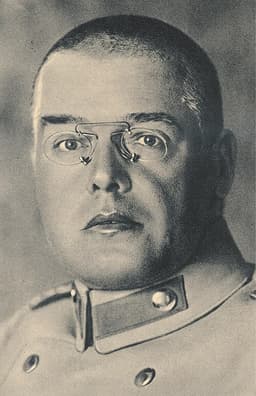
Max Hoffmann
General · Modern
55.7Total
Basic Information
Born
1767
1869
Died
1845
1927
Era
Modern
Modern
Nationality
United States
Germany
Occupation
General
General
Civilization
Western
Western
Score Comparison
Military (10%)
70.0
82.0
Political (20%)
72.0
42.2
Influence (20%)
65.0
58.0
Legacy (20%)
55.0
54.0
Leadership (15%)
66.0
43.8
Strategy (15%)
50.0
66.3
TOTAL
62.7
55.7
Andrew Jackson — Complete Timeline
1806 AD
Assassination Attempt and Duel with Charles DickinsonOther
Jackson killed Charles Dickinson in a duel after Dickinson insulted his wife. Jackson was wounded but survived. This event reinforced his reputation for violence and honor in early American politics.
DuelPersonal LifeHonor
destructive
1815 AD
Battle of New OrleansWar◆ Major
Jackson commanded US forces to a decisive victory against the British at the Battle of New Orleans. This victory, occurring after the Treaty of Ghent was signed, made Jackson a national hero and boosted American morale.
War of 1812BattleUS Military
Impact: national
1830 AD
Indian Removal ActPolitical Action
Jackson signed the Indian Removal Act, authorizing the forced relocation of Native American tribes from the southeastern US to lands west of the Mississippi. This led to the Trail of Tears and the displacement of thousands.
Indian RemovalTrail of TearsNative American Policy
Impact: nationaldestructive
1832 AD
Nullification CrisisPolitical Action◆ Major
Jackson faced the Nullification Crisis when South Carolina declared federal tariffs null and void. Jackson threatened military force to enforce federal law, leading to a compromise tariff that defused the crisis.
Nullification CrisisStates' RightsFederal Authority
Impact: national
Bank War and Veto of the Second Bank RecharterPolitical Action◆ Major
Jackson vetoed the recharter of the Second Bank of the United States, arguing it was unconstitutional and favored elites. He then removed federal deposits, leading to the bank's demise and economic instability.
Bank WarEconomic PolicyPresidential Power
Impact: nationaldestructive
Max Hoffmann — Complete Timeline
1914 AD
Battle of TannenbergWar
As Chief of Operations for the German Eighth Army, Hoffmann played a key role in planning the encirclement of the Russian Second Army at Tannenberg. The battle resulted in the destruction of the Russian army and the capture of its commander, Samsonov. This victory established Hindenburg and Ludendorff's reputations.
World War IEastern FrontBattle
Impact: regional
Battle of the Masurian LakesWar◆ Major
Hoffmann helped plan the follow-up battle to Tannenberg, the First Battle of the Masurian Lakes. German forces drove the Russian First Army out of East Prussia, inflicting heavy casualties. This cleared German territory of Russian troops and secured the eastern border for the remainder of 1914.
World War IEastern FrontBattle
Impact: regional
1918 AD
Treaty of Brest-LitovskPolitical Action
Hoffmann was the chief German military negotiator at Brest-Litovsk. He dictated harsh terms to Soviet Russia, forcing the cession of vast territories including Poland, the Baltic states, and Ukraine. The treaty ended the war on the Eastern Front but was later annulled by the Armistice.
World War IPeace TreatyEastern Europe
Impact: globaldestructive
Expert Analysis
Origins
Andrew Jackson was born on March 15, 1767, in the Waxhaws region between North Carolina and South Carolina. His father died before his birth, and his mother raised him in poverty. Jackson received sporadic education and was orphaned by age 14. He fought as a courier in the American Revolution, enduring captivity and smallpox. After the war, he studied law and moved to Tennessee, where he became a frontier lawyer, land speculator, and slaveholder.
Max Hoffmann was born on January 25, 1869, in Homberg an der Efze, Hesse, Germany, into a middle-class family. His father was a civil servant. Hoffmann attended the Prussian Cadet Corps and was commissioned as a second lieutenant in 1888. He studied at the Prussian War Academy and served on the General Staff, where he developed expertise in Russian affairs. By 1914, he was a lieutenant colonel and chief of operations for the German Eighth Army under General Paul von Hindenburg.
Rise to Power
Jackson rose to national prominence through military success. In 1814, he was appointed major general in the U.S. Army and defeated the Creek Nation at the Battle of Horseshoe Bend, forcing the Treaty of Fort Jackson that ceded 23 million acres of Creek land. His greatest triumph came on January 8, 1815, at the Battle of New Orleans, where he led a diverse force of regulars, militia, pirates, and volunteers to a decisive victory against the British, killing over 2,000 British troops while suffering only 71 casualties. This victory, though occurring after the Treaty of Ghent, made Jackson a national hero. He later invaded Spanish Florida in 1818, executing two British subjects, which sparked diplomatic controversy but also led to the Adams-Onís Treaty ceding Florida to the U.S.
Hoffmann's rise came through staff work. As chief of operations for the Eighth Army in August 1914, he helped devise the plan that encircled the Russian Second Army at Tannenberg. The battle, fought from August 26-30, 1914, resulted in the destruction of an entire Russian army, with 92,000 prisoners and 78,000 casualties. Hoffmann then contributed to the First Battle of the Masurian Lakes (September 1914), which drove the Russian First Army from East Prussia. His strategic acumen earned him recognition, and by 1916 he became chief of staff of the Eastern Front. In 1917, he was the chief German military negotiator at the Treaty of Brest-Litovsk, dictating harsh terms that forced Soviet Russia to cede Ukraine, Poland, and the Baltics.
Leadership & Governance
Jackson's leadership was autocratic and populist. As president (1829-1837), he expanded executive power, using the veto 12 times—more than all his predecessors combined. He dismantled the Second Bank of the United States by vetoing its recharter in 1832 and removing federal deposits in 1833, which led to economic instability but appealed to his supporters. During the Nullification Crisis (1832-1833), he threatened military force against South Carolina for defying federal tariffs, asserting federal supremacy. He also signed the Indian Removal Act in 1830, forcing the relocation of five tribes along the Trail of Tears, resulting in thousands of deaths. Jackson scored 66.0 in leadership, reflecting his decisive but controversial approach.
Hoffmann's leadership was limited to military and diplomatic spheres. He scored 43.8 in leadership, partly because he never held supreme command. He was known for his sharp intellect and caustic wit, often clashing with superiors. At Brest-Litovsk, he dominated negotiations, insisting on territorial annexations against the wishes of civilian negotiators. His governance style was pragmatic and ruthless, prioritizing German strategic interests over humanitarian concerns. He advocated for unrestricted submarine warfare and was skeptical of Ludendorff's offensives in 1918.
Triumph & Tragedy
Jackson's greatest triumph was the Battle of New Orleans, which secured his fame and propelled him to the presidency. His greatest failure was the Indian Removal Act, which caused immense suffering and is now condemned as ethnic cleansing. Economically, his war on the Bank contributed to the Panic of 1837, though the full impact occurred after his presidency.
Hoffmann's greatest triumph was Tannenberg, one of history's most decisive battles. He also played a key role in the Treaty of Brest-Litovsk, which gave Germany vast resources and eliminated the Eastern Front. His greatest failure was his inability to prevent Germany's defeat; his strategic advice was often ignored by the Supreme Command. After the war, his memoirs downplayed his role, and he died in 1927 before seeing the rise of Nazism.
Character & Destiny
Jackson was combative, vengeful, and fiercely loyal. His dueling and brawling reputation shaped his political persona. He believed in a strict interpretation of the Constitution except when it conflicted with his goals. His character led to the expansion of executive power but also to policies that damaged native peoples and the economy.
Hoffmann was brilliant but arrogant. He correctly predicted the failure of Germany's unrestricted submarine warfare and the Schlieffen Plan's implementation. His destiny was tied to the Eastern Front's success, but his lack of political skill and abrasive personality limited his influence. He died relatively obscure compared to Hindenburg and Ludendorff.
Legacy
Jackson's legacy is deeply contested. He is remembered as the founder of the Democratic Party, a champion of the common man, and a strong executive. But his Indian removal and support for slavery have led to his condemnation. His image was removed from the $20 bill in recent redesigns. He scored 55.0 in legacy.
Hoffmann's legacy is primarily among military historians. His operational planning at Tannenberg is studied in staff colleges. The Treaty of Brest-Litovsk set a precedent for harsh peace terms, influencing later events. However, his name is far less known than Hindenburg's. He scored 54.0 in legacy.
Conclusion
Andrew Jackson had a greater overall impact than Max Hoffmann, as reflected in his higher total score (62.7 vs. 55.7). While Hoffmann was a superior military strategist (scoring 82.0 in military vs. Jackson's 70.0), Jackson's political influence (72.0 vs. 42.2) and leadership (66.0 vs. 43.8) were far more significant. Jackson shaped the American presidency and the nation's expansion, for better or worse. Hoffmann's achievements were confined to the Eastern Front and a single peace treaty. Jackson's impact on millions of people—through Indian removal, the Bank War, and executive power—outweighs Hoffmann's operational victories. Therefore, Andrew Jackson is the more consequential figure.
Rankings
🥇
Andrew JacksonLeader
Mil: 70.0Pol: 72.0Inf: 65.0
62.7
🥈
Max Hoffmann
Mil: 82.0Pol: 42.2Inf: 58.0
55.7
+7.0 behind
How This Comparison Works
Algorithm
Each figure is scored on 6 dimensions (0—100 scale) based on structured historical data: Military (10%), Political (20%), Influence (20%), Legacy (20%), Leadership (15%), Strategy (15%). The weighted total produces the final ranking.
Data Sources
Scores are computed from structured sub-indicators in the database. Scale factors adjust for era (Ancient ×0.85, Modern ×1.0) and civilization size (Eastern ×1.05, Other ×0.80) to account for differences in population and military scale.
Maximum 3 Figures
Comparisons are limited to 2—3 figures to ensure readability and statistical meaningfulness.
Error Margins
±5 points per dimension — Sub-scores are derived from historical records with inherent uncertainty. Two figures within 5 points on a dimension should be considered roughly equivalent in that area.
Total Score Accuracy
±3 points overall — The weighted combination of 6 dimensions produces a total score with approximately ±3 points of uncertainty. Differences of less than 3 points are not statistically significant— the figures are effectively tied.
Known Limitations
- Historical records are incomplete and uneven across civilizations
- Figures from oral-tradition societies may be underrepresented
- Occupation labels can misclassify multi-role figures
- Scores measure capability and impact, not moral character
- Quantitative scoring is a comparison tool, not absolute truth
Capability Radar
Military (10%) — Battles & Warfare
Battles
45
75
Win Rate
70
80
Expansion
60
60
Political (20%) — Governance & Reform
Reform
65
20
Diplomacy
55
50
Economy
50
15
Influence (20%) — Cultural & Global Reach
Cultural
65
30
Global
60
50
Legacy (20%) — Historical Impact
Historical
70
65
Longevity
65
40
Leadership (15%) — Power & Stability
Tenure
70
30
Stability
45
10
Strategy (15%) — Tactics & Innovation
Strategy
55
90
Tactics
65
85
Reform
40
40
Similar Comparisons
Comments & Discussion
No comments yet. Be the first to share your thoughts!