Loading...
Anne of Austria vs Jean-Jacques Dessalines
Jean-Jacques Dessalines leads by 19.4 pts · 2 figures compared
…

Anne of Austria
Emperor · Modern
52.2Total
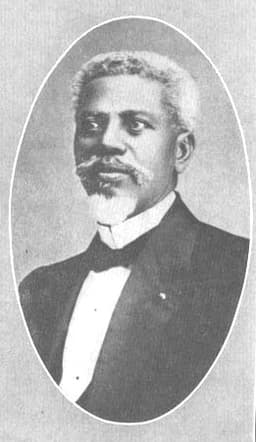
Jean-Jacques Dessalines
Emperor · Modern
71.6Total
Basic Information
Born
1601
1758
Died
1666
1806
Era
Modern
Modern
Nationality
France
Haiti
Occupation
Emperor
Emperor
Civilization
Western
Western
Score Comparison
Military (10%)
10.2
78.0
Political (20%)
55.0
68.0
Influence (20%)
60.0
82.0
Legacy (20%)
54.0
72.0
Leadership (15%)
72.0
55.3
Strategy (15%)
36.8
68.1
TOTAL
52.2
71.6
Anne of Austria — Complete Timeline
1643 AD
Appointment as Regent of FrancePolitical Action◆ Major
Upon the death of Louis XIII, Anne of Austria became regent for her four-year-old son Louis XIV. She overturned her husband's will, which had limited her power, and appointed Cardinal Mazarin as chief minister, continuing Richelieu's policies.
RegencyMazarinLouis XIV
Impact: national
1648 AD
The Fronde: Civil WarWar◆ Major
Anne of Austria faced a series of noble and parliamentary revolts known as the Fronde. She and the young Louis XIV were forced to flee Paris twice. The rebellion was eventually suppressed, but it left Louis XIV with a lifelong distrust of the nobility and Paris.
FrondeCivil WarNobility
Impact: nationaldestructive
1659 AD
Treaty of the PyreneesPolitical Action◆ Major
Anne of Austria's regency government negotiated the Treaty of the Pyrenees with Spain, ending decades of war. The treaty included the marriage of Louis XIV to the Spanish Infanta Maria Theresa, strengthening Bourbon-Habsburg relations.
TreatySpainMarriage
Impact: regionalconstructive
1661 AD
End of Regency and Mazarin's DeathPolitical Action◆ Major
Cardinal Mazarin died, and Anne of Austria's regency formally ended as Louis XIV assumed personal rule. Anne retired to the convent of Val-de-Gr
Regency EndLouis XIVMazarin
Impact: national
Jean-Jacques Dessalines — Complete Timeline
1803 AD
Battle of VertièresWar
Dessalines led Haitian forces to a decisive victory over the French army at Verti
BattleIndependenceFrench Defeat
Impact: globalconstructive
1804 AD
Haitian Independence DeclarationPolitical Action
Dessalines declared Haiti's independence, renaming the country from Saint-Domingue. He issued the Haitian Declaration of Independence, establishing the first black republic and the second independent nation in the Americas.
IndependenceRepublicAbolition
Impact: globalprogressive
Coronation as Emperor Jacques IPolitical Action◆ Major
Dessalines crowned himself Emperor Jacques I of Haiti, establishing an authoritarian regime. He centralized power, imposed forced labor to rebuild the economy, and executed former white colonists.
CoronationAuthoritarianismEmpire
Impact: nationaldestructive
1806 AD
Assassination of DessalinesPolitical Action◆ Major
Dessalines was ambushed and killed by rebels at Pont-Rouge near Port-au-Prince. His authoritarian rule and economic policies had alienated elites, leading to his overthrow and Haiti's division into two states.
AssassinationRebellionPolitical Division
Impact: nationaltragic
Expert Analysis
Origins
Anne of Austria was born on September 22, 1601, in Valladolid, Spain, as the daughter of King Philip III of Spain and Margaret of Austria. She was raised in the Spanish court, receiving a strict Catholic education. In 1615, she married Louis XIII of France, becoming queen consort. The marriage was strained, partly due to political tensions between France and Spain. After years of estrangement, she finally gave birth to the future Louis XIV in 1638, a pivotal event for the succession.
Jean-Jacques Dessalines was born around 1758 in West Africa, enslaved and brought to the French colony of Saint-Domingue (now Haiti). He worked as a field hand and later as a foreman. Unlike Anne, he had no formal education but gained military experience during the Haitian Revolution. He rose through the ranks under Toussaint Louverture, eventually becoming a key leader.
Rise to Power
Anne's rise came through inheritance and marriage. Upon Louis XIII's death in 1643, she became regent for her four-year-old son, Louis XIV. She overturned her husband's will, which had limited her powers, and appointed Cardinal Mazarin as chief minister. Her regency faced immediate challenges from nobles and parlements.
Dessalines rose to power through military prowess. He fought in the Haitian Revolution from its start in 1791. After Louverture was captured in 1802, Dessalines took command. His turning point was the Battle of Vertières on November 18, 1803, where he led a decisive victory over the French. This victory forced the French to withdraw and led to Haiti's independence on January 1, 1804.
Leadership & Governance
Anne of Austria governed as regent with Mazarin. Their leadership focused on centralizing royal power, but they faced the Fronde (1648–1653), a series of civil wars. Anne and Louis XIV were forced to flee Paris twice. She showed resilience but relied heavily on Mazarin. Her governance scored 72.0 in leadership, reflecting her ability to maintain authority during a turbulent minority.
Dessalines established an authoritarian regime after independence. He crowned himself Emperor Jacques I on October 6, 1804. His governance included forced labor to rebuild the economy, similar to the plantation system. He centralized power and suppressed dissent, scoring 55.3 in leadership. His political score of 68.0 indicates effective but brutal consolidation.
Triumph & Tragedy
Anne's greatest success was securing the throne for her son and ending the Franco-Spanish war with the Treaty of the Pyrenees (1659), which included Louis XIV's marriage to Maria Theresa of Spain. Her tragedy was the Fronde, which weakened the monarchy temporarily and forced her to flee. She also failed to prevent Mazarin's dominance, which alienated some nobles.
Dessalines' triumph was leading Haiti to independence, a rare successful slave revolt. His tragedy was his assassination on October 17, 1806, after alienating elites with his authoritarian rule and economic policies. His legacy is mixed: liberator but also autocrat.
Character & Destiny
Anne was patient and devout, but her reliance on Mazarin shaped her regency. She was cautious in politics, scoring 55.0 in political skill. Her character helped preserve the monarchy for Louis XIV, but she lacked the strategic vision of her son. Her destiny was to be a transitional figure.
Dessalines was fierce and uncompromising. His military score of 78.0 reflects his battlefield success. His strategic score of 68.1 shows planning ability, but his harsh rule led to his downfall. His character was suited for revolution, not peacetime governance.
Legacy
Anne's legacy is as the mother of Louis XIV and a regent who preserved the monarchy. Her influence score of 60.0 reflects her role in shaping French absolutism. She is remembered as a stabilizing force during a crisis.
Dessalines is a national hero in Haiti, with a legacy score of 72.0. He is celebrated as the father of Haitian independence, but his authoritarian methods are criticized. His legacy endures as a symbol of anti-colonial resistance.
Conclusion
Jean-Jacques Dessalines had greater impact than Anne of Austria. His total score of 71.6 versus Anne's 52.2 reflects his transformative role in establishing the first independent black republic. While Anne maintained a monarchy, Dessalines changed the course of history for millions. His military and political achievements, despite flaws, outweigh Anne's regency. Dessalines' legacy of liberation is more consequential than Anne's preservation of royal power.
Rankings
🥇
Jean-Jacques DessalinesLeader
Mil: 78.0Pol: 68.0Inf: 82.0
71.6
🥈
Anne of Austria
Mil: 10.2Pol: 55.0Inf: 60.0
52.2
+19.4 behind
How This Comparison Works
Algorithm
Each figure is scored on 6 dimensions (0—100 scale) based on structured historical data: Military (10%), Political (20%), Influence (20%), Legacy (20%), Leadership (15%), Strategy (15%). The weighted total produces the final ranking.
Data Sources
Scores are computed from structured sub-indicators in the database. Scale factors adjust for era (Ancient ×0.85, Modern ×1.0) and civilization size (Eastern ×1.05, Other ×0.80) to account for differences in population and military scale.
Maximum 3 Figures
Comparisons are limited to 2—3 figures to ensure readability and statistical meaningfulness.
Error Margins
±5 points per dimension — Sub-scores are derived from historical records with inherent uncertainty. Two figures within 5 points on a dimension should be considered roughly equivalent in that area.
Total Score Accuracy
±3 points overall — The weighted combination of 6 dimensions produces a total score with approximately ±3 points of uncertainty. Differences of less than 3 points are not statistically significant— the figures are effectively tied.
Known Limitations
- Historical records are incomplete and uneven across civilizations
- Figures from oral-tradition societies may be underrepresented
- Occupation labels can misclassify multi-role figures
- Scores measure capability and impact, not moral character
- Quantitative scoring is a comparison tool, not absolute truth
Capability Radar
Military (10%) — Battles & Warfare
Battles
10
85
Win Rate
10
90
Expansion
15
70
Political (20%) — Governance & Reform
Reform
60
60
Diplomacy
75
40
Economy
65
35
Influence (20%) — Cultural & Global Reach
Cultural
50
70
Global
50
70
Legacy (20%) — Historical Impact
Historical
60
85
Longevity
55
75
Leadership (15%) — Power & Stability
Tenure
70
30
Stability
55
20
Strategy (15%) — Tactics & Innovation
Strategy
15
85
Tactics
10
80
Reform
20
75
Similar Comparisons
Comments & Discussion
No comments yet. Be the first to share your thoughts!