Loading...
Anne of Austria vs Jiaqing Emperor
Anne of Austria leads by 5.7 pts · 2 figures compared
…

Anne of Austria
Emperor · Modern
52.2Total
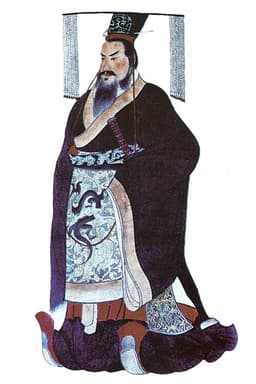
Jiaqing Emperor
Emperor · Modern
46.5Total
Basic Information
Born
1601
1760
Died
1666
1820
Era
Modern
Modern
Nationality
France
China
Occupation
Emperor
Emperor
Civilization
Western
Eastern
Score Comparison
Military (10%)
10.2
35.0
Political (20%)
55.0
39.4
Influence (20%)
60.0
51.0
Legacy (20%)
54.0
40.8
Leadership (15%)
72.0
64.0
Strategy (15%)
36.8
45.0
TOTAL
52.2
46.5
Anne of Austria — Complete Timeline
1643 AD
Appointment as Regent of FrancePolitical Action◆ Major
Upon the death of Louis XIII, Anne of Austria became regent for her four-year-old son Louis XIV. She overturned her husband's will, which had limited her power, and appointed Cardinal Mazarin as chief minister, continuing Richelieu's policies.
RegencyMazarinLouis XIV
Impact: national
1648 AD
The Fronde: Civil WarWar◆ Major
Anne of Austria faced a series of noble and parliamentary revolts known as the Fronde. She and the young Louis XIV were forced to flee Paris twice. The rebellion was eventually suppressed, but it left Louis XIV with a lifelong distrust of the nobility and Paris.
FrondeCivil WarNobility
Impact: nationaldestructive
1659 AD
Treaty of the PyreneesPolitical Action◆ Major
Anne of Austria's regency government negotiated the Treaty of the Pyrenees with Spain, ending decades of war. The treaty included the marriage of Louis XIV to the Spanish Infanta Maria Theresa, strengthening Bourbon-Habsburg relations.
TreatySpainMarriage
Impact: regionalconstructive
1661 AD
End of Regency and Mazarin's DeathPolitical Action◆ Major
Cardinal Mazarin died, and Anne of Austria's regency formally ended as Louis XIV assumed personal rule. Anne retired to the convent of Val-de-Gr
Regency EndLouis XIVMazarin
Impact: national
Jiaqing Emperor — Complete Timeline
1795 AD
Suppression of the Miao RebellionWar◆ Major
Jiaqing's forces suppressed a major Miao rebellion in Guizhou and Hunan provinces. The campaign was brutal and costly, but restored Qing control over the region, though it highlighted ethnic tensions.
Miao rebellionEthnic conflictMilitary campaign
Impact: regionaldestructive
1796 AD
White Lotus RebellionWar◆ Major
The White Lotus Rebellion erupted in central China, lasting until 1804. Jiaqing's government struggled to suppress the rebellion due to corruption and inefficiency, draining the Qing treasury and exposing military weakness.
RebellionWhite LotusQing decline
Impact: nationaldestructive
1799 AD
Execution of HeshenPolitical Action◆ Major
Upon taking full power after his father Qianlong's death, Jiaqing ordered the arrest and execution of the corrupt grand councilor Heshen. Heshen's vast wealth was confiscated, temporarily replenishing the imperial treasury.
Anti-corruptionHeshenPolitical purge
Impact: nationalconstructive
1800 AD
Fiscal crisis and tax reformsReform◆ Major
Jiaqing attempted to address the fiscal crisis caused by the White Lotus Rebellion and corruption. He implemented tax reforms, reduced court spending, and tried to curb official embezzlement, but with limited success.
Fiscal reformTax policyEconomic crisis
Impact: nationalconstructive
1805 AD
Decline of the Qing militaryOther◆ Major
The Qing military's inability to quickly suppress the White Lotus Rebellion revealed its decline. The Eight Banners and Green Standard armies were poorly trained and equipped, forcing the use of local militias.
Military declineEight BannersQing weakness
Impact: nationaldestructive
Expert Analysis
Origins
Anne of Austria was born in 1601 in Valladolid, Spain, as the daughter of King Philip III of Spain. She was raised in the rigid Spanish court, receiving a Catholic education focused on piety and obedience. In 1615, she married Louis XIII of France in a political alliance, but the marriage was strained due to Louis's reliance on Cardinal Richelieu and her Spanish ties. Anne's early years at the French court were marked by isolation and suspicion.
Jiaqing Emperor, born Yongyan in 1760, was the 15th son of the Qianlong Emperor of the Qing dynasty. His mother was a consort, but he was selected as heir apparent in 1795. His upbringing was steeped in Confucian classics and Manchu martial traditions, but he lived in the shadow of his father's long reign. Jiaqing was known for his frugality and seriousness, contrasting with the extravagance of Qianlong's later years.
Rise to Power
Anne of Austria became regent of France in 1643 upon the death of Louis XIII. Her husband's will had limited her power by creating a regency council, but Anne had it annulled by the Parlement of Paris, securing sole regency. She appointed Cardinal Mazarin as chief minister, continuing Richelieu's policies. Her rise was swift, relying on her status as queen mother and her alliance with Mazarin.
Jiaqing's rise was gradual. He was formally named crown prince in 1795, but Qianlong continued to rule as emperor emeritus until his death in 1799. During this period, Jiaqing had limited authority, while the corrupt official Heshen dominated court. Upon Qianlong's death, Jiaqing swiftly moved against Heshen, arresting him and confiscating his vast wealth. This act marked Jiaqing's full assumption of power.
Leadership & Governance
Anne of Austria's leadership was defined by her regency during Louis XIV's minority. She relied heavily on Mazarin, but she was decisive in crises. During the Fronde (1648-1653), she showed resolve, refusing to flee Paris initially and later negotiating with rebels. Her governance focused on centralizing royal authority and ending the costly war with Spain. She prioritized stability, even at the cost of personal popularity.
Jiaqing's governance was marked by attempts to reform a corrupt and declining empire. He executed Heshen to signal a crackdown on corruption, but the deep-rooted patronage system persisted. He reduced court spending and tried to reform tax collection, but his efforts were undermined by bureaucratic inertia. The White Lotus Rebellion (1796-1804) exposed the military's decay; Jiaqing's response was to rely on local militias, which proved costly and only partially effective. His political score of 39.4 reflects his inability to enact lasting reforms.
Triumph & Tragedy
Anne of Austria's greatest triumph was the Treaty of the Pyrenees in 1659, which ended the Franco-Spanish war and secured a marriage between Louis XIV and the Spanish infanta. This treaty enhanced French power and prestige. Her greatest failure was the Fronde, which cost lives and destabilized the kingdom. However, she learned from it, ensuring Louis XIV's absolute rule later.
Jiaqing's triumph was the execution of Heshen, which briefly boosted public morale and filled the treasury. However, the White Lotus Rebellion was his tragedy: it lasted nine years, cost over 200 million taels of silver, and killed millions. The rebellion revealed the Qing's inability to adapt, and Jiaqing's military score of 35.0 reflects the army's poor performance.
Character & Destiny
Anne of Austria was known for her piety, dignity, and pragmatism. She was not a brilliant strategist but had strong survival instincts. Her character shaped her destiny: she endured personal hardships and political turmoil to preserve the throne for her son. Historians note that she scored 72.0 in leadership for her steady hand during crises.
Jiaqing was conscientious but indecisive. He lacked the boldness to overhaul the Qing system. His character—frugal, moralistic, but cautious—limited his effectiveness. He scored 64.0 in leadership, but his political score of 39.4 shows his struggle against systemic decay. His fate was to preside over a declining dynasty, unable to reverse its course.
Legacy
Anne of Austria's legacy is as the regent who preserved the French monarchy and enabled Louis XIV's absolute rule. The Treaty of the Pyrenees reshaped European borders. Her influence is seen in the strengthening of central authority, which led to France's dominance under the Sun King. She scored 54.0 in legacy.
Jiaqing's legacy is mixed. He is remembered as a well-intentioned emperor who failed to stop the Qing decline. His reforms had limited effect, and the White Lotus Rebellion marked the beginning of the end for the dynasty. His legacy score of 40.8 reflects this. The Qing continued to weaken, leading to the Opium Wars after his death.
Conclusion
Anne of Austria had a greater impact than the Jiaqing Emperor. Her regency stabilized France during a critical period, allowing Louis XIV to become the epitome of absolute monarchy. Her political and leadership scores (55.0 and 72.0) exceed Jiaqing's (39.4 and 64.0). While Jiaqing faced impossible odds, his inability to reform the Qing state sealed its fate. Anne's legacy is more tangible: she left a stronger, centralized France. Jiaqing's reign only delayed the inevitable decline. Thus, Anne of Austria, with a total score of 52.2 against Jiaqing's 46.5, is the more consequential figure.
Rankings
🥇
Anne of AustriaLeader
Mil: 10.2Pol: 55.0Inf: 60.0
52.2
🥈
Jiaqing Emperor
Mil: 35.0Pol: 39.4Inf: 51.0
46.5
+5.7 behind
How This Comparison Works
Algorithm
Each figure is scored on 6 dimensions (0—100 scale) based on structured historical data: Military (10%), Political (20%), Influence (20%), Legacy (20%), Leadership (15%), Strategy (15%). The weighted total produces the final ranking.
Data Sources
Scores are computed from structured sub-indicators in the database. Scale factors adjust for era (Ancient ×0.85, Modern ×1.0) and civilization size (Eastern ×1.05, Other ×0.80) to account for differences in population and military scale.
Maximum 3 Figures
Comparisons are limited to 2—3 figures to ensure readability and statistical meaningfulness.
Error Margins
±5 points per dimension — Sub-scores are derived from historical records with inherent uncertainty. Two figures within 5 points on a dimension should be considered roughly equivalent in that area.
Total Score Accuracy
±3 points overall — The weighted combination of 6 dimensions produces a total score with approximately ±3 points of uncertainty. Differences of less than 3 points are not statistically significant— the figures are effectively tied.
Known Limitations
- Historical records are incomplete and uneven across civilizations
- Figures from oral-tradition societies may be underrepresented
- Occupation labels can misclassify multi-role figures
- Scores measure capability and impact, not moral character
- Quantitative scoring is a comparison tool, not absolute truth
Capability Radar
Military (10%) — Battles & Warfare
Battles
10
40
Win Rate
10
30
Expansion
15
10
Political (20%) — Governance & Reform
Reform
60
25
Diplomacy
75
30
Economy
65
20
Influence (20%) — Cultural & Global Reach
Cultural
50
30
Global
50
15
Legacy (20%) — Historical Impact
Historical
60
35
Longevity
55
20
Leadership (15%) — Power & Stability
Tenure
70
60
Stability
55
15
Strategy (15%) — Tactics & Innovation
Strategy
15
30
Tactics
10
35
Reform
20
20
Similar Comparisons
Comments & Discussion
No comments yet. Be the first to share your thoughts!