Loading...
This comparison has not been analyzed yet.
One-time AI generation (~1 minute). Scores and timeline are already available below.
Ante Jelavic vs Robert Borden
Robert Borden leads by 14.7 pts · 2 figures compared
…

Ante Jelavic
Politician · Modern
43.0Total
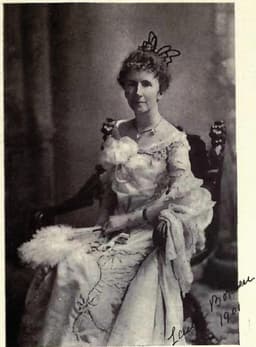
Robert Borden
Politician · Modern
57.7Total
Basic Information
Born
1963
1854
Died
—
1937
Era
Modern
Modern
Nationality
Bosnia
Canada
Occupation
Politician
Politician
Civilization
Western
Western
Score Comparison
Military (10%)
52.9
36.7
Political (20%)
27.9
72.0
Influence (20%)
47.9
56.4
Legacy (20%)
37.5
49.2
Leadership (15%)
41.5
72.0
Strategy (15%)
60.0
60.0
TOTAL
43.0
57.7
Ante Jelavic — Complete Timeline
1998 AD
Croat member of the PresidencyPolitical Action◆ Major
Jelavic served as the Croat member of the Presidency of Bosnia and Herzegovina from 1998 to 2001. He was a member of the Croatian Democratic Union (HDZ) and advocated for Croat interests within the Bosnian federation.
PresidencyCroat politicsHDZ
Impact: national
2001 AD
Removal from officePolitical Action◆ Major
Jelavic was removed from the Presidency in March 2001 by the High Representative for Bosnia and Herzegovina, Wolfgang Petritsch, for violating the Dayton Agreement. He had declared a self-rule for Croats in Bosnia, which was deemed unconstitutional.
RemovalHigh RepresentativeCroat self-rule
Impact: nationaldestructive
Robert Borden — Complete Timeline
1911 AD
Became Prime Minister of CanadaPolitical Action◆ Major
Borden became the eighth Prime Minister of Canada, leading a Conservative government. His victory was largely due to opposition to Laurier's reciprocity agreement with the United States.
Government FormationElectionConservatism
Impact: national
1914 AD
Led Canada through World War IWar◆ Major
Borden led Canada's war effort during World War I. He committed over 600,000 troops to the conflict, expanded the military, and managed the domestic war economy. The war deeply divided Canada along linguistic lines.
World War IMilitaryWar Effort
Impact: global
1917 AD
Introduced conscription in CanadaPolitical Action◆ Major
Borden's government passed the Military Service Act, introducing conscription for overseas service. The policy was deeply unpopular in Quebec and led to the Conscription Crisis of 1917, which exacerbated French-English tensions.
ConscriptionCrisisQuebec
Impact: nationaldestructive
1919 AD
Secured Canada's signature on the Treaty of VersaillesPolitical Action
Borden insisted that Canada sign the Treaty of Versailles as an independent nation, separate from Britain. This marked a significant step in Canada's evolution from a colony to a sovereign state, gaining a separate seat in the League of Nations.
TreatySovereigntyLeague of Nations
Impact: globalconstructive
This comparison has not been analyzed yet.
One-time AI generation (~1 minute). Scores and timeline are already available below.
Rankings
🥇
Robert BordenLeader
Mil: 36.7Pol: 72.0Inf: 56.4
57.7
🥈
Ante Jelavic
Mil: 52.9Pol: 27.9Inf: 47.9
43.0
+14.7 behind
How This Comparison Works
Algorithm
Each figure is scored on 6 dimensions (0—100 scale) based on structured historical data: Military (10%), Political (20%), Influence (20%), Legacy (20%), Leadership (15%), Strategy (15%). The weighted total produces the final ranking.
Data Sources
Scores are computed from structured sub-indicators in the database. Scale factors adjust for era (Ancient ×0.85, Modern ×1.0) and civilization size (Eastern ×1.05, Other ×0.80) to account for differences in population and military scale.
Maximum 3 Figures
Comparisons are limited to 2—3 figures to ensure readability and statistical meaningfulness.
Error Margins
±5 points per dimension — Sub-scores are derived from historical records with inherent uncertainty. Two figures within 5 points on a dimension should be considered roughly equivalent in that area.
Total Score Accuracy
±3 points overall — The weighted combination of 6 dimensions produces a total score with approximately ±3 points of uncertainty. Differences of less than 3 points are not statistically significant— the figures are effectively tied.
Known Limitations
- Historical records are incomplete and uneven across civilizations
- Figures from oral-tradition societies may be underrepresented
- Occupation labels can misclassify multi-role figures
- Scores measure capability and impact, not moral character
- Quantitative scoring is a comparison tool, not absolute truth
Capability Radar
Military (10%) — Battles & Warfare
Battles
45
48
Win Rate
51
47
Expansion
50
56
Political (20%) — Governance & Reform
Reform
15
60
Diplomacy
25
70
Economy
10
55
Influence (20%) — Cultural & Global Reach
Cultural
15
30
Global
10
50
Legacy (20%) — Historical Impact
Historical
15
55
Longevity
10
40
Leadership (15%) — Power & Stability
Tenure
20
65
Stability
10
60
Strategy (15%) — Tactics & Innovation
Strategy
57
57
Tactics
59
58
Reform
60
64
Similar Comparisons
Comments & Discussion
No comments yet. Be the first to share your thoughts!