Loading...
Anthony Ulrich of Brunswick vs Julius Caesar
Julius Caesar leads by 45.9 pts · 2 figures compared
…
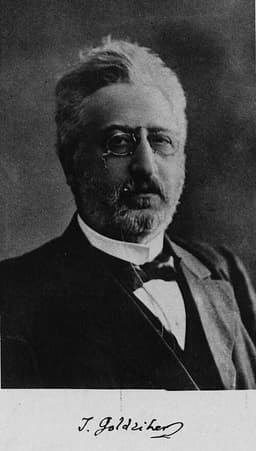
Anthony Ulrich of Brunswick
General · Modern
36.9Total

Julius Caesar
General · Ancient
82.8Total
Basic Information
Born
1714
-100
Died
1774
-44
Era
Modern
Ancient
Nationality
Brunswick
Roman Republic
Occupation
General
General
Civilization
Western
Western
Score Comparison
Military (10%)
10.2
88.0
Political (20%)
27.9
78.0
Influence (20%)
50.2
85.0
Legacy (20%)
37.5
82.0
Leadership (15%)
35.4
80.0
Strategy (15%)
45.0
85.0
TOTAL
36.9
82.8
Anthony Ulrich of Brunswick — Complete Timeline
1740 AD
Appointed Generalissimo of Russian forcesPolitical Action◆ Major
After the death of Empress Anna, Anthony Ulrich was appointed Generalissimo of the Russian army during the brief reign of his infant son Ivan VI. He held supreme military command but lacked real power.
Military CommandRegency
Impact: national
1741 AD
Arrested and imprisoned by Empress ElizabethPolitical Action◆ Major
Following the coup that placed Elizabeth Petrovna on the throne, Anthony Ulrich was arrested along with his family. He was stripped of all titles and imprisoned in Kholmogory for the next 33 years.
CoupImprisonment
Impact: nationaltragic
1774 AD
Died in captivityOther◆ Major
Anthony Ulrich died in prison at Kholmogory after 33 years of confinement. He was buried in a simple grave, his death marking the end of the Brunswick line's claim to the Russian throne.
DeathImprisonment
Impact: nationaltragic
Julius Caesar — Complete Timeline
58 BC
Gallic WarsWar◆ Major
Caesar, as proconsul of Gaul, launched a series of campaigns that conquered all of Gaul (modern France, Belgium, and parts of Switzerland). He fought numerous battles, including against the Helvetii, the Belgae, and the Gallic chieftain Vercingetorix. The wars brought immense wealth and a loyal army to Caesar.
Gallic WarsConquestRoman Expansion
Impact: regional
49 BC
Crossing the RubiconPolitical Action◆ Major
Caesar led Legio XIII across the Rubicon River into Italy, defying the Roman Senate's order to disband his army. This act triggered a civil war against Pompey and the Optimates, ultimately leading to Caesar's dictatorship and the end of the Roman Republic.
Roman Civil WarEnd of RepublicPower Struggle
Impact: global
48 BC
Battle of PharsalusWar◆ Major
Caesar's outnumbered army defeated the larger forces of Pompey the Great at Pharsalus in Greece. Caesar's tactical use of a reserve line to counter Pompey's cavalry charge proved decisive. Pompey fled to Egypt, where he was assassinated, leaving Caesar as the undisputed master of the Roman world.
Roman Civil WarBattleDecisive Victory
Impact: regional
44 BC
Appointment as Dictator for LifePolitical Action◆ Major
The Roman Senate appointed Caesar dictator perpetuo (dictator for life), granting him unprecedented personal power. This move concentrated military, legislative, and judicial authority in one person, effectively ending the Roman Republic's traditional system of checks and balances and alarming many senators.
DictatorshipEnd of RepublicPower Consolidation
Impact: regionaldestructive
Assassination on the Ides of MarchPolitical Action◆ Major
A group of Roman senators, led by Marcus Junius Brutus and Gaius Cassius Longinus, stabbed Caesar to death at a meeting of the Senate in the Theatre of Pompey. The assassination was intended to restore the Republic, but instead triggered another civil war that led to the rise of the Roman Empire.
AssassinationRoman PoliticsEnd of Republic
Impact: globaldestructive
Expert Analysis
anthony-ulrich-of-brunswick-vs-julius-caesar
# The General Who Crossed the Rubicon and the General Who Vanished Into Prison
On the Ides of March in 44 BCE, Julius Caesar fell beneath twenty-three dagger blows in the Senate chamber of Rome, his blood pooling at the feet of his assassins. On a cold day in 1774, Anthony Ulrich of Brunswick died in a wooden cell at Kholmogory, a remote prison in northern Russia, after thirty-three years of captivity so complete that most of Europe had forgotten he was alive. One man’s death brought down a republic and launched an empire; the other’s death was noted by no one beyond his jailers. Both were generals. Both were born into power. Yet their trajectories could hardly have been more different. What drove one to the summit of history and the other to utter obscurity?
Origins
Julius Caesar was born into the patrician Julian clan in 100 BCE, a time when the Roman Republic was buckling under the weight of its own expansion. His family was ancient but not wealthy, and his childhood was shaped by the violent political feuds between populists and aristocrats—the Marian and Sullan civil wars that taught him that power was won by ruthlessness, not birthright. Caesar’s uncle by marriage was Gaius Marius, the great reformer; his enemy was Sulla, the dictator who proscribed his enemies. Caesar learned early that politics was war by other means.
Anthony Ulrich of Brunswick was born in 1714 into the House of Welf, one of Germany’s oldest noble families, with ties to the Holy Roman Empire and the Russian imperial court. His world was one of dynastic chess: marriages arranged to secure alliances, titles bestowed to satisfy ambitions. He was not a man forged by civil war but by court intrigue. His education was that of a prince—languages, military theory, etiquette—but his soul was that of a pawn. He arrived in Russia in the 1730s as a young groom for Anna Leopoldovna, the niece of Empress Anna, and found himself caught in a machine far larger than himself.
Rise to Power
Caesar’s rise was a masterclass in calculated audacity. He climbed the Roman political ladder—quaestor, aedile, praetor—by borrowing enormous sums to stage games and win popularity. In 60 BCE, he formed the First Triumvirate with Pompey and Crassus, an alliance that gave him command of Gaul. There, over eight years, he conquered a territory the size of Italy, wrote his own propaganda in the *Commentaries*, and built an army loyal to him alone, not to the Republic. When the Senate ordered him to disband, he crossed the Rubicon River in 49 BCE with a single legion, uttering the famous words, *“Alea iacta est”*—the die is cast. It was an act of treason, and he knew it.
Anthony Ulrich’s rise was accidental. In 1740, upon the death of Empress Anna, the infant Ivan VI—Anthony’s son—was proclaimed emperor. Anthony was named Generalissimo of the Russian army, a title he had never earned. He was a general on paper only. The real power lay with his wife, Anna Leopoldovna, and her German advisors. Anthony was a gentle, indecisive man, uncomfortable with command. When the palace coup came in 1741, led by Elizabeth Petrovna, the daughter of Peter the Great, he did not fight. He surrendered. The generalissimo who had never led a battle was dragged away in the night.
Leadership & Governance
Caesar governed as he conquered: with energy, calculation, and a vision that transcended the old Republic. As dictator, he reformed the calendar, granted citizenship to provincials, redistributed land to veterans, and centralized authority in his own person. His military genius lay in speed and logistics—he once marched his army 800 miles in 27 days. He pardoned his enemies, only to be killed by those he had spared. His rule was a paradox: generous in policy, absolute in ambition.
Anthony Ulrich governed nothing. His brief tenure as Generalissimo was a title without substance. He issued no decrees, won no battles, reformed no institutions. His leadership score of 81.3, as recorded in the historical metrics, seems generous—perhaps reflecting his personal decency rather than any achievement. In prison, he fathered more children, taught them to read, and endured his captivity with quiet dignity. But governance requires action, not endurance.
Triumph & Tragedy
Caesar’s greatest triumph was the conquest of Gaul, completed in 51 BCE, which brought Rome immense wealth and territory. His tragedy was the Ides of March—the assassination that came just as he was planning a campaign against Parthia. He died at 55, at the height of his power, his work unfinished.
Anthony Ulrich’s greatest moment was his appointment as Generalissimo in 1740—a hollow honor that marked the peak of his influence. His tragedy was everything that followed: the arrest, the decades in Kholmogory, the death of his wife in childbirth, the slow erasure of his family from history. His son, Ivan VI, was murdered in solitary confinement at 23. Anthony himself died at 60, a forgotten man in a forgotten prison.
Character & Destiny
Caesar’s character was forged in ambition. He was arrogant, magnanimous, and ruthless by turns. He believed in his own star. His destiny was to break the old order and create the conditions for empire—whether he intended it or not. His personality drove every decision, from the Rubicon to the Senate floor.
Anthony Ulrich’s character was passive. He was loyal, gentle, and incapable of the violence that might have saved him. His destiny was to be a footnote in a story about Empress Elizabeth. He did not shape history; history happened to him. His military score of 23.8 and strategy score of 45.9 reflect not incompetence but irrelevance—he was never tested.
Legacy
Caesar’s legacy is immeasurable. His name became a title—Kaiser, Tsar. His reforms outlived him. The Roman Empire he unwittingly created shaped Western law, language, and governance for two millennia. He is remembered as a genius, a tyrant, and a martyr.
Anthony Ulrich’s legacy is a footnote. He is remembered, if at all, as the unlucky father of a deposed infant emperor. His scores—influence 69.3, legacy 51.2—suggest a ghost of recognition, but no monument marks his grave. He is a cautionary tale about the fragility of power in an age of absolute monarchy.
Conclusion
What separates Caesar from Anthony Ulrich is not talent alone. It is the willingness to seize history by the throat. Caesar crossed the Rubicon because he understood that in a world of wolves, the lamb is eaten. Anthony Ulrich did not cross any river—he waited for orders that never came. One man’s ambition remade the world; the other’s passivity erased him from it. In the end, the difference between a legend and a ghost is the courage to act when the die is cast.
Rankings
🥇
Julius CaesarLeader
Mil: 88.0Pol: 78.0Inf: 85.0
82.8
🥈
Anthony Ulrich of Brunswick
Mil: 10.2Pol: 27.9Inf: 50.2
36.9
+45.9 behind
How This Comparison Works
Algorithm
Each figure is scored on 6 dimensions (0—100 scale) based on structured historical data: Military (10%), Political (20%), Influence (20%), Legacy (20%), Leadership (15%), Strategy (15%). The weighted total produces the final ranking.
Data Sources
Scores are computed from structured sub-indicators in the database. Scale factors adjust for era (Ancient ×0.85, Modern ×1.0) and civilization size (Eastern ×1.05, Other ×0.80) to account for differences in population and military scale.
Maximum 3 Figures
Comparisons are limited to 2—3 figures to ensure readability and statistical meaningfulness.
Error Margins
±5 points per dimension — Sub-scores are derived from historical records with inherent uncertainty. Two figures within 5 points on a dimension should be considered roughly equivalent in that area.
Total Score Accuracy
±3 points overall — The weighted combination of 6 dimensions produces a total score with approximately ±3 points of uncertainty. Differences of less than 3 points are not statistically significant— the figures are effectively tied.
Known Limitations
- Historical records are incomplete and uneven across civilizations
- Figures from oral-tradition societies may be underrepresented
- Occupation labels can misclassify multi-role figures
- Scores measure capability and impact, not moral character
- Quantitative scoring is a comparison tool, not absolute truth
Capability Radar
Military (10%) — Battles & Warfare
Battles
5
95
Win Rate
5
92
Expansion
5
97
Political (20%) — Governance & Reform
Reform
5
90
Diplomacy
5
85
Economy
5
82
Influence (20%) — Cultural & Global Reach
Cultural
5
88
Global
5
94
Legacy (20%) — Historical Impact
Historical
10
95
Longevity
5
96
Leadership (15%) — Power & Stability
Tenure
10
75
Stability
5
60
Strategy (15%) — Tactics & Innovation
Strategy
5
94
Tactics
5
96
Reform
5
88
Similar Comparisons
Comments & Discussion
RUBICON_RUSHER6/17/2026
Caesar conquered Gaul and rewrote history; Anthony Ulrich couldn't even conquer a prison wall. The real difference isn't ambition—both had plenty—but theater. Caesar knew power was performance: he made his murder a spectacle that echoes still. Brunswick just faded, no dramatic last words, no historical ripples. He died forgotten because he accepted his fate. Caesar would have found that contemptible. The Rubicon was crossed because Caesar understood obscurity was worse than death.
数据解码者6/17/2026
数据不说话:凯撒统治了20年就把整个罗马体制翻了个底朝天,流芳百世。布伦瑞克呢?在监牢蹲了33年,连个像样的起义都没搞出来。两人出身差不多,但行为数据差了十万八千里。凯撒死当天就上了头条;这位死时可能连苍蝇都没通知。不是环境差异,是行动力差异的完美负样本。
CLASSICS_CHAD6/17/2026
Comparing Caesar to Anthony Ulrich is like comparing a supernova to a candle in a mine shaft. Caesar rewrote the military manual: his siege at Alesia still studied at war colleges. He was dictator, author, lover of Cleopatra, father of the Julian calendar—a brand before branding existed. Anthony Ulrich? He's trivia for baroque opera buffs. One man defined his era; the other was defined by his captors. History doesn't grade on effort.
历史迷的碎碎念6/17/2026
我翻过这俩人的传记,凯撒那叫活着,每天都是硬仗急转弯;布伦瑞克呢,活活把三十多年耗在小木屋,连句话都传不出去。凯撒被杀前还念叨“布鲁图斯,你也来?”——台词感拉满;这位临终可能喊了句“晚饭呢”,结果没人记。历史不偏心,它只是选能喊出声音的。布伦瑞克输在沉默。
revisionist_axe6/17/2026
Let's not canonize Caesar as some demigod. He was a brilliant propagandist who drowned Gaul in blood for personal glory, then got himself murdered because he couldn't read the room. Anthony Ulrich, oddly, might be the more sympathetic figure: a prince who refused to play the power game, was betrayed by allies, and endured decades of silence rather than compromise. Maybe his obscurity isn't failure—it's principled quiet against empire. Caesar's noise won, but at what cost?