Loading...
Antigonus I Monophthalmus vs Duke Wen of Jin
Antigonus I Monophthalmus leads by 0.7 pts · 2 figures compared
…

Antigonus I Monophthalmus
Emperor · Ancient
63.4Total
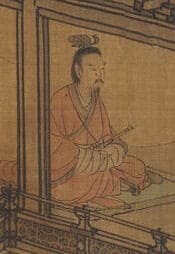
Duke Wen of Jin
Emperor · Ancient
62.7Total
Basic Information
Born
-382
-697
Died
-301
-628
Era
Ancient
Ancient
Nationality
Macedon
China
Occupation
Emperor
Emperor
Civilization
Western
Eastern
Score Comparison
Military (10%)
78.5
80.0
Political (20%)
55.8
65.0
Influence (20%)
62.0
59.0
Legacy (20%)
56.0
54.0
Leadership (15%)
68.0
66.0
Strategy (15%)
75.0
68.1
TOTAL
63.4
62.7
Antigonus I Monophthalmus — Complete Timeline
316 BC
Battle of GabieneWar◆ Major
Antigonus I defeated Eumenes, a former general of Alexander, at Gabiene in Persia. This victory eliminated a major rival and gave Antigonus control over the eastern satrapies, making him the most powerful of the Diadochi at that time.
DiadochiBattlePersia
Impact: regional
315 BC
Siege of TyreWar
Antigonus I besieged and captured the city of Tyre from Ptolemy I's forces. The siege demonstrated his military capabilities and expanded his control over Phoenicia and Syria, strengthening his position in the Diadochi conflicts.
DiadochiSiegePhoenicia
Impact: regional
306 BC
Proclamation as King of AsiaPolitical Action◆ Major
Antigonus I declared himself king of Asia, claiming authority over the entire former empire of Alexander. This act prompted other Diadochi to also assume royal titles, formalizing the breakup of Alexander's empire into separate Hellenistic kingdoms.
DiadochiKingshipHellenistic
Impact: regional
301 BC
Battle of IpsusWar
Antigonus I Monophthalmus commanded his army against the allied forces of Seleucus, Lysimachus, and Cassander at Ipsus. He was defeated and killed in battle, ending his ambition to reunite Alexander's empire. His death solidified the division of the empire among the other Diadochi.
DiadochiBattleAntigonid
Impact: regionaltragic
Duke Wen of Jin — Complete Timeline
656 BC
Exile and Return to JinPolitical Action◆ Major
Duke Wen of Jin (then Prince Chong'er) was forced into exile for 19 years after a political purge in Jin. He traveled through several states, gaining experience and allies, before returning to claim the throne of Jin in 636 BCE.
Spring and AutumnExileReturn
Impact: regionaltragic
636 BC
Reforms in Jin StateReform◆ Major
Upon returning to power, Duke Wen implemented administrative and military reforms in Jin. He reorganized the army into three divisions, promoted talented officials regardless of birth, and established a legal code, strengthening Jin's governance.
Spring and AutumnReformJin State
Impact: regionalprogressive
632 BC
Battle of ChengpuWar
Duke Wen of Jin defeated the state of Chu at the Battle of Chengpu, the largest battle of the Spring and Autumn period. The victory established Jin as the dominant power and Duke Wen as the hegemon of the Chinese states.
Spring and AutumnBattleHegemon
Impact: regional
Convening of the Alliance of JiantuPolitical Action◆ Major
After the Battle of Chengpu, Duke Wen convened a major alliance of states at Jiantu, where he was formally recognized as hegemon. He also received a mandate from the Zhou king to lead military campaigns, solidifying his authority.
Spring and AutumnAllianceHegemon
Impact: regionalconstructive
Expert Analysis
Origins
Antigonus I Monophthalmus (382–301 BCE) was born into the Macedonian nobility, likely at the court of King Philip II. He served under Philip and later Alexander the Great, commanding the Allied Greek infantry during the invasion of Asia. His father was a Macedonian noble, but little else is known of his early life. He earned the nickname 'Monophthalmus' (One-Eyed) after losing an eye in battle, possibly at the Siege of Perinthus (340 BCE).
Duke Wen of Jin (697–628 BCE), originally named Chong'er, was a prince of the state of Jin during the Spring and Autumn period. He was the son of Duke Xian of Jin and a younger son, not initially expected to rule. His early life was marked by political turmoil: his father's favorite concubine Li Ji schemed to remove the legitimate heirs, forcing Chong'er into exile at age 43. He fled Jin in 656 BCE and spent 19 years wandering among various states, including Di, Qi, Chu, and Qin.
Rise to Power
Antigonus gained prominence after Alexander's death in 323 BCE as the satrap of Phrygia. He initially supported the regent Perdiccas but soon turned against him. In 321 BCE, he defeated Eumenes at the Battle of Orkynia, but Eumenes escaped. Antigonus then allied with other Diadochi against Perdiccas. After Perdiccas's murder in 320 BCE, the Partition of Triparadisus confirmed Antigonus as strategos of Asia. He spent the next years consolidating power, defeating Eumenes at the Battle of Gabiene in 316 BCE, which gave him control over the eastern satrapies. In 306 BCE, after his son Demetrius Poliorcetes defeated Ptolemy at Salamis, Antigonus declared himself king (basileus) of Asia, claiming the entire empire. This prompted Seleucus, Ptolemy, Lysimachus, and Cassander to also assume kingships.
Duke Wen's path to power was unconventional. After 19 years in exile, he returned to Jin in 636 BCE following the death of his nephew, Duke Huai. With the support of his uncle, the Duke of Qin, he was installed as ruler. He quickly consolidated power by rewarding loyal followers and implementing reforms. He reorganized the army into three divisions (upper, middle, lower) and appointed capable ministers like Hu Yan and Zhao Shuai. His key ally was the state of Qin, which provided military support for his return.
Leadership & Governance
Antigonus ruled his territories from Antigonia (later Antioch) and governed through a mix of Macedonian and local elites. He maintained a strong army, relying on Macedonian phalanxes and mercenaries. He minted coins bearing his image, a novel practice among the Diadochi. His governance was pragmatic but aimed at centralizing power. He often appointed his sons as satraps, notably Demetrius. However, his overreach in claiming kingship and his aggressive expansion alienated other rulers. He failed to secure the loyalty of key cities like Babylon, which Seleucus recaptured in 312 BCE.
Duke Wen of Jin governed through a feudal system, promoting talented individuals regardless of birth. He established a merit-based bureaucracy, which later became a model for Chinese administration. He convened the Alliance of Jiantu in 632 BCE, where he was recognized as hegemon (ba) and received a mandate from the Zhou king to lead the states. His military reforms included standardizing equipment and training. He also implemented a legal code to ensure fairness. His leadership style emphasized personal loyalty and moral authority, aligning with Confucian ideals that emerged later.
Triumph & Tragedy
Antigonus's greatest triumph was his expansion: at his peak in 302 BCE, he controlled Asia Minor, Syria, and parts of Greece. His defeat of Eumenes eliminated a major rival. However, his greatest failure was the Battle of Ipsus in 301 BCE. His army, though numerically superior, was outmaneuvered by the allied forces of Seleucus, Lysimachus, and Cassander. His son Demetrius's cavalry charge was unsupported, leading to the collapse of his phalanx. Antigonus died in battle at age 81, and his kingdom was divided among the victors. He never achieved his dream of reuniting Alexander's empire.
Duke Wen's greatest triumph was the Battle of Chengpu in 632 BCE. He decisively defeated the powerful state of Chu, which had been expanding northward. The victory established Jin as the dominant power in China and earned him the hegemonic title. He also successfully integrated his exile companions into government. His tragedy was that his successors could not maintain the hegemony. After his death in 628 BCE, Jin faced internal strife and eventually declined. His own son, Duke Xiang, managed to preserve some influence, but the state fragmented in the 5th century BCE.
Character & Destiny
Antigonus was ambitious and determined, but also overconfident and rigid. He trusted his son Demetrius's military judgment, which proved disastrous at Ipsus. He was known for his personal bravery, fighting in the front lines even in old age. However, his inability to compromise led to his downfall. Historians like Plutarch describe him as harsh and autocratic. He scored 75.0 in strategy and 78.5 in military, but his political score of 55.8 reflected his failure to build lasting alliances.
Duke Wen was patient and diplomatic. His 19-year exile taught him resilience and the importance of alliances. He was known for his humility and willingness to learn from others. He forgave former enemies, such as the eunuch who had tried to kill him. His character aligned with the Confucian ideal of a virtuous ruler. However, his reliance on personal relationships meant that his achievements were not institutionalized. He scored 65.0 in politics and 66.0 in leadership, slightly higher than Antigonus in those areas.
Legacy
Antigonus's legacy is mixed. He founded the Antigonid dynasty, which ruled Macedon until the Roman conquest. His coinage influenced later Hellenistic rulers. His defeat at Ipsus demonstrated the limits of military power in the Diadochi wars. In terms of scores, his overall is 63.4, with influence 62.0 and legacy 56.0. He is remembered primarily as a failed empire-builder.
Duke Wen's legacy is more enduring in Chinese history. He is considered one of the Five Hegemons, a model of a legitimate hegemon who upheld the Zhou feudal order. His reforms influenced later Legalist and Confucian thought. The Battle of Chengpu is a classic example of military strategy. His overall score is 62.7, with influence 59.0 and legacy 54.0. He is remembered as a symbol of perseverance and righteous rule.
Conclusion
While Antigonus I Monophthalmus has a slightly higher total score (63.4 vs 62.7), Duke Wen of Jin had greater long-term impact. Antigonus's empire collapsed within his lifetime, and his dynasty only survived in Macedon. Duke Wen's reforms and the hegemony of Jin shaped the political landscape of China for centuries. His emphasis on meritocracy and alliance-building had lasting influence. Therefore, Duke Wen of Jin is the more significant historical figure. He scored higher in military (80.0 vs 78.5) and political (65.0 vs 55.8) categories, which were crucial for his success. Antigonus's strategic score (75.0) and military prowess were impressive, but his political miscalculations doomed his ambitions. In the end, Duke Wen's resilience and governance left a deeper mark on history.
Rankings
🥇
Antigonus I MonophthalmusLeader
Mil: 78.5Pol: 55.8Inf: 62.0
63.4
🥈
Duke Wen of Jin
Mil: 80.0Pol: 65.0Inf: 59.0
62.7
+0.7 behind
How This Comparison Works
Algorithm
Each figure is scored on 6 dimensions (0—100 scale) based on structured historical data: Military (10%), Political (20%), Influence (20%), Legacy (20%), Leadership (15%), Strategy (15%). The weighted total produces the final ranking.
Data Sources
Scores are computed from structured sub-indicators in the database. Scale factors adjust for era (Ancient ×0.85, Modern ×1.0) and civilization size (Eastern ×1.05, Other ×0.80) to account for differences in population and military scale.
Maximum 3 Figures
Comparisons are limited to 2—3 figures to ensure readability and statistical meaningfulness.
Error Margins
±5 points per dimension — Sub-scores are derived from historical records with inherent uncertainty. Two figures within 5 points on a dimension should be considered roughly equivalent in that area.
Total Score Accuracy
±3 points overall — The weighted combination of 6 dimensions produces a total score with approximately ±3 points of uncertainty. Differences of less than 3 points are not statistically significant— the figures are effectively tied.
Known Limitations
- Historical records are incomplete and uneven across civilizations
- Figures from oral-tradition societies may be underrepresented
- Occupation labels can misclassify multi-role figures
- Scores measure capability and impact, not moral character
- Quantitative scoring is a comparison tool, not absolute truth
Capability Radar
Military (10%) — Battles & Warfare
Battles
85
75
Win Rate
80
70
Expansion
90
75
Political (20%) — Governance & Reform
Reform
65
65
Diplomacy
72
85
Economy
60
70
Influence (20%) — Cultural & Global Reach
Cultural
60
60
Global
70
55
Legacy (20%) — Historical Impact
Historical
75
70
Longevity
65
65
Leadership (15%) — Power & Stability
Tenure
70
70
Stability
55
65
Strategy (15%) — Tactics & Innovation
Strategy
88
85
Tactics
82
80
Reform
75
60
Similar Comparisons
Comments & Discussion
No comments yet. Be the first to share your thoughts!