Loading...
Duke Wen of Jin vs Vologases IV of Parthia
Duke Wen of Jin leads by 4.1 pts · 2 figures compared
…

Duke Wen of Jin
Emperor · Ancient
62.7Total
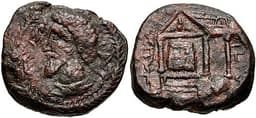
Vologases IV of Parthia
Emperor · Ancient
58.6Total
Basic Information
Born
-697
130
Died
-628
191
Era
Ancient
Ancient
Nationality
China
Parthian Empire
Occupation
Emperor
Emperor
Civilization
Eastern
Middle Eastern
Score Comparison
Military (10%)
80.0
67.5
Political (20%)
65.0
68.0
Influence (20%)
59.0
52.5
Legacy (20%)
54.0
44.2
Leadership (15%)
66.0
72.0
Strategy (15%)
68.1
66.3
TOTAL
62.7
58.6
Duke Wen of Jin — Complete Timeline
656 BC
Exile and Return to JinPolitical Action◆ Major
Duke Wen of Jin (then Prince Chong'er) was forced into exile for 19 years after a political purge in Jin. He traveled through several states, gaining experience and allies, before returning to claim the throne of Jin in 636 BCE.
Spring and AutumnExileReturn
Impact: regionaltragic
636 BC
Reforms in Jin StateReform◆ Major
Upon returning to power, Duke Wen implemented administrative and military reforms in Jin. He reorganized the army into three divisions, promoted talented officials regardless of birth, and established a legal code, strengthening Jin's governance.
Spring and AutumnReformJin State
Impact: regionalprogressive
632 BC
Battle of ChengpuWar
Duke Wen of Jin defeated the state of Chu at the Battle of Chengpu, the largest battle of the Spring and Autumn period. The victory established Jin as the dominant power and Duke Wen as the hegemon of the Chinese states.
Spring and AutumnBattleHegemon
Impact: regional
Convening of the Alliance of JiantuPolitical Action◆ Major
After the Battle of Chengpu, Duke Wen convened a major alliance of states at Jiantu, where he was formally recognized as hegemon. He also received a mandate from the Zhou king to lead military campaigns, solidifying his authority.
Spring and AutumnAllianceHegemon
Impact: regionalconstructive
Vologases IV of Parthia — Complete Timeline
162 AD
War with Roman Emperor Marcus AureliusWar◆ Major
Vologases IV invaded Armenia and Syria, triggering a major war with the Roman Empire under Emperor Marcus Aurelius. The Parthians initially captured Armenia and invaded Syria, but were later pushed back by Roman counter-offensives.
Roman-Parthian WarInvasionMarcus Aurelius
Impact: regionaldestructive
165 AD
Roman Sack of CtesiphonWar◆ Major
Roman general Avidius Cassius led a campaign that sacked the Parthian capital Ctesiphon. The city was looted and the royal palace destroyed. This was a major defeat for Vologases IV and weakened Parthian prestige.
BattleCapital SackedRoman-Parthian War
Impact: regionaldestructive
Outbreak of the Antonine PlagueOther◆ Major
Roman soldiers returning from the Parthian campaign brought back a devastating plague, known as the Antonine Plague, which spread throughout the Roman Empire. This pandemic killed millions and severely weakened both Rome and Parthia.
PandemicAntonine PlagueConsequences of War
Impact: globaltragic
191 AD
Last Strong Parthian KingOther
Vologases IV is considered the last strong Parthian king. After his death, the Parthian Empire entered a period of decline marked by civil wars and internal strife, eventually leading to the rise of the Sassanid Empire.
End of EraParthian DeclineHistorical Assessment
Impact: regional
Expert Analysis
Origins
Duke Wen of Jin, born Chong'er in 697 BCE, was a prince of the Jin state during the Spring and Autumn period. His father, Duke Xian of Jin, favored a younger son, leading to a political purge that forced Chong'er into exile for 19 years. He wandered through eight states, including Di, Qi, Chu, and Qin, gaining allies and experience. His education was practical, learning diplomacy and military tactics on the road.
Vologases IV ruled the Parthian Empire from 147 to 191 CE. His early life is obscure, but he likely came from the Arsacid royal family. He inherited a stable empire but faced internal dissent and Roman aggression. His upbringing involved training in horsemanship and archery, typical for Parthian nobility, and he was well-versed in diplomacy.
Rise to Power
Duke Wen returned to Jin in 636 BCE after his brother, Duke Hui, died. With military support from the Qin state, he defeated Hui's son and ascended the throne. His exile had taught him patience and the value of alliances. He quickly consolidated power by rewarding loyal followers and executing opponents.
Vologases IV became king in 147 CE after the death of his predecessor, possibly his father Mithridates IV. He faced an immediate challenge from a usurper, but he suppressed the rebellion. His rise was typical for Parthian kings, relying on noble support and military strength.
Leadership & Governance
Duke Wen implemented administrative reforms in Jin, reorganizing the army into three divisions (upper, middle, lower) and appointing talented ministers like Hu Yan and Xian Zhen. He promoted merit over birth, a significant shift. He also established a legal code and reduced noble privileges, strengthening central control. His governance was pragmatic, focusing on state efficiency.
Vologases IV maintained traditional Parthian governance, relying on feudal nobles and the royal guard. He did not reform the administrative system. He attempted to strengthen the monarchy by curbing noble power but with limited success. His leadership was more reactive than proactive.
Triumph & Tragedy
Duke Wen's greatest triumph was the Battle of Chengpu in 632 BCE, where he defeated the Chu state. With 70,000 troops, he outmaneuvered Chu's army, using terrain and timing. This victory made Jin the hegemon. His tragedy was the later decline of Jin due to internal strife, partly because his reforms empowered families who later fought for control.
Vologases IV's triumph was the initial invasion of Armenia and Syria in 161-165 CE, capturing Seleucia and Antioch. However, his tragedy was the Roman counterattack under Avidius Cassius, who sacked Ctesiphon in 165 CE. The Parthian capital was looted, and the royal palace destroyed. The Antonine Plague, brought back by Roman troops, weakened both empires.
Character & Destiny
Duke Wen was patient and calculating, shaped by his exile. He trusted his advisors and learned from setbacks. His character fostered loyalty and stability. In contrast, Vologases IV was ambitious but overconfident. He underestimated Roman resolve after initial victories. His failure to secure lasting gains led to Parthian decline.
Legacy
Duke Wen's legacy is as one of the Five Hegemons, establishing Jin as a dominant power for centuries. His reforms influenced later Chinese statecraft. He scored 54.0 in legacy. Vologases IV is remembered as the last strong Parthian king; after him, civil wars and Sassanid rise ended Parthian rule. His legacy score is 44.2.
Conclusion
Duke Wen of Jin had greater impact. His military score of 80.0 and strategy of 68.1 led to decisive victories that shaped Chinese history. Vologases IV, with military 67.5 and strategy 66.3, fought bravely but ultimately lost to Rome. Duke Wen's total score of 62.7 exceeds Vologases' 58.6. While both were significant, Duke Wen's reforms and hegemony had longer-lasting effects.
Rankings
🥇
Duke Wen of JinLeader
Mil: 80.0Pol: 65.0Inf: 59.0
62.7
🥈
Vologases IV of Parthia
Mil: 67.5Pol: 68.0Inf: 52.5
58.6
+4.1 behind
How This Comparison Works
Algorithm
Each figure is scored on 6 dimensions (0—100 scale) based on structured historical data: Military (10%), Political (20%), Influence (20%), Legacy (20%), Leadership (15%), Strategy (15%). The weighted total produces the final ranking.
Data Sources
Scores are computed from structured sub-indicators in the database. Scale factors adjust for era (Ancient ×0.85, Modern ×1.0) and civilization size (Eastern ×1.05, Other ×0.80) to account for differences in population and military scale.
Maximum 3 Figures
Comparisons are limited to 2—3 figures to ensure readability and statistical meaningfulness.
Error Margins
±5 points per dimension — Sub-scores are derived from historical records with inherent uncertainty. Two figures within 5 points on a dimension should be considered roughly equivalent in that area.
Total Score Accuracy
±3 points overall — The weighted combination of 6 dimensions produces a total score with approximately ±3 points of uncertainty. Differences of less than 3 points are not statistically significant— the figures are effectively tied.
Known Limitations
- Historical records are incomplete and uneven across civilizations
- Figures from oral-tradition societies may be underrepresented
- Occupation labels can misclassify multi-role figures
- Scores measure capability and impact, not moral character
- Quantitative scoring is a comparison tool, not absolute truth
Capability Radar
Military (10%) — Battles & Warfare
Battles
75
65
Win Rate
70
55
Expansion
75
60
Political (20%) — Governance & Reform
Reform
65
55
Diplomacy
85
60
Economy
70
55
Influence (20%) — Cultural & Global Reach
Cultural
60
40
Global
55
35
Legacy (20%) — Historical Impact
Historical
70
45
Longevity
65
40
Leadership (15%) — Power & Stability
Tenure
70
70
Stability
65
60
Strategy (15%) — Tactics & Innovation
Strategy
85
65
Tactics
80
60
Reform
60
50
Similar Comparisons
Comments & Discussion
No comments yet. Be the first to share your thoughts!