Loading...
This comparison has not been analyzed yet.
One-time AI generation (~1 minute). Scores and timeline are already available below.
Antoine Gizenga vs Gerhard Schroder
Gerhard Schroder leads by 18.5 pts · 2 figures compared
…
Antoine Gizenga
Politician · Modern
40.1Total

Gerhard Schroder
Politician · Modern
58.6Total
Basic Information
Born
1925
1944
Died
—
—
Era
Modern
Modern
Nationality
DR Congo
Germany
Occupation
Politician
Politician
Civilization
Other
Western
Score Comparison
Military (10%)
36.6
49.6
Political (20%)
25.0
70.0
Influence (20%)
47.1
60.0
Legacy (20%)
37.5
52.0
Leadership (15%)
41.5
72.0
Strategy (15%)
53.5
43.1
TOTAL
40.1
58.6
Antoine Gizenga — Complete Timeline
1960 AD
Declared Prime Minister of Free Republic of CongoPolitical Action◆ Major
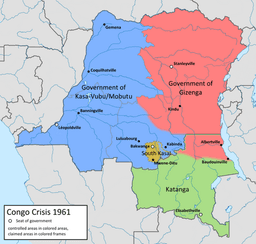
During the Congo Crisis, Gizenga declared himself prime minister of the rival Free Republic of Congo based in Stanleyville, opposing the central government in L
Congo CrisisSecessionStanleyville
Impact: national
1962 AD
Arrested and ImprisonedPolitical Action
Gizenga was arrested by central government forces and imprisoned for his role in the Stanleyville rebellion. He remained in detention for several years, effectively ending his challenge to the L
ImprisonmentCongo CrisisPolitical Repression
Impact: nationaltragic
Gerhard Schroder — Complete Timeline
2003 AD
Implementation of Agenda 2010 ReformsReform
Schroder's government enacted the Agenda 2010 package of labor market and welfare reforms, which cut unemployment benefits, deregulated the labor market, and reduced the power of unions. The reforms were credited with later reducing unemployment but were deeply unpopular with the SPD's base.
Labor ReformWelfare StateHartz Reforms
Impact: nationaldestructive
Opposition to the Iraq WarPolitical Action◆ Major
Schroder firmly opposed the US-led invasion of Iraq, refusing to commit German troops even if a UN mandate was obtained. This stance was popular in Germany but strained relations with the US, particularly with President George W. Bush.
Iraq WarForeign PolicyUS-Germany Relations
Impact: globalconstructive
2005 AD
Loss of Confidence Vote and Early ElectionPolitical Action◆ Major
Schroder deliberately lost a confidence vote in the Bundestag to trigger early federal elections after his SPD lost a key state election. The gambit backfired as the CDU/CSU won the most seats, leading to a grand coalition under Angela Merkel and Schroder's departure.
Confidence VoteElectionPolitical Strategy
Impact: nationaldestructive
This comparison has not been analyzed yet.
One-time AI generation (~1 minute). Scores and timeline are already available below.
Rankings
🥇
Gerhard SchroderLeader
Mil: 49.6Pol: 70.0Inf: 60.0
58.6
🥈
Antoine Gizenga
Mil: 36.6Pol: 25.0Inf: 47.1
40.1
+18.5 behind
How This Comparison Works
Algorithm
Each figure is scored on 6 dimensions (0—100 scale) based on structured historical data: Military (10%), Political (20%), Influence (20%), Legacy (20%), Leadership (15%), Strategy (15%). The weighted total produces the final ranking.
Data Sources
Scores are computed from structured sub-indicators in the database. Scale factors adjust for era (Ancient ×0.85, Modern ×1.0) and civilization size (Eastern ×1.05, Other ×0.80) to account for differences in population and military scale.
Maximum 3 Figures
Comparisons are limited to 2—3 figures to ensure readability and statistical meaningfulness.
Error Margins
±5 points per dimension — Sub-scores are derived from historical records with inherent uncertainty. Two figures within 5 points on a dimension should be considered roughly equivalent in that area.
Total Score Accuracy
±3 points overall — The weighted combination of 6 dimensions produces a total score with approximately ±3 points of uncertainty. Differences of less than 3 points are not statistically significant— the figures are effectively tied.
Known Limitations
- Historical records are incomplete and uneven across civilizations
- Figures from oral-tradition societies may be underrepresented
- Occupation labels can misclassify multi-role figures
- Scores measure capability and impact, not moral character
- Quantitative scoring is a comparison tool, not absolute truth
Capability Radar
Military (10%) — Battles & Warfare
Battles
5
29
Win Rate
5
34
Expansion
5
33
Political (20%) — Governance & Reform
Reform
15
75
Diplomacy
15
60
Economy
10
70
Influence (20%) — Cultural & Global Reach
Cultural
10
40
Global
10
50
Legacy (20%) — Historical Impact
Historical
15
55
Longevity
10
45
Leadership (15%) — Power & Stability
Tenure
20
65
Stability
10
55
Strategy (15%) — Tactics & Innovation
Strategy
5
37
Tactics
5
41
Reform
5
47
Similar Comparisons
Comments & Discussion
No comments yet. Be the first to share your thoughts!