Loading...
Gerhard Schroder vs John Adams
John Adams leads by 6.1 pts · 2 figures compared
…

Gerhard Schroder
Politician · Modern
58.6Total
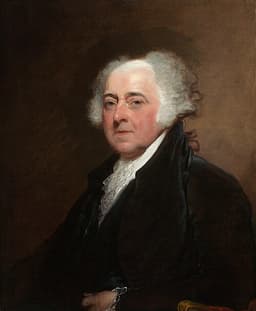
John Adams
Politician · Modern
64.7Total
Basic Information
Born
1944
1735
Died
—
1826
Era
Modern
Modern
Nationality
Germany
United States
Occupation
Politician
Politician
Civilization
Western
Western
Score Comparison
Military (10%)
49.6
49.7
Political (20%)
70.0
70.0
Influence (20%)
60.0
82.0
Legacy (20%)
52.0
55.0
Leadership (15%)
72.0
72.0
Strategy (15%)
43.1
42.0
TOTAL
58.6
64.7
Gerhard Schroder — Complete Timeline
2003 AD
Implementation of Agenda 2010 ReformsReform
Schroder's government enacted the Agenda 2010 package of labor market and welfare reforms, which cut unemployment benefits, deregulated the labor market, and reduced the power of unions. The reforms were credited with later reducing unemployment but were deeply unpopular with the SPD's base.
Labor ReformWelfare StateHartz Reforms
Impact: nationaldestructive
Opposition to the Iraq WarPolitical Action◆ Major
Schroder firmly opposed the US-led invasion of Iraq, refusing to commit German troops even if a UN mandate was obtained. This stance was popular in Germany but strained relations with the US, particularly with President George W. Bush.
Iraq WarForeign PolicyUS-Germany Relations
Impact: globalconstructive
2005 AD
Loss of Confidence Vote and Early ElectionPolitical Action◆ Major
Schroder deliberately lost a confidence vote in the Bundestag to trigger early federal elections after his SPD lost a key state election. The gambit backfired as the CDU/CSU won the most seats, leading to a grand coalition under Angela Merkel and Schroder's departure.
Confidence VoteElectionPolitical Strategy
Impact: nationaldestructive
John Adams — Complete Timeline
1770 AD
Defense of the British Soldiers in the Boston Massacre TrialPolitical Action◆ Major
Adams defended British soldiers accused of murder in the Boston Massacre. He secured acquittals for most, arguing for fair trial rights. This action demonstrated his commitment to rule of law despite political pressure.
Boston MassacreLegal DefenseAmerican Revolution
1796 AD
Election as Second President of the United StatesPolitical Action◆ Major
Adams was elected as the second US president, defeating Thomas Jefferson. His presidency was marked by tensions with France, the XYZ Affair, and the passage of the Alien and Sedition Acts.
PresidencyUS PoliticsElection
Impact: national
1798 AD
Signing of the Alien and Sedition ActsPolitical Action◆ Major
Adams signed the Alien and Sedition Acts, which restricted immigration and criminalized criticism of the government. These acts were widely condemned as violations of free speech and led to the Kentucky and Virginia Resolutions.
Alien and Sedition ActsCivil LibertiesUS Politics
Impact: nationaldestructive
1801 AD
Appointment of John Marshall as Chief JusticePolitical Action◆ Major
Adams appointed John Marshall as Chief Justice of the Supreme Court in the final months of his presidency. Marshall's tenure established judicial review and shaped American constitutional law for decades.
Supreme CourtJudicial ReviewUS Constitution
Impact: nationalconstructive
Peaceful Transfer of Power to Thomas JeffersonPolitical Action
Adams peacefully transferred power to his political rival Thomas Jefferson after losing the 1800 election. This set a precedent for peaceful transitions of power in the United States.
Peaceful TransferUS PoliticsDemocracy
Impact: nationalconstructive
Expert Analysis
Origins
Gerhard Schröder was born on April 7, 1944, in Mossenberg, Germany, into a working-class family. His father died in World War II, and his mother worked as a cleaner. Schröder left school at 14 to work as a retail apprentice, later earning his Abitur through night school and studying law at the University of Göttingen. He joined the Social Democratic Party (SPD) in 1963 and worked as a lawyer before entering politics full-time.
John Adams was born on October 30, 1735, in Braintree, Massachusetts, to a Puritan farming family. His father was a deacon and farmer. Adams graduated from Harvard College at age 20 and became a lawyer. He was deeply influenced by Enlightenment thinkers and became a leading voice for American independence, serving in the Continental Congress and helping draft the Declaration of Independence.
Rise to Power
Schröder's political ascent began as a member of the Bundestag in 1980. He served as Minister-President of Lower Saxony from 1990 to 1998, gaining national prominence. In 1998, he led the SPD to victory in federal elections, forming a coalition with the Greens and becoming Chancellor of Germany, succeeding Helmut Kohl.
Adams rose to prominence as a delegate to the First and Second Continental Congresses. He nominated George Washington as commander-in-chief and was a key figure in the push for independence. He served as a diplomat in France and the Netherlands, helping secure crucial support. In 1789, he became the first Vice President under Washington, and in 1796 he was elected the second President of the United States.
Leadership & Governance
Schröder's chancellorship (1998-2005) was marked by his Agenda 2010 reforms, which restructured Germany's labor market and welfare system. These reforms cut unemployment benefits, deregulated the labor market, and aimed to stimulate economic growth. While controversial, they are credited with later reducing unemployment and strengthening the German economy. Schröder also opposed the 2003 Iraq War, refusing to commit troops even under UN mandate, a stance that resonated with the German public but strained relations with the United States.
Adams' presidency (1797-1801) was dominated by foreign policy challenges, particularly with France. The XYZ Affair led to an undeclared naval war (Quasi-War). Adams avoided full-scale war by pursuing diplomacy, a decision that cost him support from his own Federalist Party. Domestically, he signed the Alien and Sedition Acts, which restricted immigration and criminalized criticism of the government, widely seen as an overreach. However, he also appointed John Marshall as Chief Justice, who established judicial review.
Triumph & Tragedy
Schröder's greatest success was the implementation of Agenda 2010, which modernized Germany's economy and laid the groundwork for its later strength. His opposition to the Iraq War boosted his popularity at home. However, his decision to call a confidence vote in 2005 to trigger early elections backfired when he narrowly lost, ending his chancellorship. His post-political career as a lobbyist for Russian energy companies, including Gazprom, damaged his reputation.
Adams' greatest triumph was the peaceful transfer of power to his political rival Thomas Jefferson after the contentious 1800 election, setting a vital precedent for democratic transitions. His defense of British soldiers in the Boston Massacre trial demonstrated his commitment to the rule of law. However, the Alien and Sedition Acts are a major blot on his legacy, as they violated free speech. His failure to build a strong political party left him isolated.
Character & Destiny
Schröder was pragmatic and ambitious, willing to push through unpopular reforms for long-term gain. His political instincts were sharp, but his later ties to Russia revealed a lack of ethical boundaries. His character led him to prioritize economic modernization over party unity, which ultimately cost him power.
Adams was principled, often stubborn, and fiercely independent. He valued law and order but could be vain and sensitive to criticism. His decision to avoid war with France was wise but politically costly. His inability to compromise or build alliances contributed to his single-term presidency.
Legacy
Schröder's legacy is mixed: Agenda 2010 transformed Germany's economy and influenced European labor policies, but his post-chancellorship activities tarnished his image. He scored 52.0 in Legacy on the HistoryVersus scale, reflecting the controversy.
Adams' legacy is more enduring. His role in the American Revolution, his presidency, and his appointment of John Marshall shaped the United States profoundly. The peaceful transfer of power is a cornerstone of American democracy. He scored 55.0 in Legacy, slightly higher than Schröder.
Conclusion
While Schröder had a significant impact on modern Germany, John Adams' contributions to the founding of the United States and the establishment of democratic norms are more foundational and lasting. Adams' actions—defending the rule of law, ensuring peaceful transitions, and shaping the judiciary—have resonated for centuries. Schröder's reforms, though important, are more recent and context-specific. On the HistoryVersus scale, Adams' total score of 64.7 surpasses Schröder's 58.6, reflecting his greater overall impact. Therefore, John Adams had a greater historical impact.
Rankings
🥇
John AdamsLeader
Mil: 49.7Pol: 70.0Inf: 82.0
64.7
🥈
Gerhard Schroder
Mil: 49.6Pol: 70.0Inf: 60.0
58.6
+6.1 behind
How This Comparison Works
Algorithm
Each figure is scored on 6 dimensions (0—100 scale) based on structured historical data: Military (10%), Political (20%), Influence (20%), Legacy (20%), Leadership (15%), Strategy (15%). The weighted total produces the final ranking.
Data Sources
Scores are computed from structured sub-indicators in the database. Scale factors adjust for era (Ancient ×0.85, Modern ×1.0) and civilization size (Eastern ×1.05, Other ×0.80) to account for differences in population and military scale.
Maximum 3 Figures
Comparisons are limited to 2—3 figures to ensure readability and statistical meaningfulness.
Error Margins
±5 points per dimension — Sub-scores are derived from historical records with inherent uncertainty. Two figures within 5 points on a dimension should be considered roughly equivalent in that area.
Total Score Accuracy
±3 points overall — The weighted combination of 6 dimensions produces a total score with approximately ±3 points of uncertainty. Differences of less than 3 points are not statistically significant— the figures are effectively tied.
Known Limitations
- Historical records are incomplete and uneven across civilizations
- Figures from oral-tradition societies may be underrepresented
- Occupation labels can misclassify multi-role figures
- Scores measure capability and impact, not moral character
- Quantitative scoring is a comparison tool, not absolute truth
Capability Radar
Military (10%) — Battles & Warfare
Battles
29
26
Win Rate
34
32
Expansion
33
38
Political (20%) — Governance & Reform
Reform
75
75
Diplomacy
60
85
Economy
70
55
Influence (20%) — Cultural & Global Reach
Cultural
40
65
Global
50
65
Legacy (20%) — Historical Impact
Historical
55
75
Longevity
45
70
Leadership (15%) — Power & Stability
Tenure
65
60
Stability
55
50
Strategy (15%) — Tactics & Innovation
Strategy
37
41
Tactics
41
38
Reform
47
42
Similar Comparisons
Comments & Discussion
No comments yet. Be the first to share your thoughts!