Loading...
This comparison has not been analyzed yet.
One-time AI generation (~1 minute). Scores and timeline are already available below.
Antoine Gizenga vs Moncef Marzouki
Moncef Marzouki leads by 8.7 pts · 2 figures compared
…
Antoine Gizenga
Politician · Modern
40.1Total

Moncef Marzouki
Politician · Modern
48.8Total
Basic Information
Born
1925
1945
Died
—
—
Era
Modern
Modern
Nationality
DR Congo
Tunisia
Occupation
Politician
Politician
Civilization
Other
Middle Eastern
Score Comparison
Military (10%)
36.6
40.4
Political (20%)
25.0
68.0
Influence (20%)
47.1
54.1
Legacy (20%)
37.5
43.3
Leadership (15%)
41.5
40.0
Strategy (15%)
53.5
42.4
TOTAL
40.1
48.8
Antoine Gizenga — Complete Timeline
1960 AD
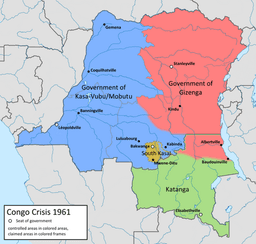
Declared Prime Minister of Free Republic of CongoPolitical Action◆ Major
During the Congo Crisis, Gizenga declared himself prime minister of the rival Free Republic of Congo based in Stanleyville, opposing the central government in L
Congo CrisisSecessionStanleyville
Impact: national
1962 AD
Arrested and ImprisonedPolitical Action
Gizenga was arrested by central government forces and imprisoned for his role in the Stanleyville rebellion. He remained in detention for several years, effectively ending his challenge to the L
ImprisonmentCongo CrisisPolitical Repression
Impact: nationaltragic
Moncef Marzouki — Complete Timeline
2001 AD
Founding of the Congress for the Republic partyPolitical Action
Marzouki founded the Congress for the Republic (CPR) party as a secular, left-leaning opposition movement. The party was banned under President Zine El Abidine Ben Ali, forcing Marzouki into exile in France.
Political PartyOpposition
Impact: nationalconstructive
2011 AD
Election as President of TunisiaPolitical Action◆ Major
Following the Tunisian Revolution, the Constituent Assembly elected Moncef Marzouki as President of Tunisia. He became the first democratically elected president in the country's history, serving from 2011 to 2014.
DemocracyArab SpringElection
Impact: nationalprogressive
2014 AD
Tunisian Constitution of 2014Reform◆ Major
Marzouki oversaw the adoption of a new constitution, which established a mixed presidential-parliamentary system, guaranteed human rights, and enshrined gender equality. The constitution was widely praised as a model for the Arab world.
ConstitutionReformDemocracy
Impact: nationalconstructive
Defeat in 2014 presidential electionPolitical Action◆ Major
Marzouki lost the presidential runoff to Beji Caid Essebsi, receiving 44.3% of the vote. This marked the first peaceful democratic transfer of power in Tunisia's history.
ElectionDemocracy
Impact: national
This comparison has not been analyzed yet.
One-time AI generation (~1 minute). Scores and timeline are already available below.
Rankings
🥇
Moncef MarzoukiLeader
Mil: 40.4Pol: 68.0Inf: 54.1
48.8
🥈
Antoine Gizenga
Mil: 36.6Pol: 25.0Inf: 47.1
40.1
+8.7 behind
How This Comparison Works
Algorithm
Each figure is scored on 6 dimensions (0—100 scale) based on structured historical data: Military (10%), Political (20%), Influence (20%), Legacy (20%), Leadership (15%), Strategy (15%). The weighted total produces the final ranking.
Data Sources
Scores are computed from structured sub-indicators in the database. Scale factors adjust for era (Ancient ×0.85, Modern ×1.0) and civilization size (Eastern ×1.05, Other ×0.80) to account for differences in population and military scale.
Maximum 3 Figures
Comparisons are limited to 2—3 figures to ensure readability and statistical meaningfulness.
Error Margins
±5 points per dimension — Sub-scores are derived from historical records with inherent uncertainty. Two figures within 5 points on a dimension should be considered roughly equivalent in that area.
Total Score Accuracy
±3 points overall — The weighted combination of 6 dimensions produces a total score with approximately ±3 points of uncertainty. Differences of less than 3 points are not statistically significant— the figures are effectively tied.
Known Limitations
- Historical records are incomplete and uneven across civilizations
- Figures from oral-tradition societies may be underrepresented
- Occupation labels can misclassify multi-role figures
- Scores measure capability and impact, not moral character
- Quantitative scoring is a comparison tool, not absolute truth
Capability Radar
Military (10%) — Battles & Warfare
Battles
5
24
Win Rate
5
23
Expansion
5
26
Political (20%) — Governance & Reform
Reform
15
55
Diplomacy
15
50
Economy
10
40
Influence (20%) — Cultural & Global Reach
Cultural
10
30
Global
10
35
Legacy (20%) — Historical Impact
Historical
15
40
Longevity
10
20
Leadership (15%) — Power & Stability
Tenure
20
60
Stability
10
35
Strategy (15%) — Tactics & Innovation
Strategy
5
28
Tactics
5
35
Reform
5
38
Similar Comparisons
Comments & Discussion
No comments yet. Be the first to share your thoughts!