Loading...
Antonio Ramalho Eanes vs Turenne
Turenne leads by 22.9 pts · 2 figures compared
…

Antonio Ramalho Eanes
General · Modern
52.9Total
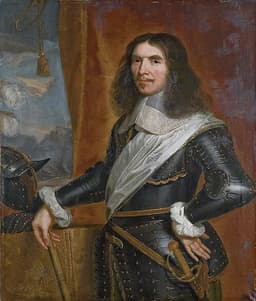
Turenne
General · Modern
75.8Total
Basic Information
Born
1935
1611
Died
—
1675
Era
Modern
Modern
Nationality
Portugal
France
Occupation
General
General
Civilization
Western
Western
Score Comparison
Military (10%)
22.6
79.9
Political (20%)
72.0
72.0
Influence (20%)
54.9
88.0
Legacy (20%)
46.7
65.0
Leadership (15%)
79.8
77.2
Strategy (15%)
25.0
72.0
TOTAL
52.9
75.8
Antonio Ramalho Eanes — Complete Timeline
1974 AD
Led the Military During the Carnation RevolutionPolitical Action◆ Major
Eanes was a key military figure in the Carnation Revolution, commanding the forces that overthrew the Estado Novo. He later became the first Chief of Staff of the Army under the new democratic regime.
RevolutionMilitaryDemocracy
Impact: nationalconstructive
1976 AD
Elected President of PortugalPolitical Action◆ Major
Eanes was elected as the first constitutional President of Portugal after the Carnation Revolution, winning 61% of the vote. He was a general who had played a key role in the revolution and the transition to democracy.
PresidencyDemocracyTransition
Impact: nationalconstructive
1980 AD
Re-elected as President of PortugalPolitical Action◆ Major
Eanes was re-elected as President with 56% of the vote, defeating conservative candidate Ant
PresidencyRe-electionStability
Impact: nationalconstructive
1985 AD
Founded the Democratic Renewal PartyPolitical Action
After his presidency, Eanes founded the Democratic Renewal Party, a centrist political party. The party won seats in the 1985 election but later declined, and Eanes retired from active politics.
Party FoundationCentrismPost-Presidency
Impact: national
Turenne — Complete Timeline
1639 AD
Campaign in the ValtellinaWar
Turenne commanded French forces in the Valtellina during the Thirty Years' War. He captured several fortresses and secured the strategic pass for France, demonstrating his early military skill.
Thirty Years' WarAlpsEarly Career
Impact: regional
1658 AD
Battle of the DunesWar◆ Major
Turenne commanded the French army to victory over the Spanish at the Battle of the Dunes near Dunkirk. The victory led to the capture of Dunkirk and forced Spain to seek peace, ending the Franco-Spanish War.
Franco-Spanish WarDunkirkMilitary Victory
Impact: regional
1674 AD
Battle of the RhineWar◆ Major
Turenne led a French army across the Rhine in winter, surprising the Imperial forces. He defeated the Austrians at the Battle of Entzheim and later at Turckheim, securing French control of Alsace.
Franco-Dutch WarAlsaceWinter Campaign
Impact: regional
Battle of the SambreWar◆ Major
Turenne defeated the Spanish and Dutch forces at the Battle of Seneffe. The battle was costly but prevented the Allies from invading France. It demonstrated Turenne's tactical skill in defensive warfare.
Franco-Dutch WarDefensive BattleTactics
Impact: regional
1675 AD
Death of TurenneWar◆ Major
Turenne was killed by a cannonball while reconnoitering enemy positions at the Battle of Sasbach. His death was a major loss for France. He was buried with honors in the Basilica of Saint-Denis.
Death in BattleFranco-Dutch WarMilitary Loss
Impact: nationaltragic
Expert Analysis
Origins
**Antonio Ramalho Eanes** was born on January 25, 1935, in Alcains, Portugal, into a modest family. His father was a construction worker. He attended the Military Academy and graduated as an infantry officer. Eanes served in the Portuguese Colonial War in Angola and Mozambique, gaining firsthand experience of the military's role in politics.
**Henri de la Tour d'Auvergne, Vicomte de Turenne**, was born on September 11, 1611, in Sedan, France, into a noble family. His mother was a Protestant heiress, and his father was a duke. Turenne was raised in the Protestant faith and received military training from a young age. He joined the Dutch army at age 14, fighting under Maurice of Nassau.
Rise to Power
Eanes rose to prominence during the Carnation Revolution of April 25, 1974. As a major, he commanded the military forces that overthrew the Estado Novo dictatorship. His role in securing the revolution's success made him a national figure. In 1975, he became Chief of Staff of the Armed Forces. His political career culminated in his election as President on June 27, 1976, winning 61% of the vote.
Turenne's rise began in the Thirty Years' War. In 1630, he joined the French army and quickly advanced due to his noble birth and military skill. By 1634, he was a maréchal de camp. In 1643, he was appointed a Marshal of France at age 32. His key turning point came during the Fronde civil wars (1648-1653), when he initially supported the rebels but later switched to the royal side, securing his position under Louis XIV.
Leadership & Governance
Eanes's leadership style was constitutional and stabilizing. As president, he prioritized consolidating democracy and civilian control over the military. He oversaw the drafting of the 1976 constitution and worked to prevent a communist takeover. His governance scored 72.0 in political acumen. However, his military score is low at 22.6, reflecting his limited battlefield experience. His strategy score is 25.0, indicating a focus on political rather than military strategy.
Turenne excelled in military command with a military score of 79.9 and strategy score of 72.0. He was known for his aggressive yet calculated tactics, such as crossing the Rhine in winter (1674) to surprise Imperial forces. His leadership score of 77.2 reflects his ability to inspire troops and adapt to changing circumstances. Politically, he scored 72.0, having navigated the Fronde effectively.
Triumph & Tragedy
Eanes's greatest success was his role in stabilizing Portugal after the Carnation Revolution. He was re-elected in 1980 with 56% of the vote, defeating conservative candidate António Soares Carneiro. However, his political influence waned after his presidency. Founding the Democratic Renewal Party in 1985, it won seats but later declined, and Eanes failed to maintain a lasting political movement.
Turenne's triumphs include the Battle of the Dunes (1658), where he defeated the Spanish and captured Dunkirk. He also successfully campaigned in the Valtellina during the Thirty Years' War. His tragedy came at the Battle of Sasbach (1675), where he was killed by a cannonball while scouting. His death was a major loss for France, and he was buried with honors.
Character & Destiny
Eanes was characterized by a calm, deliberate manner. He focused on rule of law and democratic processes, which shaped his destiny as a transitional figure. His caution in political maneuvering limited his long-term influence.
Turenne was known for his daring and strategic brilliance. His willingness to take risks, like winter campaigns, led to great victories but also to his death. Historical assessments praise his tactical innovations and adaptability.
Legacy
Eanes's legacy is as a stabilizing force in Portuguese democracy. The 1976 constitution and the consolidation of civilian rule are his enduring contributions. He is remembered as a figure of integrity but not a transformative leader.
Turenne's legacy is as one of the greatest French commanders. His campaigns influenced military tactics for generations. The French army honored his memory, and his name remains synonymous with military excellence. His influence score of 88.0 reflects this enduring impact.
Conclusion
While Eanes played a crucial role in Portugal's transition to democracy, Turenne's military achievements and strategic innovations had a broader and more lasting impact on European history. Turenne's total score of 75.8 far exceeds Eanes's 52.9. In military and strategic terms, Turenne is unquestionably greater. Eanes's political contributions, though significant, are confined to a single nation and a brief period. Thus, Turenne had greater overall impact.
Rankings
🥇
TurenneLeader
Mil: 79.9Pol: 72.0Inf: 88.0
75.8
🥈
Antonio Ramalho Eanes
Mil: 22.6Pol: 72.0Inf: 54.9
52.9
+22.9 behind
How This Comparison Works
Algorithm
Each figure is scored on 6 dimensions (0—100 scale) based on structured historical data: Military (10%), Political (20%), Influence (20%), Legacy (20%), Leadership (15%), Strategy (15%). The weighted total produces the final ranking.
Data Sources
Scores are computed from structured sub-indicators in the database. Scale factors adjust for era (Ancient ×0.85, Modern ×1.0) and civilization size (Eastern ×1.05, Other ×0.80) to account for differences in population and military scale.
Maximum 3 Figures
Comparisons are limited to 2—3 figures to ensure readability and statistical meaningfulness.
Error Margins
±5 points per dimension — Sub-scores are derived from historical records with inherent uncertainty. Two figures within 5 points on a dimension should be considered roughly equivalent in that area.
Total Score Accuracy
±3 points overall — The weighted combination of 6 dimensions produces a total score with approximately ±3 points of uncertainty. Differences of less than 3 points are not statistically significant— the figures are effectively tied.
Known Limitations
- Historical records are incomplete and uneven across civilizations
- Figures from oral-tradition societies may be underrepresented
- Occupation labels can misclassify multi-role figures
- Scores measure capability and impact, not moral character
- Quantitative scoring is a comparison tool, not absolute truth
Capability Radar
Military (10%) — Battles & Warfare
Battles
10
85
Win Rate
10
88
Expansion
5
80
Political (20%) — Governance & Reform
Reform
65
60
Diplomacy
60
75
Economy
50
55
Influence (20%) — Cultural & Global Reach
Cultural
30
65
Global
30
70
Legacy (20%) — Historical Impact
Historical
40
80
Longevity
30
75
Leadership (15%) — Power & Stability
Tenure
60
70
Stability
70
65
Strategy (15%) — Tactics & Innovation
Strategy
10
92
Tactics
10
90
Reform
15
75
Similar Comparisons
Comments & Discussion
No comments yet. Be the first to share your thoughts!