Loading...
Antti Rinne vs Julius Caesar
Julius Caesar leads by 43.2 pts · 2 figures compared
…
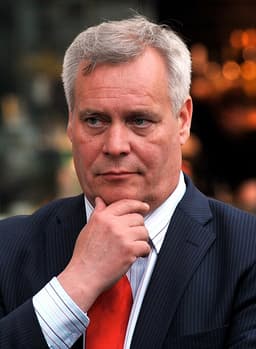
Antti Rinne
Politician · Modern
39.6Total

Julius Caesar
General · Ancient
82.8Total
Basic Information
Born
1962
-100
Died
—
-44
Era
Modern
Ancient
Nationality
Finland
Roman Republic
Occupation
Politician
General
Civilization
Western
Western
Score Comparison
Military (10%)
49.9
88.0
Political (20%)
32.2
78.0
Influence (20%)
45.5
85.0
Legacy (20%)
35.8
82.0
Leadership (15%)
34.6
80.0
Strategy (15%)
42.8
85.0
TOTAL
39.6
82.8
Antti Rinne — Complete Timeline
2005 AD
Served as President of the Finnish Trade Union ConfederationPolitical Action
Rinne served as President of the Finnish Trade Union Confederation (SAK) from 2005 to 2014. He represented Finnish workers in collective bargaining and labor policy discussions, building his political base.
Trade UnionLabor
Impact: nationalconstructive
2014 AD
Elected Leader of the Social Democratic PartyPolitical Action◆ Major
Rinne was elected leader of the Social Democratic Party of Finland in May 2014, succeeding Jutta Urpilainen. He led the party to a narrow victory in the 2019 parliamentary elections, becoming Prime Minister.
Party LeadershipElection
Impact: nationalconstructive
2019 AD
Appointed Prime Minister of FinlandPolitical Action◆ Major
Antti Rinne became Prime Minister of Finland in June 2019, leading a coalition government of five parties. His tenure lasted only six months, ending in December 2019 after a political crisis over the handling of a postal service strike.
GovernmentCoalition
Impact: national
Resigned as Prime MinisterPolitical Action◆ Major
Rinne resigned as Prime Minister in December 2019 following a no-confidence vote triggered by the Centre Party. The crisis stemmed from his handling of a postal workers' strike and disagreements over wage policies.
ResignationPolitical Crisis
Impact: nationaldestructive
Julius Caesar — Complete Timeline
58 BC
Gallic WarsWar◆ Major
Caesar, as proconsul of Gaul, launched a series of campaigns that conquered all of Gaul (modern France, Belgium, and parts of Switzerland). He fought numerous battles, including against the Helvetii, the Belgae, and the Gallic chieftain Vercingetorix. The wars brought immense wealth and a loyal army to Caesar.
Gallic WarsConquestRoman Expansion
Impact: regional
49 BC
Crossing the RubiconPolitical Action◆ Major
Caesar led Legio XIII across the Rubicon River into Italy, defying the Roman Senate's order to disband his army. This act triggered a civil war against Pompey and the Optimates, ultimately leading to Caesar's dictatorship and the end of the Roman Republic.
Roman Civil WarEnd of RepublicPower Struggle
Impact: global
48 BC
Battle of PharsalusWar◆ Major
Caesar's outnumbered army defeated the larger forces of Pompey the Great at Pharsalus in Greece. Caesar's tactical use of a reserve line to counter Pompey's cavalry charge proved decisive. Pompey fled to Egypt, where he was assassinated, leaving Caesar as the undisputed master of the Roman world.
Roman Civil WarBattleDecisive Victory
Impact: regional
44 BC
Appointment as Dictator for LifePolitical Action◆ Major
The Roman Senate appointed Caesar dictator perpetuo (dictator for life), granting him unprecedented personal power. This move concentrated military, legislative, and judicial authority in one person, effectively ending the Roman Republic's traditional system of checks and balances and alarming many senators.
DictatorshipEnd of RepublicPower Consolidation
Impact: regionaldestructive
Assassination on the Ides of MarchPolitical Action◆ Major
A group of Roman senators, led by Marcus Junius Brutus and Gaius Cassius Longinus, stabbed Caesar to death at a meeting of the Senate in the Theatre of Pompey. The assassination was intended to restore the Republic, but instead triggered another civil war that led to the rise of the Roman Empire.
AssassinationRoman PoliticsEnd of Republic
Impact: globaldestructive
Expert Analysis
antti-rinne-vs-julius-caesar
# The Ides of March and the December of Discontent
On a cold March morning in 44 BCE, Julius Caesar fell beneath twenty-three dagger strokes in the Senate chamber of Rome, his blood pooling on the marble floor as his assassins—men he had pardoned, promoted, and trusted—fled into the chaos they had unleashed. Two thousand years later, on a gray December day in 2019, Antti Rinne walked out of the Finnish Parliament building in Helsinki, his six-month tenure as prime minister ended not by daggers but by a no-confidence vote triggered by his coalition partners over a postal strike. One man had conquered Gaul, crossed the Rubicon, and reshaped the Western world; the other had negotiated labor agreements and managed a welfare state. What separates a figure who becomes legend from one who becomes a footnote? The answer lies not merely in ambition or circumstance, but in the tectonic forces of history itself.
Origins
Julius Caesar was born into the twilight of the Roman Republic, a world of senatorial intrigue, civil wars, and an empire straining against its own political structures. His family, the Julii, claimed descent from the goddess Venus, but their fortune had faded. Young Caesar grew up in a Rome where a man’s worth was measured by military glory, political cunning, and the ability to command legions. The era demanded audacity—and Caesar, from his youth, displayed it. He was captured by pirates as a young man, laughed at their ransom demand, and later crucified them. His world was one of conquest, where a general could win immortality by crossing the Alps.
Antti Rinne was born in 1962 in Helsinki, Finland, a small Nordic democracy that had emerged from the shadow of the Soviet Union into the quiet prosperity of the European Union. His father was a welder, his mother a nurse. The world that shaped Rinne was one of collective bargaining, welfare state expansion, and parliamentary compromise. He studied law, then spent decades in trade unions, rising to lead the Trade Union for the Public and Welfare Sectors. His era demanded not daring but patience, not conquest but consensus. While Caesar learned to command men in battle, Rinne learned to negotiate contracts at conference tables.
Rise to Power
Caesar’s path was forged in blood and debt. He climbed the Roman political ladder—the *cursus honorum*—through military commands in Spain, then through the consulship in 59 BCE, which he secured by forming the First Triumvirate with Pompey and Crassus. His real ascent began when he took command of Gaul. Over eight years, from 58 to 50 BCE, he conquered a territory larger than Italy, wrote his own commentaries to shape public opinion, and built an army that would follow him anywhere. When the Senate ordered him to disband his legions, he chose war. Crossing the Rubicon River in 49 BCE was not just a military decision; it was a declaration that he would rather rule alone than share power with men he despised.
Rinne’s rise was slower, quieter, and utterly procedural. He served as President of the Finnish Trade Union Confederation from 2005 to 2014, representing workers in an era of declining union membership. In 2014, he was elected leader of the Social Democratic Party, succeeding Jutta Urpilainen after her party’s poor election results. His path to power required no crossing of rivers, no defiance of the Senate—only patient coalition-building. When he became Prime Minister in June 2019, it was because four other parties agreed to share power with him, not because he had conquered them.
Leadership & Governance
Caesar governed with the absolute authority of a dictator who had seen how the Republic’s old institutions failed. He reformed the calendar, granted citizenship to provincials, initiated massive public works, and centralized power in his own hands. His military genius was total—at Alesia in 52 BCE, he besieged the Gallic chieftain Vercingetorix while simultaneously defeating a relief army, a feat of simultaneous offense and defense that remains a textbook maneuver. Yet his political wisdom was flawed: he pardoned his enemies, believing that mercy would secure loyalty, but it only gave them time to plot his murder.
Rinne governed as a prime minister in a parliamentary system where power is shared, contested, and temporary. His greatest achievement was forming a five-party coalition government that included the Centre Party, the Greens, the Left Alliance, and the Swedish People’s Party—a fragile alliance held together by compromise. His military score of 37.5 reflects the irrelevance of martial skill in a modern welfare state; his political score of 52.4 reflects the grinding reality of coalition politics. When a dispute over working conditions at the state-owned postal company Posti escalated into a strike in November 2019, Rinne’s handling of the crisis lost him the confidence of the Centre Party. He resigned not because he was defeated in battle, but because he could not hold a coalition together.
Triumph & Tragedy
Caesar’s greatest triumph was his conquest of Gaul, which doubled Rome’s territory and made him the wealthiest man in the Republic. His greatest tragedy was his own success: by destroying the Republic’s old order, he created a vacuum that could only be filled by his adopted heir, Octavian, who would become Augustus, the first Roman emperor. Caesar’s assassination on the Ides of March was the tragic climax of a life that had become too large for the institutions that contained him.
Rinne’s triumph was becoming Prime Minister of Finland—a position of honor and responsibility that few achieve. His tragedy came swiftly: his six-month tenure was the shortest of any Finnish prime minister since 1917. He was undone not by enemies with daggers, but by a postal strike, a lost confidence vote, and the cold arithmetic of parliamentary mathematics. His political score of 52.4 and legacy score of 48.9 reflect a career that reached its peak and collapsed before it could leave a mark.
Character & Destiny
Caesar was audacious, brilliant, and ruthless. He gambled everything—his life, his fortune, his legacy—on the belief that he could reshape history. His character drove him to take risks that no sane man would take, and his destiny was to succeed beyond all measure, then to be destroyed by his own success. “The die is cast,” he said at the Rubicon, and he meant it.
Rinne was patient, cautious, and consensus-driven. He rose through institutions that rewarded steadiness, not daring. His character made him a capable trade union leader and a competent party chairman, but it did not prepare him for the brutal speed of modern political crisis. His destiny was to be a placeholder—a man who held power briefly, then vanished from the stage.
Legacy
Caesar’s legacy is immeasurable. The Roman Empire that followed him lasted nearly five hundred years in the West and another thousand in the East. His name became synonymous with imperial power—*Kaiser* in German, *Tsar* in Russian. His writings are still studied in military academies. He is remembered as a genius, a tyrant, a reformer, and a warning.
Rinne’s legacy is a footnote in Finnish political history. He is remembered, if at all, as the prime minister who lasted six months, whose government collapsed over a labor dispute. His legacy score of 48.9 places him in the quiet margins of history, where most politicians—even those who lead nations—eventually reside.
Conclusion
Standing at the edge of the Rubicon, Caesar knew that the river he was about to cross would change the world. Standing at the edge of his resignation, Antti Rinne knew that the documents he was about to sign would change nothing. The difference between them is not merely one of talent or ambition—it is the difference between an age when one man could reshape civilization with a sword, and an age when even a prime minister is bound by the slow, patient, indifferent machinery of democracy. Caesar’s blood stained the Senate floor for centuries; Rinne’s signature faded from the record in weeks. Both men did what their eras demanded, but only one era demanded greatness.
Rankings
🥇
Julius CaesarLeader
Mil: 88.0Pol: 78.0Inf: 85.0
82.8
🥈
Antti Rinne
Mil: 49.9Pol: 32.2Inf: 45.5
39.6
+43.2 behind
How This Comparison Works
Algorithm
Each figure is scored on 6 dimensions (0—100 scale) based on structured historical data: Military (10%), Political (20%), Influence (20%), Legacy (20%), Leadership (15%), Strategy (15%). The weighted total produces the final ranking.
Data Sources
Scores are computed from structured sub-indicators in the database. Scale factors adjust for era (Ancient ×0.85, Modern ×1.0) and civilization size (Eastern ×1.05, Other ×0.80) to account for differences in population and military scale.
Maximum 3 Figures
Comparisons are limited to 2—3 figures to ensure readability and statistical meaningfulness.
Error Margins
±5 points per dimension — Sub-scores are derived from historical records with inherent uncertainty. Two figures within 5 points on a dimension should be considered roughly equivalent in that area.
Total Score Accuracy
±3 points overall — The weighted combination of 6 dimensions produces a total score with approximately ±3 points of uncertainty. Differences of less than 3 points are not statistically significant— the figures are effectively tied.
Known Limitations
- Historical records are incomplete and uneven across civilizations
- Figures from oral-tradition societies may be underrepresented
- Occupation labels can misclassify multi-role figures
- Scores measure capability and impact, not moral character
- Quantitative scoring is a comparison tool, not absolute truth
Capability Radar
Military (10%) — Battles & Warfare
Battles
27
95
Win Rate
34
92
Expansion
35
97
Political (20%) — Governance & Reform
Reform
20
90
Diplomacy
25
85
Economy
20
82
Influence (20%) — Cultural & Global Reach
Cultural
5
88
Global
5
94
Legacy (20%) — Historical Impact
Historical
10
95
Longevity
5
96
Leadership (15%) — Power & Stability
Tenure
10
75
Stability
10
60
Strategy (15%) — Tactics & Innovation
Strategy
37
94
Tactics
42
96
Reform
45
88
Similar Comparisons
Comments & Discussion
RomeSaltAnalyzer6/17/2026
Caesar got stabbed 23 times by senators he literally saved from execution, and people still debate whether he "deserved" it. Rinne got voted out by coalition partners over a postal strike. One changed the calendar, named months after himself, and triggered a 500-year empire. The other is a trivia answer in Nordic political science exams. Scale matters. Caesar's "failure" reshaped Western governance; Rinne's failure reshaped... Finnish postal policy. Context is everything. Put Rinne in the Senate
LegionarySkeptic6/17/2026
This comparison is an insult to comparative history. Caesar's crossing of the Rubicon was a deliberate act of civil war that ended the Republic's 450-year constitutional system. Rinne's "crossing" was signing a budget amendment nobody remembers. Caesar had a 60,000-man army and dictatorial ambition; Rinne had a coalition agreement and union negotiation skills. The only thing they share is that both were eventually abandoned by people closest to them—but one lost an empire, the other lost a cabin
艾达的钉子6/17/2026
别扯什么“历史的偶然性”了。凯撒被刺杀后,屋大维、安东尼和雷必达掐了十几年,最后罗马变成了帝国,元老院成了装饰品。林内辞职后呢?芬兰换了个马林,照样搞福利、加税、管罢工,连外交部副部长都没换人。这不是个人命运问题——这是结构性力量决定的。凯撒撞上了共和国的断裂带,林内撞上的不过是一封辞职信。把林内放公元前44年,他连广场演讲都撑不过三分钟就被人群嘘下去了。
条条小径6/17/2026
从“源头”上讲,两人最大的区别根本不在于出身或者野心,而在于权力合法性来源。凯撒的权力来自刀剑:高卢战利品、军团忠诚、行省总督权。林内的权力呢?议会席位、联合政府协议、民调数字。凯撒可以藐视元老院,因为他的军团只认他;林内不能藐视中间党,因为没有他们的支持票,他甚至组不了阁。所以凯撒倒台是“被谋杀”,林内倒台是“被弹劾”——这俩词本身就定义了完全不同的权力生态。
史海钓沉6/17/2026
最讽刺的其实是结局的对称性,你们注意到了吗?凯撒死在参政院,倒在他亲手赦免的布鲁图斯脚下;林内死在没有信任案,倒在他亲自拉拢的中左联盟手里。一个死于恩将仇报,一个死于背信弃义,这种人性层面的相似性,比什么“历史地位”更值得玩味。只不过前者被莎士比亚写成了悲剧,