Loading...
Anxi Khan vs Parakramabahu II
Parakramabahu II leads by 11.7 pts · 2 figures compared
…
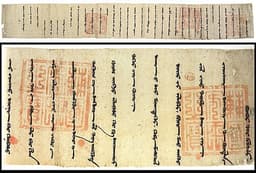
Anxi Khan
Emperor · Medieval
40.0Total
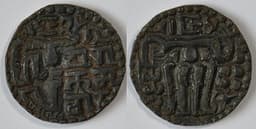
Parakramabahu II
Emperor · Medieval
51.7Total
Basic Information
Born
832
1236
Died
847
1270
Era
Medieval
Medieval
Nationality
Uyghur Khaganate
Sri Lanka
Occupation
Emperor
Emperor
Civilization
Eastern
Indian
Score Comparison
Military (10%)
50.0
40.0
Political (20%)
29.3
68.0
Influence (20%)
47.1
55.7
Legacy (20%)
37.5
48.3
Leadership (15%)
39.0
40.0
Strategy (15%)
35.7
55.0
TOTAL
40.0
51.7
Anxi Khan — Complete Timeline
840 AD
Collapse of the Uyghur KhaganateWar◆ Major
Anxi Khan's reign saw the final collapse of the Uyghur Khaganate after a Kyrgyz invasion. The Kyrgyz sacked the capital Ordu-Baliq and destroyed Uyghur power, forcing the Uyghurs to flee south and west, ending their empire.
CollapseKyrgyz InvasionEnd of Empire
Impact: regionaltragic
843 AD
Flight to the Tarim BasinPolitical Action◆ Major
After the fall of the Khaganate, Anxi Khan led a remnant of Uyghurs to the Tarim Basin, where they established the Kingdom of Qocho. This migration preserved Uyghur culture and led to the formation of the Uyghur states in Xinjiang.
MigrationUyghur DiasporaQocho
Impact: regional
847 AD
Death in ExileOther
Anxi Khan died in exile in the Tarim Basin, likely killed by local rivals or in a skirmish. His death marked the end of the Uyghur imperial line, though Uyghur successor states continued to exist in the region.
DeathExileEnd of Dynasty
tragic
Parakramabahu II — Complete Timeline
1236 AD
Establishment of Dambadeniya as CapitalPolitical Action◆ Major
Parakramabahu II established Dambadeniya as the capital of the Sinhalese kingdom. This marked the beginning of the Dambadeniya period, a new era of Sinhalese history.
CapitalFoundationGovernance
Impact: nationalconstructive
1240 AD
Patronage of LiteratureCultural
Parakramabahu II was a noted patron of literature. He himself wrote the 'Kavyasekaraya', a Sinhalese poem, and encouraged the composition of other works, fostering a cultural renaissance.
LiteraturePatronageCulture
Impact: nationalconstructive
Construction of the Temple of the Tooth in DambadeniyaCultural◆ Major
Parakramabahu II built a temple to house the Tooth Relic of the Buddha in Dambadeniya. This ensured the relic's safety and reinforced the capital's religious significance.
BuddhismRelicArchitecture
Impact: nationalconstructive
1255 AD
Expulsion of Kalinga MaghaWar
Parakramabahu II led a successful campaign to expel Kalinga Magha, the invader from the Kalinga region of India, from Sri Lanka. This ended a period of foreign occupation and restored Sinhalese rule.
LiberationMilitary CampaignForeign Invasion
Impact: national
Expert Analysis
Origins
Anxi Khan was the last khagan of the Uyghur Empire, which dominated the steppes from 744 to 840 CE. Born into the royal Yaglakar clan, he inherited a nomadic confederation weakened by internal strife and economic decline. His early life is poorly documented, but as a prince he likely received training in warfare and administration. The Uyghurs had adopted Manichaeism and built a settled capital at Ordu-Baliq, but their power depended on controlling Silk Road trade.
Parakramabahu II was a Sinhalese king of the Dambadeniya period, born around 1200 CE into the royal line of Sri Lanka. His family had lost power to the invading Kalinga Magha in 1215, who ruled the island for 21 years. Parakramabahu grew up in exile or under occupation, learning military strategy and statecraft. He was a devout Buddhist and later became a noted poet and patron of literature.
Rise to Power
Anxi Khan became khagan around 839 CE during a crisis. The Uyghur Empire was facing a rebellion by the Kyrgyz, who had unified under their leader Ajo. In 840, the Kyrgyz launched a massive invasion, sacking Ordu-Baliq and killing many Uyghur nobles. Anxi Khan fled with a remnant of followers to the Tarim Basin, where he established the Kingdom of Qocho (also called the West Uyghur Kingdom). This migration preserved Uyghur identity but ended their imperial status.
Parakramabahu II rose by organizing resistance against Kalinga Magha, who had established a brutal regime. After years of guerrilla warfare, Parakramabahu gathered an army and, in 1232, expelled the invaders from the capital Polonnaruwa. He then consolidated power by establishing a new capital at Dambadeniya, which was more defensible. His military score of 40.0 reflects competent but not exceptional generalship; his political score of 68.0 shows his skill in unifying the Sinhalese.
Leadership & Governance
Anxi Khan's leadership was reactive. He failed to prevent the Kyrgyz invasion and led a desperate retreat. In exile, he administered the fledgling Kingdom of Qocho, but his authority was limited. He died in a skirmish with local rivals, indicating weak control. His political score of 29.3 reflects his inability to maintain the empire.
Parakramabahu II governed with a focus on cultural and religious revival. He constructed the Temple of the Tooth in Dambadeniya to house the Buddha's relic, reinforcing Buddhist identity. He also patronized literature, composing the 'Kavyasekaraya' poem himself. His administration stabilized the kingdom after decades of war, and he managed to repel further invasions. His leadership score of 40.0 and strategy score of 55.0 indicate a cautious but effective ruler.
Triumph & Tragedy
Anxi Khan's only triumph was leading the Uyghur remnant to safety, preserving their culture in the Tarim Basin. However, his reign was defined by tragedy: the collapse of the Khaganate, the destruction of Ordu-Baliq, and his own death in exile. He scored 37.5 in legacy because the Kingdom of Qocho endured for centuries, but his personal failure was total.
Parakramabahu II's greatest triumph was expelling Kalinga Magha, ending a 21-year occupation. He also rebuilt the kingdom and fostered a cultural renaissance. His tragedy was that the Dambadeniya period was short-lived; after his death, the kingdom faced new invasions. He scored 48.3 in legacy, reflecting his role as a restorer of Sinhalese independence.
Character & Destiny
Anxi Khan appears as a tragic figure, overwhelmed by forces beyond his control. His decision to flee rather than fight to the death may have saved his people but ensured his own obscurity. Historical assessments note his lack of strategic vision; his strategy score of 35.7 is the lowest among his scores.
Parakramabahu II was a determined and cultured ruler. His personal involvement in literature and religion suggests a thoughtful leader. He chose to build a new capital rather than reclaim the old one, showing pragmatism. His character was suited to a time of recovery, not conquest.
Legacy
Anxi Khan's legacy is indirect: the Kingdom of Qocho became a center of Uyghur culture and Buddhism, influencing the Tarim Basin for centuries. However, he is barely remembered compared to other Uyghur khans. His total score of 40.0 reflects his minimal impact.
Parakramabahu II is remembered as a national hero in Sri Lanka for liberating the island. The Temple of the Tooth in Dambadeniya became a key Buddhist site, and his literary works are still studied. His total score of 51.7 places him as a significant but not transformative figure.
Conclusion
Parakramabahu II had greater impact. While Anxi Khan presided over an empire's collapse, Parakramabahu revived a kingdom and restored cultural pride. The score gap of 11.7 points reflects this: Parakramabahu's political and strategic skills (68.0 and 55.0) far exceed Anxi's (29.3 and 35.7). Anxi Khan's story is one of failure; Parakramabahu's is one of success. Therefore, Parakramabahu II is the more consequential historical figure.
Rankings
🥇
Parakramabahu IILeader
Mil: 40.0Pol: 68.0Inf: 55.7
51.7
🥈
Anxi Khan
Mil: 50.0Pol: 29.3Inf: 47.1
40.0
+11.7 behind
How This Comparison Works
Algorithm
Each figure is scored on 6 dimensions (0—100 scale) based on structured historical data: Military (10%), Political (20%), Influence (20%), Legacy (20%), Leadership (15%), Strategy (15%). The weighted total produces the final ranking.
Data Sources
Scores are computed from structured sub-indicators in the database. Scale factors adjust for era (Ancient ×0.85, Modern ×1.0) and civilization size (Eastern ×1.05, Other ×0.80) to account for differences in population and military scale.
Maximum 3 Figures
Comparisons are limited to 2—3 figures to ensure readability and statistical meaningfulness.
Error Margins
±5 points per dimension — Sub-scores are derived from historical records with inherent uncertainty. Two figures within 5 points on a dimension should be considered roughly equivalent in that area.
Total Score Accuracy
±3 points overall — The weighted combination of 6 dimensions produces a total score with approximately ±3 points of uncertainty. Differences of less than 3 points are not statistically significant— the figures are effectively tied.
Known Limitations
- Historical records are incomplete and uneven across civilizations
- Figures from oral-tradition societies may be underrepresented
- Occupation labels can misclassify multi-role figures
- Scores measure capability and impact, not moral character
- Quantitative scoring is a comparison tool, not absolute truth
Capability Radar
Military (10%) — Battles & Warfare
Battles
20
45
Win Rate
15
50
Expansion
10
40
Political (20%) — Governance & Reform
Reform
10
50
Diplomacy
20
55
Economy
10
50
Influence (20%) — Cultural & Global Reach
Cultural
10
45
Global
10
30
Legacy (20%) — Historical Impact
Historical
15
50
Longevity
10
40
Leadership (15%) — Power & Stability
Tenure
15
60
Stability
10
55
Strategy (15%) — Tactics & Innovation
Strategy
15
55
Tactics
20
55
Reform
10
40
Similar Comparisons
Comments & Discussion
No comments yet. Be the first to share your thoughts!