Loading...
This comparison has not been analyzed yet.
One-time AI generation (~1 minute). Scores and timeline are already available below.
Aparajita Varman vs Sancho II of Castile
Sancho II of Castile leads by 3.3 pts · 2 figures compared
…
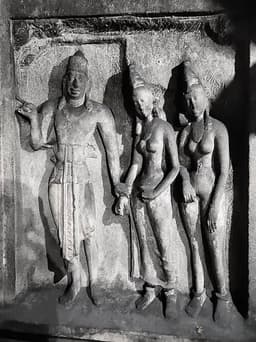
Aparajita Varman
Emperor · Medieval
36.4Total
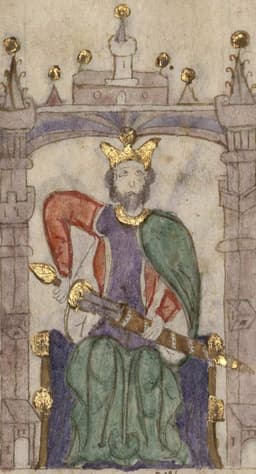
Sancho II of Castile
Emperor · Medieval
39.7Total
Basic Information
Born
880
1036
Died
897
1072
Era
Medieval
Medieval
Nationality
India
Castile
Occupation
Emperor
Emperor
Civilization
Indian
Western
Score Comparison
Military (10%)
21.2
55.0
Political (20%)
33.6
29.3
Influence (20%)
46.3
46.3
Legacy (20%)
35.8
37.5
Leadership (15%)
33.6
33.6
Strategy (15%)
36.8
38.3
TOTAL
36.4
39.7
Aparajita Varman — Complete Timeline
880 AD
Alliance with the Ganga DynastyPolitical Action
Aparajita Varman formed an alliance with the Western Ganga dynasty to counter the growing power of the Cholas. This alliance provided temporary military support but ultimately failed to prevent the Chola conquest of Pallava lands.
AllianceGanga DynastyAnti-Chola Coalition
Impact: regional
890 AD
Loss of Kanchipuram to the CholasWar◆ Major
Aparajita Varman lost the Pallava capital Kanchipuram to the Chola king Aditya I after a series of military campaigns. This loss marked the final decline of Pallava power and the transfer of hegemony in the Tamil region to the Cholas.
Capital LossChola ExpansionPallava Decline
Impact: regionaldestructive
897 AD
Defeat by Chola Aditya I at the Battle of TirupatiWar◆ Major
Aparajita Varman was defeated and killed by the Chola king Aditya I at the Battle of Tirupati. This defeat ended the Pallava dynasty's rule, as Aditya I annexed the Pallava territories into the expanding Chola kingdom.
Pallava-Chola WarDynastic EndBattle
Impact: regionaltragic
Sancho II of Castile — Complete Timeline
1065 AD
Conquest of LeonWar◆ Major
Sancho II conquered the Kingdom of Leon from his brother Alfonso VI, following the division of their father Ferdinand I's realm. He defeated Alfonso at the Battle of Llantada and forced him into exile in Toledo. This conquest united Leon and Castile under Sancho's rule.
ConquestLeonCivil War
Impact: regionaldestructive
1071 AD
Conquest of GaliciaWar◆ Major
Sancho II conquered the Kingdom of Galicia from his brother Garcia II, who was captured and imprisoned. This conquest completed Sancho's unification of the realms of his father, making him the most powerful Christian ruler in Iberia.
ConquestGaliciaUnification
Impact: regionaldestructive
1072 AD
Siege of Zamora and DeathWar◆ Major
Sancho II besieged the city of Zamora, held by his sister Urraca, who had rebelled against him. During the siege, Sancho was assassinated by a Zamoran noble named Vellido Dolfos. His death ended his unification efforts and allowed his brother Alfonso VI to reclaim the throne.
SiegeAssassinationZamora
Impact: regionaltragic
This comparison has not been analyzed yet.
One-time AI generation (~1 minute). Scores and timeline are already available below.
Rankings
🥇
Sancho II of CastileLeader
Mil: 55.0Pol: 29.3Inf: 46.3
39.7
🥈
Aparajita Varman
Mil: 21.2Pol: 33.6Inf: 46.3
36.4
+3.3 behind
How This Comparison Works
Algorithm
Each figure is scored on 6 dimensions (0—100 scale) based on structured historical data: Military (10%), Political (20%), Influence (20%), Legacy (20%), Leadership (15%), Strategy (15%). The weighted total produces the final ranking.
Data Sources
Scores are computed from structured sub-indicators in the database. Scale factors adjust for era (Ancient ×0.85, Modern ×1.0) and civilization size (Eastern ×1.05, Other ×0.80) to account for differences in population and military scale.
Maximum 3 Figures
Comparisons are limited to 2—3 figures to ensure readability and statistical meaningfulness.
Error Margins
±5 points per dimension — Sub-scores are derived from historical records with inherent uncertainty. Two figures within 5 points on a dimension should be considered roughly equivalent in that area.
Total Score Accuracy
±3 points overall — The weighted combination of 6 dimensions produces a total score with approximately ±3 points of uncertainty. Differences of less than 3 points are not statistically significant— the figures are effectively tied.
Known Limitations
- Historical records are incomplete and uneven across civilizations
- Figures from oral-tradition societies may be underrepresented
- Occupation labels can misclassify multi-role figures
- Scores measure capability and impact, not moral character
- Quantitative scoring is a comparison tool, not absolute truth
Capability Radar
Military (10%) — Battles & Warfare
Battles
15
35
Win Rate
10
40
Expansion
5
30
Political (20%) — Governance & Reform
Reform
5
10
Diplomacy
10
15
Economy
10
15
Influence (20%) — Cultural & Global Reach
Cultural
10
10
Global
5
5
Legacy (20%) — Historical Impact
Historical
10
15
Longevity
5
10
Leadership (15%) — Power & Stability
Tenure
20
20
Stability
10
10
Strategy (15%) — Tactics & Innovation
Strategy
10
25
Tactics
15
30
Reform
5
10
Similar Comparisons
Comments & Discussion
No comments yet. Be the first to share your thoughts!