Loading...
Henry IV of Castile vs Sancho II of Castile
Sancho II of Castile leads by 1.6 pts · 2 figures compared
…
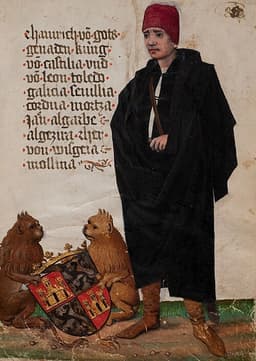
Henry IV of Castile
Emperor · Medieval
38.1Total
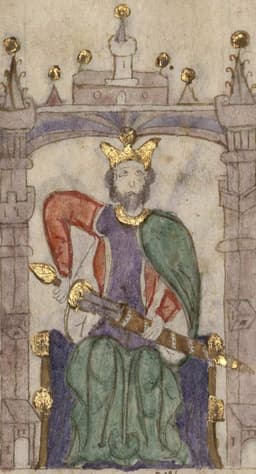
Sancho II of Castile
Emperor · Medieval
39.7Total
Basic Information
Born
1425
1036
Died
1474
1072
Era
Medieval
Medieval
Nationality
Castile
Castile
Occupation
Emperor
Emperor
Civilization
Western
Western
Score Comparison
Military (10%)
21.2
55.0
Political (20%)
25.0
29.3
Influence (20%)
48.6
46.3
Legacy (20%)
41.7
37.5
Leadership (15%)
38.1
33.6
Strategy (15%)
39.6
38.3
TOTAL
38.1
39.7
Henry IV of Castile — Complete Timeline
1468 AD
Treaty of the Bulls of GuisandoPolitical Action◆ Major
Henry IV of Castile signed the Treaty of the Bulls of Guisando, recognizing his half-sister Isabella as his legitimate heir instead of his daughter Joanna. This agreement was intended to resolve the succession dispute, but Henry later repudiated it, leading to renewed conflict.
Succession crisisIsabella I
Impact: national
1474 AD
War of the Castilian SuccessionWar
After Henry IV's death, a civil war erupted between supporters of his daughter Joanna la Beltraneja and those of his half-sister Isabella. The war involved Portuguese and Aragonese intervention and ended with Isabella's victory, securing her throne and leading to the union of Castile and Aragon.
Civil warSuccession
Impact: nationaldestructive
Loss of the Canary IslandsWar
During the War of the Castilian Succession, Henry IV's forces lost control of the Canary Islands to Portuguese-backed rebels. The islands were later recovered by Isabella I, but the conflict highlighted the weakness of Henry's reign and the erosion of royal authority.
Territorial lossCanary Islands
Impact: regionaldestructive
Sancho II of Castile — Complete Timeline
1065 AD
Conquest of LeonWar◆ Major
Sancho II conquered the Kingdom of Leon from his brother Alfonso VI, following the division of their father Ferdinand I's realm. He defeated Alfonso at the Battle of Llantada and forced him into exile in Toledo. This conquest united Leon and Castile under Sancho's rule.
ConquestLeonCivil War
Impact: regionaldestructive
1071 AD
Conquest of GaliciaWar◆ Major
Sancho II conquered the Kingdom of Galicia from his brother Garcia II, who was captured and imprisoned. This conquest completed Sancho's unification of the realms of his father, making him the most powerful Christian ruler in Iberia.
ConquestGaliciaUnification
Impact: regionaldestructive
1072 AD
Siege of Zamora and DeathWar◆ Major
Sancho II besieged the city of Zamora, held by his sister Urraca, who had rebelled against him. During the siege, Sancho was assassinated by a Zamoran noble named Vellido Dolfos. His death ended his unification efforts and allowed his brother Alfonso VI to reclaim the throne.
SiegeAssassinationZamora
Impact: regionaltragic
Expert Analysis
Origins
Henry IV of Castile was born in 1425 to John II of Castile and Maria of Aragon. His early life was marked by political instability as nobles vied for influence. His father died when Henry was 29, leaving him a fractured kingdom. Henry's education was typical for a medieval prince, focusing on military training and governance, but he showed little aptitude for either.
Sancho II of Castile was born circa 1036 to Ferdinand I of Leon and Sancha of Leon. He was the second son, raised in the shadow of his elder brother Alfonso, but Ferdinand divided his kingdom among his sons, giving Sancho Castile. Sancho's upbringing emphasized martial prowess, and he quickly proved himself a capable commander.
Rise to Power
Henry IV ascended the throne in 1454 upon his father's death. His reign began with attempts to centralize power, but he faced opposition from powerful nobles. Key turning point: in 1464, a league of nobles forced Henry to recognize his half-brother Alfonso as heir, leading to a civil war that lasted until Alfonso's death in 1468. Henry then signed the Treaty of the Bulls of Guisando (1468), recognizing his half-sister Isabella as heir instead of his daughter Joanna. This set the stage for the War of the Castilian Succession after his death in 1474.
Sancho II rose to power by force. After his father Ferdinand I died in 1065, Sancho received Castile, while his brothers Alfonso got Leon and Garcia got Galicia. Sancho immediately sought to reunify his father's realm. In 1068, he defeated Alfonso at the Battle of Llantada, but a truce followed. In 1071, he conquered Galicia from Garcia, imprisoning him. In 1072, he defeated Alfonso at the Battle of Golpejera and annexed Leon. Sancho then controlled all of Ferdinand's former kingdoms.
Leadership & Governance
Henry IV's leadership style was indecisive and reliant on favorites. His governance was marked by favoritism toward a small circle, alienating the nobility. He failed to enforce royal authority, leading to noble revolts. His political score of 25.0 reflects his inability to manage the kingdom. For example, he allowed the Portuguese to interfere in Castilian affairs, and his daughter Joanna's legitimacy was questioned, sparking a succession war.
Sancho II was a militaristic leader, scoring 55.0 in military, which was his primary tool. He ruled through conquest and fear, but his political score of 29.3 shows he neglected diplomacy. After conquering Leon and Galicia, he alienated his sister Urraca, who held Zamora. His governance relied on force, and he failed to consolidate his gains through alliances. His strategy score of 38.3 indicates he was competent in battle but not in long-term planning.
Triumph & Tragedy
Henry IV's greatest success was arguably the Treaty of the Bulls of Guisando, which temporarily stabilized the succession. However, his biggest failure was the War of the Castilian Succession, which erupted due to his inability to secure his daughter's claim. The war lasted from 1474 to 1479, devastating Castile. His legacy score of 41.7 reflects that his reign weakened the monarchy, paving the way for Isabella's centralization.
Sancho II's triumph was conquering Leon and Galicia, reuniting his father's kingdom. He scored 55.0 in military, showing his effectiveness. His tragedy was his death during the Siege of Zamora in 1072, assassinated by a Zamoran noble. This ended his unification, and his brother Alfonso VI reclaimed Leon and later became king of Castile. Sancho's total score of 39.7 is slightly higher than Henry's 38.1, but his achievements were undone by his death.
Character & Destiny
Henry IV was known as "the Impotent," a nickname that reflected both his physical and political weakness. He was indecisive and easily manipulated, leading to constant conflict. His character shaped his fate: his inability to assert authority led to the succession crisis and civil war. Historical assessments view him as a weak king whose reign destabilized Castile.
Sancho II was called "the Strong," but his strength was one-dimensional. He was aggressive and ruthless, but his lack of political acumen led to his downfall. His assassination at Zamora was a direct result of his confrontational approach. Historians see him as a capable warrior but a flawed ruler who could not secure his legacy.
Legacy
Henry IV's legacy is mixed. His reign set the stage for Isabella I's rise, but his weakness contributed to the War of the Castilian Succession. The Treaty of the Bulls of Guisando is remembered, but his daughter Joanna's illegitimacy scandal persisted. His influence score of 48.6 reflects the lasting impact of his succession crisis, which shaped Spanish history.
Sancho II's legacy is overshadowed by his brother Alfonso VI, who completed the reconquest of Toledo. Sancho's conquests were temporary, undone by his death. His legacy score of 37.5 is lower than Henry's 41.7, as his achievements were ephemeral. However, his military campaigns set a precedent for Castilian expansion.
Conclusion
Sancho II scored 39.7 total, slightly above Henry IV's 38.1, but his impact was more limited. Henry's reign triggered a succession war that led to Isabella I's consolidation and the unification of Spain. Sancho's conquests were reversed within a decade. Therefore, Henry IV had a greater long-term impact on Castile, despite his lower scores. His failures inadvertently paved the way for the Spanish Empire, while Sancho's successes died with him.
Rankings
🥇
Sancho II of CastileLeader
Mil: 55.0Pol: 29.3Inf: 46.3
39.7
🥈
Henry IV of Castile
Mil: 21.2Pol: 25.0Inf: 48.6
38.1
+1.6 behind
How This Comparison Works
Algorithm
Each figure is scored on 6 dimensions (0—100 scale) based on structured historical data: Military (10%), Political (20%), Influence (20%), Legacy (20%), Leadership (15%), Strategy (15%). The weighted total produces the final ranking.
Data Sources
Scores are computed from structured sub-indicators in the database. Scale factors adjust for era (Ancient ×0.85, Modern ×1.0) and civilization size (Eastern ×1.05, Other ×0.80) to account for differences in population and military scale.
Maximum 3 Figures
Comparisons are limited to 2—3 figures to ensure readability and statistical meaningfulness.
Error Margins
±5 points per dimension — Sub-scores are derived from historical records with inherent uncertainty. Two figures within 5 points on a dimension should be considered roughly equivalent in that area.
Total Score Accuracy
±3 points overall — The weighted combination of 6 dimensions produces a total score with approximately ±3 points of uncertainty. Differences of less than 3 points are not statistically significant— the figures are effectively tied.
Known Limitations
- Historical records are incomplete and uneven across civilizations
- Figures from oral-tradition societies may be underrepresented
- Occupation labels can misclassify multi-role figures
- Scores measure capability and impact, not moral character
- Quantitative scoring is a comparison tool, not absolute truth
Capability Radar
Military (10%) — Battles & Warfare
Battles
15
35
Win Rate
10
40
Expansion
5
30
Political (20%) — Governance & Reform
Reform
20
10
Diplomacy
20
15
Economy
15
15
Influence (20%) — Cultural & Global Reach
Cultural
20
10
Global
10
5
Legacy (20%) — Historical Impact
Historical
30
15
Longevity
20
10
Leadership (15%) — Power & Stability
Tenure
40
20
Stability
5
10
Strategy (15%) — Tactics & Innovation
Strategy
10
25
Tactics
10
30
Reform
5
10
Similar Comparisons
Comments & Discussion
No comments yet. Be the first to share your thoughts!