Loading...
Arcadius vs Hormizd III
Hormizd III leads by 8.6 pts · 2 figures compared
…

Arcadius
Emperor · Ancient
41.4Total
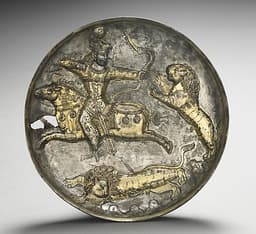
Hormizd III
Emperor · Ancient
50.0Total
Basic Information
Born
377
430
Died
408
459
Era
Ancient
Ancient
Nationality
Byzantine Empire
Sasanian Empire
Occupation
Emperor
Emperor
Civilization
Western
Middle Eastern
Score Comparison
Military (10%)
10.2
35.0
Political (20%)
29.3
68.0
Influence (20%)
48.6
56.4
Legacy (20%)
40.0
39.2
Leadership (15%)
62.2
45.0
Strategy (15%)
45.0
56.4
TOTAL
41.4
50.0
Arcadius — Complete Timeline
395 AD
Accession as Eastern Roman EmperorPolitical Action◆ Major
Arcadius became the first Eastern Roman emperor following the permanent division of the Roman Empire after the death of Theodosius I. He ruled the East while his brother Honorius ruled the West, establishing the Byzantine Empire.
Imperial DivisionByzantine EmpireSuccession
Impact: global
Fall of the Praetorian Prefect RufinusPolitical Action
Rufinus, the powerful Praetorian Prefect and regent for Arcadius, was murdered by Gothic soldiers loyal to the general Stilicho. This event marked the beginning of the influence of court eunuchs and ministers over Arcadius's reign.
Court IntrigueAssassinationStilicho
Impact: nationaltragic
399 AD
Revolt of GainasWar
The Gothic general Gainas, who had risen to power in Constantinople, rebelled against Arcadius. Gainas occupied the capital but was eventually defeated and killed by the Roman general Fravitta, ending the threat.
Gothic RevoltConstantinopleMilitary
Impact: nationaldestructive
Hormizd III — Complete Timeline
457 AD
Accession to the Sasanian thronePolitical Action◆ Major
Upon the death of his father Yazdegerd II, Hormizd III ascended the throne. His reign was immediately contested by his younger brother Peroz, who had the support of the nobility and the Hephthalite Huns.
SuccessionSasanian EmpireCivil War
Impact: national
459 AD
Defeat and death at the hands of PerozWar◆ Major
After a two-year civil war, Hormizd III was defeated by his brother Peroz, who had secured Hephthalite military support. Hormizd was captured and executed, allowing Peroz to become the sole ruler of the Sasanian Empire.
Civil WarRegicideSasanian Empire
Impact: nationaltragic
Expert Analysis
Origins
Arcadius was born in 377 AD in Hispania, the eldest son of Emperor Theodosius I and Aelia Flaccilla. He was raised in the imperial court, receiving a Christian education under the tutelage of the rhetorician Themistius and the monk Arsenius. His early life was marked by his father's efforts to secure the succession, culminating in his proclamation as co-Augustus in 383 AD at age six.
Hormizd III, born in the early 5th century, was the eldest son of Yazdegerd II, the Sasanian Shahanshah. Little is known of his childhood, but as a prince of the House of Sasan, he was groomed for leadership, likely receiving military training and administrative experience. His father's reign was marked by conflicts with the Byzantine Empire and the Hephthalites, setting the stage for Hormizd's later struggles.
Rise to Power
Arcadius became sole Eastern Roman Emperor upon the death of Theodosius I in 395 AD, inheriting a realm that was permanently divided from the West. He was only 18 and heavily reliant on advisors. Initially, the Praetorian Prefect Rufinus acted as regent, but he was assassinated later that year by Gothic soldiers loyal to Stilicho, the Western Roman general. This event left Arcadius under the influence of the eunuch Eutropius, who effectively controlled the government. Arcadius's rise was thus less a personal achievement and more a dynastic succession managed by court factions.
Hormizd III ascended the Sasanian throne in 457 AD after the death of his father Yazdegerd II. His claim was immediately contested by his younger brother Peroz, who fled to the Hephthalite Empire and secured their military support. Hormizd's reign was thus defined by a civil war from its outset. He managed to hold power for two years, but his position was weakened by internal dissent and the lack of a strong power base.
Leadership & Governance
Arcadius's leadership style was passive; he rarely made independent decisions, deferring to his ministers and his wife Aelia Eudoxia. His governance was marked by the influence of court eunuchs and the growing power of the Church. He supported the persecution of pagans and heretics, including the destruction of the Serapeum in Alexandria. His reign saw the Revolt of Gainas (399-400 AD), where the Gothic general Gainas occupied Constantinople. Arcadius's response was weak, but the revolt was crushed by loyalist forces led by the city populace. He scored 62.2 in Leadership, reflecting his ability to maintain the throne despite turmoil, but his Political score of 29.3 indicates his lack of agency.
Hormizd III's leadership was more assertive but ultimately unsuccessful. He attempted to consolidate power by eliminating rivals, but his military capabilities were limited. His Strategy score of 56.4 and Military score of 35.0 suggest he lacked the martial prowess needed to defeat his brother. His governance was focused on retaining the throne rather than implementing reforms. He scored 68.0 in Political, indicating some skill in court politics, but it was insufficient to overcome the Hephthalite-backed Peroz.
Triumph & Tragedy
Arcadius's greatest success was surviving a turbulent reign and passing the throne to his son Theodosius II, ensuring dynastic continuity. He also oversaw the construction of the Column of Arcadius in Constantinople. His greatest failure was his inability to control his own court, leading to the rise of powerful ministers and the weakening of imperial authority. The fall of Rufinus and the Gainas revolt exposed the empire's vulnerability to barbarian influence.
Hormizd III's triumph was briefly holding the throne against a determined rival. However, his tragedy was his defeat and execution by Peroz after a two-year civil war. His death ended his line and allowed Peroz to establish a new dynasty. His failure to secure Hephthalite neutrality or build a strong coalition cost him his life.
Character & Destiny
Arcadius was described as timid and easily swayed, with a tendency to rely on others. His character shaped his fate as a puppet emperor, but his longevity (reigned 395-408 AD) was due to the stability of the Eastern Roman bureaucracy. His religious piety was genuine, but it did not translate into effective rule. Historians often view him as a weak figure, overshadowed by his father and his son.
Hormizd III was likely proud and ambitious, but his decision to oppose Peroz without adequate military support proved fatal. His character suggests a willingness to fight for his claim, but his inability to compromise or seek allies led to his downfall. He is remembered primarily as a victim of fraternal rivalry.
Legacy
Arcadius's legacy is mixed. He is often seen as the first emperor of the Byzantine Empire proper, as his reign marked the permanent division of Rome. His religious policies strengthened the Church's political role, and his dynasty continued until 457 AD. However, his weak rule set precedents for court intrigue. He scores 48.6 in Influence and 40.0 in Legacy, reflecting his role as a transitional figure.
Hormizd III's legacy is minimal. He ruled for only two years and was quickly forgotten after his death. His defeat allowed Peroz to implement reforms and fight the Hephthalites. His Legacy score of 39.2 indicates his limited impact. He is a footnote in Sasanian history, a cautionary tale of civil war.
Conclusion
Arcadius had a greater impact than Hormizd III, despite his lower total score (41.4 vs 50.0). His reign established the Eastern Roman Empire as a distinct entity, influencing the course of Byzantine history for centuries. Hormizd III's brief and failed rule had no lasting effect. Arcadius's legacy, though modest, is more significant than Hormizd's erased memory.
Rankings
🥇
Hormizd IIILeader
Mil: 35.0Pol: 68.0Inf: 56.4
50.0
🥈
Arcadius
Mil: 10.2Pol: 29.3Inf: 48.6
41.4
+8.6 behind
How This Comparison Works
Algorithm
Each figure is scored on 6 dimensions (0—100 scale) based on structured historical data: Military (10%), Political (20%), Influence (20%), Legacy (20%), Leadership (15%), Strategy (15%). The weighted total produces the final ranking.
Data Sources
Scores are computed from structured sub-indicators in the database. Scale factors adjust for era (Ancient ×0.85, Modern ×1.0) and civilization size (Eastern ×1.05, Other ×0.80) to account for differences in population and military scale.
Maximum 3 Figures
Comparisons are limited to 2—3 figures to ensure readability and statistical meaningfulness.
Error Margins
±5 points per dimension — Sub-scores are derived from historical records with inherent uncertainty. Two figures within 5 points on a dimension should be considered roughly equivalent in that area.
Total Score Accuracy
±3 points overall — The weighted combination of 6 dimensions produces a total score with approximately ±3 points of uncertainty. Differences of less than 3 points are not statistically significant— the figures are effectively tied.
Known Limitations
- Historical records are incomplete and uneven across civilizations
- Figures from oral-tradition societies may be underrepresented
- Occupation labels can misclassify multi-role figures
- Scores measure capability and impact, not moral character
- Quantitative scoring is a comparison tool, not absolute truth
Capability Radar
Military (10%) — Battles & Warfare
Battles
5
39
Win Rate
5
39
Expansion
5
45
Political (20%) — Governance & Reform
Reform
20
0
Diplomacy
30
0
Economy
20
0
Influence (20%) — Cultural & Global Reach
Cultural
15
0
Global
15
0
Legacy (20%) — Historical Impact
Historical
30
5
Longevity
20
0
Leadership (15%) — Power & Stability
Tenure
60
5
Stability
20
0
Strategy (15%) — Tactics & Innovation
Strategy
5
47
Tactics
5
50
Reform
5
51
Similar Comparisons
Comments & Discussion
No comments yet. Be the first to share your thoughts!