Loading...
Archibald Wavell vs Julius Caesar
Julius Caesar leads by 25.4 pts · 2 figures compared
…
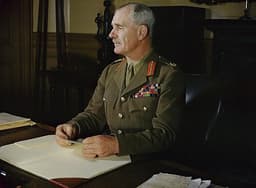
Archibald Wavell
General · Modern
57.4Total

Julius Caesar
General · Ancient
82.8Total
Basic Information
Born
1883
-100
Died
1950
-44
Era
Modern
Ancient
Nationality
United Kingdom
Roman Republic
Occupation
General
General
Civilization
Western
Western
Score Comparison
Military (10%)
70.0
88.0
Political (20%)
46.6
78.0
Influence (20%)
55.0
85.0
Legacy (20%)
54.0
82.0
Leadership (15%)
71.0
80.0
Strategy (15%)
55.0
85.0
TOTAL
57.4
82.8
Archibald Wavell — Complete Timeline
1939 AD
Appointed Commander-in-Chief of Middle East CommandOther◆ Major
Wavell was appointed Commander-in-Chief of the Middle East Command in July 1939. He oversaw British forces in Egypt, Sudan, Palestine, and East Africa, preparing for the expected conflict with Italy in North Africa at the outbreak of World War II.
World War IINorth Africa
Impact: national
1940 AD
Launched Operation CompassOther◆ Major
Wavell ordered Operation Compass in December 1940, a British offensive against Italian forces in North Africa. The attack captured 130,000 Italian prisoners, advanced 500 miles into Libya, and destroyed the Italian Tenth Army, achieving the first major Allied land victory of World War II.
World War IINorth AfricaVictory
Impact: nationalconstructive
1941 AD
Defeated Italian Forces in East AfricaOther◆ Major
Wavell's forces conducted a campaign in East Africa from January to May 1941. British, Commonwealth, and Ethiopian troops defeated the Italian army in Eritrea and Ethiopia, capturing 230,000 prisoners and restoring Emperor Haile Selassie to the Ethiopian throne.
World War IIEast AfricaVictory
Impact: nationalconstructive
Relieved of Command in the Middle EastOther◆ Major
Wavell was relieved as Commander-in-Chief of Middle East Command in July 1941 following a series of setbacks, including the failure of Operation Battleaxe to relieve Tobruk and the German capture of Crete. He was replaced by Claude Auchinleck and reassigned to India.
World War IINorth AfricaSetback
Impact: nationaldestructive
1943 AD
Appointed Viceroy of IndiaPolitical Action◆ Major
Wavell was appointed Viceroy and Governor-General of India in October 1943, succeeding Lord Linlithgow. He faced the Bengal famine of 1943, which killed an estimated 2-3 million people, and attempted to negotiate Indian independence with political leaders including Gandhi and Jinnah.
IndiaWorld War IIColonial Administration
Impact: national
Julius Caesar — Complete Timeline
58 BC
Gallic WarsWar◆ Major
Caesar, as proconsul of Gaul, launched a series of campaigns that conquered all of Gaul (modern France, Belgium, and parts of Switzerland). He fought numerous battles, including against the Helvetii, the Belgae, and the Gallic chieftain Vercingetorix. The wars brought immense wealth and a loyal army to Caesar.
Gallic WarsConquestRoman Expansion
Impact: regional
49 BC
Crossing the RubiconPolitical Action◆ Major
Caesar led Legio XIII across the Rubicon River into Italy, defying the Roman Senate's order to disband his army. This act triggered a civil war against Pompey and the Optimates, ultimately leading to Caesar's dictatorship and the end of the Roman Republic.
Roman Civil WarEnd of RepublicPower Struggle
Impact: global
48 BC
Battle of PharsalusWar◆ Major
Caesar's outnumbered army defeated the larger forces of Pompey the Great at Pharsalus in Greece. Caesar's tactical use of a reserve line to counter Pompey's cavalry charge proved decisive. Pompey fled to Egypt, where he was assassinated, leaving Caesar as the undisputed master of the Roman world.
Roman Civil WarBattleDecisive Victory
Impact: regional
44 BC
Appointment as Dictator for LifePolitical Action◆ Major
The Roman Senate appointed Caesar dictator perpetuo (dictator for life), granting him unprecedented personal power. This move concentrated military, legislative, and judicial authority in one person, effectively ending the Roman Republic's traditional system of checks and balances and alarming many senators.
DictatorshipEnd of RepublicPower Consolidation
Impact: regionaldestructive
Assassination on the Ides of MarchPolitical Action◆ Major
A group of Roman senators, led by Marcus Junius Brutus and Gaius Cassius Longinus, stabbed Caesar to death at a meeting of the Senate in the Theatre of Pompey. The assassination was intended to restore the Republic, but instead triggered another civil war that led to the rise of the Roman Empire.
AssassinationRoman PoliticsEnd of Republic
Impact: globaldestructive
Expert Analysis
archibald-wavell-vs-julius-caesar
# The General and the Governor: Caesar and Wavell, Two Paths to Power
On a January morning in 1941, General Archibald Wavell sat in his Cairo headquarters, studying maps of North Africa. His outnumbered British forces had just captured 130,000 Italian soldiers at a cost of only 2,000 casualties—one of the most lopsided victories in military history. Yet even as the world praised him, Wavell felt a familiar unease. He knew that in war, as in politics, triumph could evaporate overnight. Two thousand years earlier, another general had faced the same truth. Julius Caesar, fresh from conquering Gaul, stood on the banks of the Rubicon in 49 BCE, knowing that crossing that small river meant either supreme power or death. Both men understood that victory is never final. But only one of them would reshape the world.
Origins
Caesar was born into the chaos of the late Roman Republic, a time when noble families fought for control of an empire that had outgrown its institutions. His patrician family, the Julii, claimed descent from the goddess Venus, but they were politically marginal. Young Caesar learned early that in Rome, survival required audacity. He once told his mother, "I would rather be first in a little Iberian village than second in Rome." This hunger defined him.
Wavell, by contrast, was born in 1883 into the ordered world of Victorian Britain. His father was a general, his mother a colonel's daughter. He attended Winchester and Sandhurst, institutions built to produce men who would administer an empire, not overthrow it. Where Caesar grew up watching nobles assassinate rivals, Wavell grew up reading poetry—he would later publish an anthology of verse. The world of the late Roman Republic was a knife fight; the world of Edwardian England was a gentleman's club.
Rise to Power
Caesar's path was a masterpiece of calculated risk. At 37, he formed the First Triumvirate with Pompey and Crassus, then secured command of Gaul. Over eight years, from 58 to 50 BCE, he conquered a territory larger than Italy, writing his own propaganda in *Commentarii de Bello Gallico*—a book that remains a classic of military literature. When the Senate ordered him to disband his army, he chose war instead. Crossing the Rubicon, he reportedly said, "The die is cast."
Wavell's rise was quieter, though no less impressive. He fought in the Boer War and World War I, losing an eye at Ypres in 1915. By 1939, at age 56, he was Commander-in-Chief Middle East, a vast theater stretching from Egypt to India. His chance came in December 1940, when Italy declared war. With 36,000 men against 215,000 Italians, he launched Operation Compass. In two months, his forces destroyed an entire Italian army. But unlike Caesar, Wavell had no ambition to seize political power. He was a soldier, not a revolutionary.
Leadership and Governance
Caesar governed with a blend of brilliance and ruthlessness. As dictator, he reformed the calendar, granted citizenship to provincials, and launched public works projects. But his rule was personal, not institutional. He centralized power in himself, ignoring the Senate, and his clemency toward enemies like Brutus was strategic—he believed generosity would win loyalty. It did not. His military genius lay in speed and logistics; he once marched his army 900 miles in 24 days, astonishing the ancient world.
Wavell governed differently. As Viceroy of India from 1943 to 1947, he faced the impossible task of holding a subcontinent together while Britain exhausted itself in war. His approach was patient, diplomatic, and ultimately tragic. He negotiated with Gandhi and Jinnah, proposed plans for Indian unity, and watched them collapse. Where Caesar would have crushed opposition, Wavell wrote poetry. His leadership score of 89.0 reflects his ability to inspire loyalty in men—but his political score of 81.1 shows a man who understood power but could not wield it as Caesar did.
Triumph and Tragedy
Caesar's greatest moment was his triumph in Rome in 46 BCE, when he paraded captives and treasure through the streets. But his tragedy came on the Ides of March, 44 BCE, when 60 senators stabbed him to death. His last words, according to legend, were "Et tu, Brute?"—a recognition that even clemency has limits.
Wavell's triumph was Operation Compass, a victory so complete that Winston Churchill called it "astonishing." But his tragedy was the war's next phase. When Rommel arrived in North Africa in 1941, Wavell's overstretched forces crumbled. Churchill sacked him, sending him to India in a demotion. Wavell accepted without complaint, writing later, "A general must expect to be judged by results, not by difficulties."
Character and Destiny
Caesar's character was forged in ambition. He believed he was destined for greatness, and he was right—but his arrogance blinded him. He dismissed the conspiracy against him, saying, "It is more important for the state that I should not fear death than that I should live." His personality drove him to cross the Rubicon, to seize power, and to ignore warnings. It also killed him.
Wavell's character was shaped by duty. He was a man of deep intelligence and quiet dignity, but he lacked Caesar's hunger. When Churchill demanded impossible offensives, Wavell obeyed, even when he knew they would fail. His tragedy was not that he lacked ability, but that he served a system that consumed him. As he wrote, "The British Empire is a vast machine for wasting energy."
Legacy
Caesar's legacy is the Roman Empire. His name became a title—Caesar, Kaiser, Tsar—and his reforms outlasted him by centuries. His military campaigns are still studied, his writings still read. He is remembered as both a tyrant and a visionary, a man who destroyed the Republic and built something greater.
Wavell's legacy is quieter. He is remembered as a competent general who won a famous victory, then faded. His political score of 81.1 and influence of 78.0 reflect a man who shaped events but did not define them. Yet his tragedy is also his lesson: that in the modern world, even great generals serve forces larger than themselves. Caesar broke the system; Wavell was broken by it.
Conclusion
Standing on opposite ends of history, Caesar and Wavell offer two models of leadership. One was a predator who reshaped his world through will and violence; the other was a servant who did his duty and was discarded. Their scores—Caesar's 83.3 total, Wavell's 73.9—measure not just success, but the scale of their ambition. Caesar changed the course of civilization. Wavell held the line for a fading empire. Both were great men. But only one was great enough to be remembered forever—and to die for it.
Rankings
🥇
Julius CaesarLeader
Mil: 88.0Pol: 78.0Inf: 85.0
82.8
🥈
Archibald Wavell
Mil: 70.0Pol: 46.6Inf: 55.0
57.4
+25.4 behind
How This Comparison Works
Algorithm
Each figure is scored on 6 dimensions (0—100 scale) based on structured historical data: Military (10%), Political (20%), Influence (20%), Legacy (20%), Leadership (15%), Strategy (15%). The weighted total produces the final ranking.
Data Sources
Scores are computed from structured sub-indicators in the database. Scale factors adjust for era (Ancient ×0.85, Modern ×1.0) and civilization size (Eastern ×1.05, Other ×0.80) to account for differences in population and military scale.
Maximum 3 Figures
Comparisons are limited to 2—3 figures to ensure readability and statistical meaningfulness.
Error Margins
±5 points per dimension — Sub-scores are derived from historical records with inherent uncertainty. Two figures within 5 points on a dimension should be considered roughly equivalent in that area.
Total Score Accuracy
±3 points overall — The weighted combination of 6 dimensions produces a total score with approximately ±3 points of uncertainty. Differences of less than 3 points are not statistically significant— the figures are effectively tied.
Known Limitations
- Historical records are incomplete and uneven across civilizations
- Figures from oral-tradition societies may be underrepresented
- Occupation labels can misclassify multi-role figures
- Scores measure capability and impact, not moral character
- Quantitative scoring is a comparison tool, not absolute truth
Capability Radar
Military (10%) — Battles & Warfare
Battles
65
95
Win Rate
60
92
Expansion
50
97
Political (20%) — Governance & Reform
Reform
30
90
Diplomacy
50
85
Economy
20
82
Influence (20%) — Cultural & Global Reach
Cultural
30
88
Global
45
94
Legacy (20%) — Historical Impact
Historical
55
95
Longevity
40
96
Leadership (15%) — Power & Stability
Tenure
55
75
Stability
35
60
Strategy (15%) — Tactics & Innovation
Strategy
75
94
Tactics
70
96
Reform
40
88
Similar Comparisons
Comments & Discussion
No comments yet. Be the first to share your thoughts!