Loading...
Ariarathes IX of Cappadocia vs Cao Pi
Cao Pi leads by 14.5 pts · 2 figures compared
…
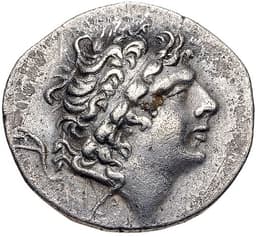
Ariarathes IX of Cappadocia
Emperor · Ancient
40.3Total

Cao Pi
Emperor · Ancient
54.8Total
Basic Information
Born
-109
187
Died
-85
226
Era
Ancient
Ancient
Nationality
Cappadocia
China
Occupation
Emperor
Emperor
Civilization
Western
Eastern
Score Comparison
Military (10%)
10.2
47.5
Political (20%)
39.4
45.0
Influence (20%)
56.4
55.7
Legacy (20%)
31.7
52.0
Leadership (15%)
49.9
74.0
Strategy (15%)
38.6
52.5
TOTAL
40.3
54.8
Ariarathes IX of Cappadocia — Complete Timeline
100 BC
Installation as Puppet King by Mithridates VIPolitical Action◆ Major
Ariarathes IX was installed as king of Cappadocia by his father, Mithridates VI of Pontus, after the murder of the previous king. He served as a puppet ruler, with real power exercised by Pontic officials.
Pontic DominationPuppet KingMithridates VI
Impact: regionaldestructive
95 BC
Expulsion by Cappadocian NobilityPolitical Action
Ariarathes IX was expelled from Cappadocia by a rebellion of the local nobility, who opposed Pontic control. The rebels appealed to Rome for a new king, leading to the appointment of Ariobarzanes I.
RebellionExpulsionRoman Intervention
Impact: national
93 BC
Restoration by Mithridates VIWar
Mithridates VI restored Ariarathes IX to the Cappadocian throne after expelling the Roman-appointed king Ariobarzanes I. This act was part of Mithridates' broader campaign to challenge Roman influence in Anatolia.
Pontic RestorationMithridatic WarsCappadocia
Impact: regional
85 BC
Final Expulsion and DeathWar◆ Major
Ariarathes IX was finally expelled from Cappadocia after the First Mithridatic War ended in Roman victory. He was killed shortly after, ending the Pontic puppet regime in Cappadocia.
Mithridatic WarsDeathEnd of Puppet Rule
Impact: regionaltragic
Cao Pi — Complete Timeline
220 AD
Establishment of the Nine-Rank SystemReform◆ Major
Cao Pi implemented the Nine-Rank System for official selection, which classified candidates into nine grades based on family background and talent. This system aimed to reduce the influence of powerful families but eventually entrenched aristocratic privilege, lasting until the Sui dynasty.
Bureaucratic ReformNine-Rank SystemCivil Service
Impact: nationalconstructive
Forced Abdication of Emperor XianPolitical Action
Cao Pi pressured Emperor Xian of Han to abdicate, then accepted the throne himself, founding the Cao Wei dynasty. He granted Emperor Xian the title Duke of Shanyang and allowed him to live in retirement. This ended the Han dynasty and began the Three Kingdoms period.
AbdicationHan Dynasty EndCao Wei
Impact: national
Death of Cao CaoPolitical Action◆ Major
Cao Pi succeeded his father Cao Cao as King of Wei and Chancellor of the Han dynasty. He immediately moved to consolidate power, forcing the Han emperor to abdicate within months. This succession marked the transition from de facto to de jure control of northern China.
SuccessionCao CaoWei Dynasty
Impact: national
222 AD
Invasion of WuWar◆ Major
Cao Pi launched a large-scale invasion of the Eastern Wu state, but was defeated at the Battle of Dongkou. The Wei navy was repelled by Wu forces under Lu Xun. This failure ended Cao Pi's ambition to quickly unify China and solidified the Three Kingdoms stalemate.
InvasionWei-Wu WarThree Kingdoms
Impact: regional
Expert Analysis
Origins
Ariarathes IX of Cappadocia was born around 110 BC, the son of Mithridates VI of Pontus. His early life was dominated by his father's ambitions, and he received a Greek education typical of the Pontic court. Cao Pi was born in 187 AD in Qiao County, China, the eldest son of the warlord Cao Cao. He was raised in a military and political environment, tutored in Confucian classics and military strategy. While Ariarathes IX's lineage was royal but subservient, Cao Pi's father was a self-made power broker.
Rise to Power
Ariarathes IX's rise came when his father Mithridates VI invaded Cappadocia and installed him as puppet king in 100 BC after murdering the previous king. He was a pawn, expelled by local nobility in 97 BC and restored by Mithridates in 89 BC during the First Mithridatic War. Cao Pi's rise was more calculated: after his father Cao Cao died in 220 AD, Cao Pi inherited the title King of Wei and Chancellor of Han. Within months, he pressured Emperor Xian to abdicate, founding the Cao Wei dynasty. He scored 45.0 in political maneuvering, compared to Ariarathes IX's 39.4.
Leadership & Governance
Ariarathes IX had no real governance role; his reign was a front for Pontic control. He scored 49.9 in leadership, but this reflects his position rather than ability. Cao Pi, with a leadership score of 74.0, implemented the Nine-Rank System, which classified officials by family background and talent, a system that influenced Chinese bureaucracy for centuries. He also consolidated power by centralizing administration and reducing the influence of powerful families. However, his invasion of Wu in 222 AD failed, scoring 47.5 in military, below his father's standards.
Triumph & Tragedy
Ariarathes IX's greatest 'triumph' was being restored to his throne twice, but these were his father's victories. His tragedy was his total dependence: he was expelled, restored, and finally killed after the First Mithridatic War ended in Roman victory. Cao Pi's triumph was founding the Cao Wei dynasty and forcing the abdication of the Han emperor, a bloodless transition. His tragedy was his failed invasion of Wu and his early death at age 39 in 226 AD, which left his dynasty vulnerable. He scored 52.0 in legacy, while Ariarathes IX scored 31.7.
Character & Destiny
Ariarathes IX's character is obscure; he was a tool of his father, lacking initiative. His destiny was to be a casualty of the Mithridatic Wars, executed after Roman victory. Cao Pi was ambitious and decisive, but also paranoid and prone to purges. He forced his brother Cao Zhi into exile and killed other potential rivals. His character shaped his fate: he built a dynasty but alienated many, contributing to its eventual fall. Historical assessments rate Cao Pi as a capable administrator but a mediocre military commander.
Legacy
Ariarathes IX left no legacy; his reign was a footnote in the collapse of Pontic power. Cao Pi's Nine-Rank System endured for centuries, and his dynasty, Cao Wei, laid the foundation for the Three Kingdoms period. However, his legacy is overshadowed by his father Cao Cao and the eventual fall of Wei. Cao Pi's influence score of 55.7 reflects his institutional impact, while Ariarathes IX's 56.4 is inflated by association.
Conclusion
Cao Pi had greater historical impact. His political reforms shaped Chinese governance, and his dynasty marked a transition from Han to the Three Kingdoms. Ariarathes IX was a puppet whose existence only highlights his father's ambition. With a total score of 54.8 compared to 40.3, Cao Pi's achievements in founding a dynasty and implementing a lasting bureaucratic system far outweigh Ariarathes IX's negligible role. The gap of 14.5 points is justified.
Rankings
🥇
Cao PiLeader
Mil: 47.5Pol: 45.0Inf: 55.7
54.8
🥈
Ariarathes IX of Cappadocia
Mil: 10.2Pol: 39.4Inf: 56.4
40.3
+14.5 behind
How This Comparison Works
Algorithm
Each figure is scored on 6 dimensions (0—100 scale) based on structured historical data: Military (10%), Political (20%), Influence (20%), Legacy (20%), Leadership (15%), Strategy (15%). The weighted total produces the final ranking.
Data Sources
Scores are computed from structured sub-indicators in the database. Scale factors adjust for era (Ancient ×0.85, Modern ×1.0) and civilization size (Eastern ×1.05, Other ×0.80) to account for differences in population and military scale.
Maximum 3 Figures
Comparisons are limited to 2—3 figures to ensure readability and statistical meaningfulness.
Error Margins
±5 points per dimension — Sub-scores are derived from historical records with inherent uncertainty. Two figures within 5 points on a dimension should be considered roughly equivalent in that area.
Total Score Accuracy
±3 points overall — The weighted combination of 6 dimensions produces a total score with approximately ±3 points of uncertainty. Differences of less than 3 points are not statistically significant— the figures are effectively tied.
Known Limitations
- Historical records are incomplete and uneven across civilizations
- Figures from oral-tradition societies may be underrepresented
- Occupation labels can misclassify multi-role figures
- Scores measure capability and impact, not moral character
- Quantitative scoring is a comparison tool, not absolute truth
Capability Radar
Military (10%) — Battles & Warfare
Battles
5
45
Win Rate
5
50
Expansion
5
50
Political (20%) — Governance & Reform
Reform
0
65
Diplomacy
5
70
Economy
0
60
Influence (20%) — Cultural & Global Reach
Cultural
0
55
Global
0
40
Legacy (20%) — Historical Impact
Historical
5
65
Longevity
5
55
Leadership (15%) — Power & Stability
Tenure
10
55
Stability
5
50
Strategy (15%) — Tactics & Innovation
Strategy
5
60
Tactics
5
55
Reform
0
40
Similar Comparisons
Comments & Discussion
No comments yet. Be the first to share your thoughts!