Loading...
Ariarathes IX of Cappadocia vs Julius Caesar
Julius Caesar leads by 42.5 pts · 2 figures compared
…
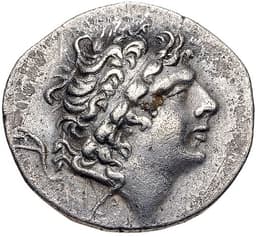
Ariarathes IX of Cappadocia
Emperor · Ancient
40.3Total

Julius Caesar
General · Ancient
82.8Total
Basic Information
Born
-109
-100
Died
-85
-44
Era
Ancient
Ancient
Nationality
Cappadocia
Roman Republic
Occupation
Emperor
General
Civilization
Western
Western
Score Comparison
Military (10%)
10.2
88.0
Political (20%)
39.4
78.0
Influence (20%)
56.4
85.0
Legacy (20%)
31.7
82.0
Leadership (15%)
49.9
80.0
Strategy (15%)
38.6
85.0
TOTAL
40.3
82.8
Ariarathes IX of Cappadocia — Complete Timeline
100 BC
Installation as Puppet King by Mithridates VIPolitical Action◆ Major
Ariarathes IX was installed as king of Cappadocia by his father, Mithridates VI of Pontus, after the murder of the previous king. He served as a puppet ruler, with real power exercised by Pontic officials.
Pontic DominationPuppet KingMithridates VI
Impact: regionaldestructive
95 BC
Expulsion by Cappadocian NobilityPolitical Action
Ariarathes IX was expelled from Cappadocia by a rebellion of the local nobility, who opposed Pontic control. The rebels appealed to Rome for a new king, leading to the appointment of Ariobarzanes I.
RebellionExpulsionRoman Intervention
Impact: national
93 BC
Restoration by Mithridates VIWar
Mithridates VI restored Ariarathes IX to the Cappadocian throne after expelling the Roman-appointed king Ariobarzanes I. This act was part of Mithridates' broader campaign to challenge Roman influence in Anatolia.
Pontic RestorationMithridatic WarsCappadocia
Impact: regional
85 BC
Final Expulsion and DeathWar◆ Major
Ariarathes IX was finally expelled from Cappadocia after the First Mithridatic War ended in Roman victory. He was killed shortly after, ending the Pontic puppet regime in Cappadocia.
Mithridatic WarsDeathEnd of Puppet Rule
Impact: regionaltragic
Julius Caesar — Complete Timeline
58 BC
Gallic WarsWar◆ Major
Caesar, as proconsul of Gaul, launched a series of campaigns that conquered all of Gaul (modern France, Belgium, and parts of Switzerland). He fought numerous battles, including against the Helvetii, the Belgae, and the Gallic chieftain Vercingetorix. The wars brought immense wealth and a loyal army to Caesar.
Gallic WarsConquestRoman Expansion
Impact: regional
49 BC
Crossing the RubiconPolitical Action◆ Major
Caesar led Legio XIII across the Rubicon River into Italy, defying the Roman Senate's order to disband his army. This act triggered a civil war against Pompey and the Optimates, ultimately leading to Caesar's dictatorship and the end of the Roman Republic.
Roman Civil WarEnd of RepublicPower Struggle
Impact: global
48 BC
Battle of PharsalusWar◆ Major
Caesar's outnumbered army defeated the larger forces of Pompey the Great at Pharsalus in Greece. Caesar's tactical use of a reserve line to counter Pompey's cavalry charge proved decisive. Pompey fled to Egypt, where he was assassinated, leaving Caesar as the undisputed master of the Roman world.
Roman Civil WarBattleDecisive Victory
Impact: regional
44 BC
Appointment as Dictator for LifePolitical Action◆ Major
The Roman Senate appointed Caesar dictator perpetuo (dictator for life), granting him unprecedented personal power. This move concentrated military, legislative, and judicial authority in one person, effectively ending the Roman Republic's traditional system of checks and balances and alarming many senators.
DictatorshipEnd of RepublicPower Consolidation
Impact: regionaldestructive
Assassination on the Ides of MarchPolitical Action◆ Major
A group of Roman senators, led by Marcus Junius Brutus and Gaius Cassius Longinus, stabbed Caesar to death at a meeting of the Senate in the Theatre of Pompey. The assassination was intended to restore the Republic, but instead triggered another civil war that led to the rise of the Roman Empire.
AssassinationRoman PoliticsEnd of Republic
Impact: globaldestructive
Expert Analysis
ariarathes-ix-of-cappadocia-vs-julius-caesar
# The Shadow King and the Titan: Why Some Men Shape History While Others Are Shaped by It
On a winter day in 49 BCE, a Roman general stood at the banks of a small river in northern Italy. The Rubicon was little more than a stream, but crossing it meant civil war—an act of treason against the Roman Senate. Julius Caesar hesitated for a moment, then uttered the words that would echo through millennia: *"Alea iacta est"*—the die is cast. He crossed, and the world changed forever.
Just forty years earlier, in the same region of Anatolia, another young man had been placed on a throne he did not earn. Ariarathes IX of Cappadocia was handed a crown by his father, the ambitious King Mithridates VI of Pontus. He sat on it, but he never truly ruled. When the Romans came, he vanished from history like a shadow at noon. Why did one man become the architect of an empire while the other became a footnote? The answer lies not in their stars, but in themselves.
Origins
Julius Caesar was born into the patrician Julian clan, a family that claimed descent from the goddess Venus. But his Rome was a republic in crisis—torn by class warfare, corruption, and the ambitions of generals who had learned that armies were more loyal to their commanders than to the state. Caesar’s father died when he was sixteen, leaving him to navigate a brutal political world where survival demanded cunning, charm, and steel. He was kidnapped by pirates as a young man, laughed at their ransom demand, and later crucified them all. From the start, Caesar understood that power was not inherited—it was seized.
Ariarathes IX was born into a different kind of storm. His father, Mithridates VI of Pontus, was a Hellenistic king who dreamed of driving Rome from the East. But Ariarathes was not a prince in the making; he was a tool. Cappadocia, a buffer kingdom between Pontus and Rome, was a chessboard piece in his father’s grand strategy. When the previous king was murdered, Mithridates installed his own son as a puppet. Ariarathes was not raised to lead; he was raised to obey. His birthright was not a destiny but a leash.
Rise to Power
Caesar’s path to power was a masterclass in patience and audacity. He climbed the Roman political ladder step by step—quaestor, aedile, praetor, consul—each role a gamble, each victory a debt owed to allies or soldiers. His appointment as governor of Gaul in 58 BCE gave him the one thing Rome valued above all: a military command. Over eight years, he conquered hundreds of tribes, crossed the Rhine, and invaded Britain. He wrote his own accounts of these campaigns, turning military dispatches into political propaganda. By the time the Senate ordered him to disband his army, Caesar had an army that would follow him to hell.
Ariarathes IX had no such climb. In 100 BCE, at the age of nine, he was installed as king of Cappadocia by his father’s soldiers. He was a child on a throne surrounded by enemies. The local nobility, resentful of Pontic control, expelled him five years later. In 93 BCE, Mithridates restored him by force, but the restoration was temporary—a pawn pushed back onto the board. Ariarathes never fought for his crown; he merely wore it when his father allowed.
Leadership & Governance
Caesar’s governance was revolutionary. As dictator, he reformed the calendar, granted citizenship to provincials, launched public works projects, and reduced debt. He ruled with a blend of clemency and iron—pardoning former enemies while centralizing power in his own hands. His military genius was matched by his political instincts: he knew that winning a war meant nothing if you could not win the peace. He built bridges, literally and figuratively, between Rome and its conquered peoples.
Ariarathes IX ruled as a shadow. His governance was not his own; it was the will of Mithridates, whose interests lay in using Cappadocia as a staging ground for war against Rome. There were no reforms, no lasting achievements—only the slow erosion of legitimacy. The Cappadocian nobility saw him not as a king but as an occupier’s son. When the First Mithridatic War ended in Roman victory in 85 BCE, Ariarathes was expelled for the final time. He died that same year, killed in the chaos of a retreating army. He had no triumphs, only expulsions.
Triumph & Tragedy
Caesar’s greatest triumph was also his greatest tragedy. He defeated his rival Pompey at Pharsalus in 48 BCE, became dictator for life, and seemed poised to remake Rome in his image. But on the Ides of March in 44 BCE, a conspiracy of senators stabbed him to death in the Pompeian Theatre. He fell at the feet of a statue of his greatest enemy, bleeding out from twenty-three wounds. His final act was not a battle cry but a question: *"Et tu, Brute?"*—even you, Brutus?
Ariarathes IX never experienced triumph. His tragedy was not a dramatic fall from greatness but a quiet erasure. He was a king without a kingdom, a son without a legacy. His death was not a martyrdom but an afterthought, recorded only because it marked the end of a failed puppet regime.
Character & Destiny
Caesar’s character was a furnace of contradictions. He was ruthless yet generous, ambitious yet calculating, vain yet capable of self-mockery. He believed in his own destiny—a belief that became self-fulfilling. His decisions were driven by a relentless hunger for glory, but also by a clear-eyed understanding of what Rome needed. He crossed the Rubicon because he knew that retreat meant death, but also because he believed he alone could save the Republic from itself.
Ariarathes IX’s character is almost invisible to history. He was a product of his father’s ambition, not his own. He lacked the will, the opportunity, or perhaps both, to break free from his role as a puppet. His decisions were not his own; they were dictated by Mithridates’ war plans. Destiny did not shape him—he was shaped by the forces that used him.
Legacy
Caesar’s legacy is the foundation of Western civilization. His name became synonymous with imperial power—*Kaiser* in German, *Tsar* in Russian. His military tactics are still studied, his writings still read, his assassination still debated. He transformed the Roman Republic into an empire, for better or worse, and his shadow stretches across two thousand years.
Ariarathes IX’s legacy is a footnote in a footnote. He appears in ancient texts only as a minor obstacle in the Mithridatic Wars, a name on a list of puppet kings. His total score of 51.0—compared to Caesar’s 83.3—is not a judgment but a reflection of a life that left no mark on the world. He is remembered only because historians need to account for every king, even those who reigned in name alone.
Conclusion
History is not a meritocracy. It does not reward effort or potential; it rewards impact. Caesar and Ariarathes IX were born into the same era, the same region of conflict, the same game of thrones. One played the game and changed its rules forever. The other was a piece on the board, moved by stronger hands. The difference was not talent or birth but will—the will to act, to risk, to seize fate by the throat. Caesar crossed the Rubicon. Ariarathes IX was carried across it. And that, in the end, is why we remember the one who crossed.
Rankings
🥇
Julius CaesarLeader
Mil: 88.0Pol: 78.0Inf: 85.0
82.8
🥈
Ariarathes IX of Cappadocia
Mil: 10.2Pol: 39.4Inf: 56.4
40.3
+42.5 behind
How This Comparison Works
Algorithm
Each figure is scored on 6 dimensions (0—100 scale) based on structured historical data: Military (10%), Political (20%), Influence (20%), Legacy (20%), Leadership (15%), Strategy (15%). The weighted total produces the final ranking.
Data Sources
Scores are computed from structured sub-indicators in the database. Scale factors adjust for era (Ancient ×0.85, Modern ×1.0) and civilization size (Eastern ×1.05, Other ×0.80) to account for differences in population and military scale.
Maximum 3 Figures
Comparisons are limited to 2—3 figures to ensure readability and statistical meaningfulness.
Error Margins
±5 points per dimension — Sub-scores are derived from historical records with inherent uncertainty. Two figures within 5 points on a dimension should be considered roughly equivalent in that area.
Total Score Accuracy
±3 points overall — The weighted combination of 6 dimensions produces a total score with approximately ±3 points of uncertainty. Differences of less than 3 points are not statistically significant— the figures are effectively tied.
Known Limitations
- Historical records are incomplete and uneven across civilizations
- Figures from oral-tradition societies may be underrepresented
- Occupation labels can misclassify multi-role figures
- Scores measure capability and impact, not moral character
- Quantitative scoring is a comparison tool, not absolute truth
Capability Radar
Military (10%) — Battles & Warfare
Battles
5
95
Win Rate
5
92
Expansion
5
97
Political (20%) — Governance & Reform
Reform
0
90
Diplomacy
5
85
Economy
0
82
Influence (20%) — Cultural & Global Reach
Cultural
0
88
Global
0
94
Legacy (20%) — Historical Impact
Historical
5
95
Longevity
5
96
Leadership (15%) — Power & Stability
Tenure
10
75
Stability
5
60
Strategy (15%) — Tactics & Innovation
Strategy
5
94
Tactics
5
96
Reform
0
88
Similar Comparisons
Comments & Discussion
FootholdFallacy6/17/2026
You're romanticizing agency here. Ariarathes ruled in name only from 101-87 BCE, but Cappadocia's geopolitical trap—between Pontus and Rome—made him a sacrifice. Caesar chose the Rubicon; Ariarathes had no river to cross. His entire reign was reactive. Real power was a mirage for him, not a choice.
史海钩沉6/17/2026
凯撒厉害?看看他的起义:杀100万高卢人,奴役100万,这是“征服”还是种族灭绝?阿里阿拉特九世至少没搞大规模屠杀,他在卡帕多西亚的统治默默无闻却也没祸害平民。凯撒的名声建立在尸骨上,别被“Alea iacta est”那套英雄叙事忽悠了。
RubiconRiff6/17/2026
Ariarathes' real crime was being born into Mithridates' empire. Caesar's genius was timing—80 BCE's Marian-Sullan chaos made him a survivor; the Sertorian revolt gave him military rep. Contrast: Ariarathes got dethroned by Sulla in 95 BCE and reinstated by Pontus. He was a geopolitical ping-pong ball, not a leader. That's the gulf.
CappadoConqueror6/17/2026
Caesar crossing the Rubicon is iconic, but Ariarathes IX wasn't just a footnote—he was a pawn in Mithridates VI's anti-Roman gambit. Rome's sources bury puppet kings like him to inflate their own drama. His 88 BCE alliance with Tigranes of Armenia against Rome shows he wasn't passive; he just lost the propaganda war. Classic Roman revisionism.
汉宫草6/17/2026
拿一个傀儡国王对比凯撒?太荒谬了。阿里阿拉特九世连自己的军队都没有,全靠他爹米特拉达梯六世支持,这就是个权术工具人。凯撒在40岁前就在高卢打下800座城池,根本不配比。历史评的是谁动手,不是谁听话。