Loading...
Aristotle vs Julius Caesar
Julius Caesar leads by 23.5 pts · 2 figures compared
…
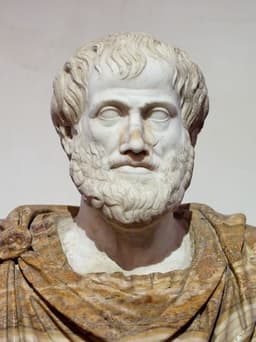
Aristotle
Philosopher · Ancient
59.3Total

Julius Caesar
General · Ancient
82.8Total
Basic Information
Born
-384
-100
Died
-322
-44
Era
Ancient
Ancient
Nationality
Greece
Roman Republic
Occupation
Philosopher
General
Civilization
Western
Western
Score Comparison
Military (10%)
8.8
88.0
Political (20%)
35.0
78.0
Influence (20%)
92.0
85.0
Legacy (20%)
87.0
82.0
Leadership (15%)
27.2
80.0
Strategy (15%)
43.6
85.0
TOTAL
59.3
82.8
Aristotle — Complete Timeline
350 BC
Development of Formal LogicInvention
Aristotle developed the first formal system of logic, including syllogistic logic, in his work 'Organon'. He identified the rules of valid reasoning, such as the syllogism, which became the foundation of Western logic for over two millennia.
LogicPhilosophyScience
Impact: globalprogressive
343 BC
Tutoring Alexander the GreatCultural◆ Major
Philip II of Macedon invited Aristotle to tutor his son Alexander. Aristotle taught Alexander for several years, instilling in him an interest in Greek culture, science, and philosophy. This relationship influenced Alexander's later policies of Hellenization in his conquered territories.
EducationMentorshipHellenization
Impact: globalconstructive
340 BC
Publication of 'Nicomachean Ethics'Cultural◆ Major
Aristotle wrote the 'Nicomachean Ethics', a treatise on virtue ethics. He argued that the highest good is eudaimonia (flourishing) achieved through virtuous activity and practical wisdom. This work became a cornerstone of Western moral philosophy.
EthicsPhilosophyVirtue
Impact: globalconstructive
335 BC
Founding of the LyceumCultural◆ Major
Aristotle founded the Lyceum, a school in Athens dedicated to philosophical and scientific research. He established a library and organized systematic studies across disciplines. The Lyceum became a major center of learning, rivaling Plato's Academy.
SchoolPhilosophyResearch
Impact: globalconstructive
323 BC
Departure from AthensPolitical Action
After Alexander's death, anti-Macedonian sentiment rose in Athens. Aristotle, associated with Macedon, left the city to avoid persecution, saying he would not allow Athens to 'sin twice against philosophy' (referring to Socrates' execution). He died in exile in Chalcis.
ExilePoliticsPhilosophy
Julius Caesar — Complete Timeline
58 BC
Gallic WarsWar◆ Major
Caesar, as proconsul of Gaul, launched a series of campaigns that conquered all of Gaul (modern France, Belgium, and parts of Switzerland). He fought numerous battles, including against the Helvetii, the Belgae, and the Gallic chieftain Vercingetorix. The wars brought immense wealth and a loyal army to Caesar.
Gallic WarsConquestRoman Expansion
Impact: regional
49 BC
Crossing the RubiconPolitical Action◆ Major
Caesar led Legio XIII across the Rubicon River into Italy, defying the Roman Senate's order to disband his army. This act triggered a civil war against Pompey and the Optimates, ultimately leading to Caesar's dictatorship and the end of the Roman Republic.
Roman Civil WarEnd of RepublicPower Struggle
Impact: global
48 BC
Battle of PharsalusWar◆ Major
Caesar's outnumbered army defeated the larger forces of Pompey the Great at Pharsalus in Greece. Caesar's tactical use of a reserve line to counter Pompey's cavalry charge proved decisive. Pompey fled to Egypt, where he was assassinated, leaving Caesar as the undisputed master of the Roman world.
Roman Civil WarBattleDecisive Victory
Impact: regional
44 BC
Appointment as Dictator for LifePolitical Action◆ Major
The Roman Senate appointed Caesar dictator perpetuo (dictator for life), granting him unprecedented personal power. This move concentrated military, legislative, and judicial authority in one person, effectively ending the Roman Republic's traditional system of checks and balances and alarming many senators.
DictatorshipEnd of RepublicPower Consolidation
Impact: regionaldestructive
Assassination on the Ides of MarchPolitical Action◆ Major
A group of Roman senators, led by Marcus Junius Brutus and Gaius Cassius Longinus, stabbed Caesar to death at a meeting of the Senate in the Theatre of Pompey. The assassination was intended to restore the Republic, but instead triggered another civil war that led to the rise of the Roman Empire.
AssassinationRoman PoliticsEnd of Republic
Impact: globaldestructive
Expert Analysis
aristotle-vs-julius-caesar
# The Sword and the Mind: Caesar and Aristotle, Architects of the Western World
On a March morning in 44 BCE, a dictator lay bleeding at the foot of a statue of his rival, Pompey, stabbed twenty-three times by senators who feared he had grown too powerful. Thirty-three years earlier, in a quiet Macedonian village, a philosopher had already died in exile, his vast library of scrolls—the first systematic attempt to catalog all human knowledge—scattered by time and war. Julius Caesar and Aristotle never met. Yet between them, they forged the two pillars upon which Western civilization still rests: the iron of empire and the scaffolding of reason. One conquered the physical world; the other, the world of ideas. Their lives, though separated by a generation and by the gulf between action and contemplation, ask a question that haunts every age: what does it mean to truly shape history?
Origins
Aristotle was born in 384 BCE in the small town of Stagira, on the northern coast of the Aegean. His father was a physician to the Macedonian king, and from childhood, Aristotle absorbed a reverence for observation and the natural world. He arrived in Athens at seventeen, entering Plato’s Academy, where he spent twenty years—first as student, then as teacher. But Plato’s world of ideal Forms did not satisfy him. Where Plato saw perfect abstractions, Aristotle saw the rich, messy particularity of fish, stars, politics, and poetry. He would spend his life trying to name and categorize everything that existed.
Julius Caesar was born into a different kind of ambition. His family, the Julii, claimed descent from the goddess Venus, but their political fortunes had faded. Rome in 100 BCE was a republic choking on its own success—a city of marble temples and bloody street gangs, where senators hired gladiators to intimidate rivals. Caesar’s youth was marked by civil war, proscriptions, and the constant threat of assassination. He learned early that survival meant alliances, and that alliances meant debts. Unlike Aristotle, who could retreat into thought, Caesar had no choice but to act.
Rise to Power
Aristotle’s path was the quiet one of the teacher. In 343 BCE, King Philip II of Macedon summoned him to tutor a thirteen-year-old prince named Alexander. For three years, Aristotle shaped the mind of the boy who would conquer the known world. He taught Alexander ethics, biology, and Homer; he gave him a copy of the *Iliad* annotated in his own hand. But Aristotle was not a man of courts. When Alexander ascended the throne, Aristotle returned to Athens, where in 335 BCE he founded the Lyceum—a school that rivaled Plato’s Academy. There, he walked the shaded paths with his students, discussing everything from the soul to the classification of sea creatures.
Caesar’s rise was the opposite: a career of risk and ruthlessness. He was captured by pirates at twenty-five, laughed at their ransom demand, and after his release, crucified them. He climbed the Roman political ladder—quaestor, aedile, praetor—by borrowing staggering sums and outspending his rivals. In 58 BCE, he secured command of Gaul, and for eight years, he waged a war of conquest that killed perhaps a million people and enslaved another million. He wrote his own account, the *Commentaries*, in a prose so clear and cold that it still feels like a blade. When the Senate ordered him to disband his army, he crossed the Rubicon River in 49 BCE with a single legion, saying, “The die is cast.” Civil war followed; Caesar won.
Leadership & Governance
Aristotle governed through ideas. His *Nicomachean Ethics*, written around 340 BCE, argued that the highest human good is *eudaimonia*—a flourishing life achieved through virtuous action, balanced between extremes. Courage, he wrote, is the mean between cowardice and recklessness. His *Politics* examined over 150 constitutions, concluding that the best government mixed monarchy, aristocracy, and democracy. He did not rule a city, but his works became the operating system for medieval universities, Islamic philosophy, and the American Founding Fathers.
Caesar governed through power and pragmatism. As dictator, he reformed the calendar—giving us the Julian calendar, with its 365 days and leap year. He extended Roman citizenship to Gauls and Spaniards, distributed land to veterans, and launched massive public works. He centralized authority, weakened the Senate, and packed it with his supporters. Yet he never abolished the Republic; he simply made it irrelevant. His rule was brilliant, restless, and ultimately fatal. He refused the crown three times, but he also accepted the title “dictator for life.” The senators who killed him did so not because he was a tyrant, but because they believed he would become one.
Triumph & Tragedy
Aristotle’s greatest triumph was the Lyceum itself—a school that produced a systematic account of every branch of knowledge: logic, physics, biology, psychology, ethics, politics, rhetoric, and poetics. He developed formal logic, including the syllogism, in his *Organon* around 350 BCE. His biology, based on dissection and observation, remained authoritative for nearly two thousand years. But his tragedy came after Alexander’s death in 323 BCE. Anti-Macedonian sentiment exploded in Athens; Aristotle, known as the tutor of the conqueror, fled to Chalcis, saying he would not let the Athenians “sin twice against philosophy.” He died the next year, in exile, at sixty-two.
Caesar’s triumph was the conquest of Gaul and his victory in the civil war. He stood at the summit of the world, his image stamped on coins from Spain to Syria. His tragedy was the Ides of March, 44 BCE—the daggers of Brutus, Cassius, and sixty other senators. He died at fifty-five, his last words perhaps not “Et tu, Brute?” but a gasp of disbelief. The Republic he had strangled was not restored; instead, his adopted heir, Octavian, became Augustus, the first Roman emperor.
Character & Destiny
Aristotle was methodical, cautious, and systematic. He believed in observation, classification, and the golden mean. He rarely took risks. His character shaped a destiny of slow, cumulative influence: the books that survived were buried, rediscovered, translated into Arabic, then Latin, and finally became the backbone of European scholasticism.
Caesar was reckless, charismatic, and decisive. He pardoned his enemies, seduced his rivals’ wives, and gambled everything on a single crossing of a river. His character shaped a destiny of violent, immediate transformation: the Republic fell, the Empire rose, and the world changed in a single generation.
Legacy
Aristotle’s legacy is measured in centuries of thought. His influence score of 90.0 and legacy score of 94.4 reflect a man who taught the West how to think. Without him, there is no Aquinas, no Galileo, no scientific method. His works were the curriculum of the medieval university and the foundation of Islamic philosophy through Avicenna and Averroes. He is the philosopher who named the world.
Caesar’s legacy is measured in empires. His military score of 88.0 and strategy score of 88.0 reflect a general who conquered Gaul and defeated Pompey. His name became a title: *Kaiser* in German, *Tsar* in Russian. Every emperor who followed, from Augustus to Napoleon, walked in his shadow. He is the man who broke the Republic and built the Empire.
Conclusion
One built an empire of ideas; the other, an empire of swords. Aristotle tutored a king who conquered the world; Caesar became a king who conquered the world. Yet both were undone by the very forces they sought to master: Aristotle by the politics he could not escape, Caesar by the politics he could not control. In the end, we remember them not as rivals but as partners—the philosopher who taught us to ask why, and the general who showed us how far one man can go. Together, they made the West.
Rankings
🥇
Julius CaesarLeader
Mil: 88.0Pol: 78.0Inf: 85.0
82.8
🥈
Aristotle
Mil: 8.8Pol: 35.0Inf: 92.0
59.3
+23.5 behind
How This Comparison Works
Algorithm
Each figure is scored on 6 dimensions (0—100 scale) based on structured historical data: Military (10%), Political (20%), Influence (20%), Legacy (20%), Leadership (15%), Strategy (15%). The weighted total produces the final ranking.
Data Sources
Scores are computed from structured sub-indicators in the database. Scale factors adjust for era (Ancient ×0.85, Modern ×1.0) and civilization size (Eastern ×1.05, Other ×0.80) to account for differences in population and military scale.
Maximum 3 Figures
Comparisons are limited to 2—3 figures to ensure readability and statistical meaningfulness.
Error Margins
±5 points per dimension — Sub-scores are derived from historical records with inherent uncertainty. Two figures within 5 points on a dimension should be considered roughly equivalent in that area.
Total Score Accuracy
±3 points overall — The weighted combination of 6 dimensions produces a total score with approximately ±3 points of uncertainty. Differences of less than 3 points are not statistically significant— the figures are effectively tied.
Known Limitations
- Historical records are incomplete and uneven across civilizations
- Figures from oral-tradition societies may be underrepresented
- Occupation labels can misclassify multi-role figures
- Scores measure capability and impact, not moral character
- Quantitative scoring is a comparison tool, not absolute truth
Capability Radar
Military (10%) — Battles & Warfare
Battles
17
95
Win Rate
16
92
Expansion
18
97
Political (20%) — Governance & Reform
Reform
30
90
Diplomacy
20
85
Economy
20
82
Influence (20%) — Cultural & Global Reach
Cultural
95
88
Global
95
94
Legacy (20%) — Historical Impact
Historical
95
95
Longevity
95
96
Leadership (15%) — Power & Stability
Tenure
10
75
Stability
10
60
Strategy (15%) — Tactics & Innovation
Strategy
21
94
Tactics
28
96
Reform
30
88
Similar Comparisons
Comments & Discussion
No comments yet. Be the first to share your thoughts!