Loading...
Aristotle vs Napoleon Bonaparte
Napoleon Bonaparte leads by 11.6 pts · 2 figures compared
…
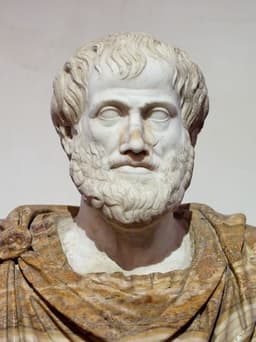
Aristotle
Philosopher · Ancient
59.3Total

Napoleon Bonaparte
General · Modern
70.9Total
Basic Information
Born
-384
1769
Died
-322
1821
Era
Ancient
Modern
Nationality
Greece
France
Occupation
Philosopher
General
Civilization
Western
Western
Score Comparison
Military (10%)
8.8
94.0
Political (20%)
35.0
72.0
Influence (20%)
92.0
40.0
Legacy (20%)
87.0
80.0
Leadership (15%)
27.2
78.0
Strategy (15%)
43.6
90.0
TOTAL
59.3
70.9
Aristotle — Complete Timeline
350 BC
Development of Formal LogicInvention
Aristotle developed the first formal system of logic, including syllogistic logic, in his work 'Organon'. He identified the rules of valid reasoning, such as the syllogism, which became the foundation of Western logic for over two millennia.
LogicPhilosophyScience
Impact: globalprogressive
343 BC
Tutoring Alexander the GreatCultural◆ Major
Philip II of Macedon invited Aristotle to tutor his son Alexander. Aristotle taught Alexander for several years, instilling in him an interest in Greek culture, science, and philosophy. This relationship influenced Alexander's later policies of Hellenization in his conquered territories.
EducationMentorshipHellenization
Impact: globalconstructive
340 BC
Publication of 'Nicomachean Ethics'Cultural◆ Major
Aristotle wrote the 'Nicomachean Ethics', a treatise on virtue ethics. He argued that the highest good is eudaimonia (flourishing) achieved through virtuous activity and practical wisdom. This work became a cornerstone of Western moral philosophy.
EthicsPhilosophyVirtue
Impact: globalconstructive
335 BC
Founding of the LyceumCultural◆ Major
Aristotle founded the Lyceum, a school in Athens dedicated to philosophical and scientific research. He established a library and organized systematic studies across disciplines. The Lyceum became a major center of learning, rivaling Plato's Academy.
SchoolPhilosophyResearch
Impact: globalconstructive
323 BC
Departure from AthensPolitical Action
After Alexander's death, anti-Macedonian sentiment rose in Athens. Aristotle, associated with Macedon, left the city to avoid persecution, saying he would not allow Athens to 'sin twice against philosophy' (referring to Socrates' execution). He died in exile in Chalcis.
ExilePoliticsPhilosophy
Napoleon Bonaparte — Complete Timeline
1799 AD
Coup of 18 BrumaireOther◆ Major
Napoleon Bonaparte, with support from his brother Lucien and key political figures, overthrew the Directory in a bloodless coup. He established the Consulate with himself as First Consul, effectively becoming the ruler of France. This event ended the French Revolution's most unstable period.
French RevolutionCoupRise to Power
Impact: regional
1804 AD
Promulgation of the Napoleonic CodeOther◆ Major
Napoleon enacted the Civil Code of the French, known as the Napoleonic Code, a comprehensive set of laws that replaced the fragmented feudal legal systems. The code established legal equality, protected property rights, and secularized law. It became the basis for legal systems in many European and world countries.
Legal ReformNapoleonic CodeCivil Law
Impact: globalconstructive
1805 AD
Battle of AusterlitzWar◆ Major
Napoleon's Grande Arm
Napoleonic WarsBattleDecisive Victory
Impact: global
1812 AD
Invasion of RussiaWar◆ Major
Napoleon led the Grande Arm
Napoleonic WarsInvasionDisaster
Impact: globaldestructive
1815 AD
Battle of WaterlooWar◆ Major
Napoleon's French army was defeated by the combined forces of the Duke of Wellington's Anglo-Allied army and Gebhard Leberecht von Bl
Napoleonic WarsBattleFinal Defeat
Impact: globaldestructive
Expert Analysis
aristotle-vs-napoleon-bonaparte
# The Emperor and the Philosopher
On a spring morning in 1815, Napoleon Bonaparte stood on the deck of a ship returning from exile, his eyes fixed on the French coastline. He was about to reclaim an empire. Two thousand years earlier, another man with ties to power had fled Athens by sea—Aristotle, the tutor of conquerors, slipping away from the city he had called home as anti-Macedonian fury rose. One man sailed toward glory and ultimate ruin; the other sailed into obscurity and eternal influence. What drove these two figures, both shapers of the Western world, to such different destinies?
Origins
Napoleon was born in 1769 on the island of Corsica, a territory only recently annexed by France. His family was minor nobility, struggling and proud. He spoke French with a thick Italian accent, and the mainland French never let him forget it. This outsider status forged in him a relentless hunger for acceptance and domination. He attended military school in Brienne, where he was bullied for his poverty and accent, and emerged with a burning ambition that would consume Europe.
Aristotle was born in 384 BCE in Stagira, a small Greek colony in northern Macedonia. His father was court physician to the Macedonian king, giving Aristotle early exposure to the corridors of power. But unlike Napoleon, Aristotle’s path was not forged in barracks but in the Academy of Athens, where he arrived as a young man to study under Plato. Where Napoleon’s world was defined by cannon and cavalry, Aristotle’s was shaped by dialectic and dissection. The contrast is stark: one man learned to command armies, the other to command ideas.
Rise to Power
Napoleon’s ascent was a masterpiece of opportunism and audacity. In 1793, at age twenty-four, he drove British forces from Toulon with a brilliant artillery plan. By 1796, he commanded the French army in Italy, where he turned a ragged force into a conquering machine. His Italian campaign was not just a military success—it was a political launchpad. He understood that in revolutionary France, victory was the only currency that mattered. By 1799, he had seized power in a coup d’état, naming himself First Consul. He was thirty years old.
Aristotle’s rise was slower, more deliberate. After Plato’s death in 347 BCE, he left Athens, perhaps disappointed at not being chosen to lead the Academy. He spent years traveling, studying marine biology on Lesbos, and building his own intellectual foundations. His great turning point came around 343 BCE, when Philip II of Macedon invited him to tutor his thirteen-year-old son, Alexander. For several years, Aristotle taught the future conqueror ethics, politics, and science. This was not a path to political power—Aristotle would never rule a state—but it was a path to shaping the mind that would rule the world.
Leadership & Governance
Napoleon led with a blend of genius and tyranny. His military campaigns from Austerlitz in 1805 to the disastrous invasion of Russia in 1812 revealed a mind that could calculate troop movements with precision while ignoring the limits of human endurance. He governed through the Napoleonic Code, a legal system that enshrined merit over birthright, property rights, and secular authority. Yet he also crowned himself emperor in 1804, surrounded by former revolutionaries, and placed his brothers on European thrones. His political wisdom was real but poisoned by megalomania.
Aristotle governed nothing but ideas. As head of the Lyceum, which he founded in 335 BCE, he created a community of researchers who studied everything from the anatomy of octopuses to the constitutions of Greek city-states. His “Politics” analyzed governance with cold clarity, identifying the strengths and weaknesses of democracy, oligarchy, and monarchy. He did not conquer nations—he conquered ignorance. Where Napoleon imposed order through force, Aristotle imposed order through logic, developing the first formal system of syllogistic reasoning in his “Organon” around 350 BCE.
Triumph & Tragedy
Napoleon’s greatest moment came on December 2, 1805, at Austerlitz, where he crushed the combined armies of Russia and Austria in a battle so perfect it became a textbook example of military genius. His worst came in 1812, when he marched 600,000 men into Russia and returned with fewer than 100,000. The retreat was a nightmare of snow, starvation, and Cossack raids. He was exiled to Elba in 1814, returned for the Hundred Days, and met final defeat at Waterloo on June 18, 1815. He died in 1821 on the remote island of Saint Helena, a prisoner of the British.
Aristotle’s triumph was not a single event but a lifetime of synthesis. In the “Nicomachean Ethics,” completed around 340 BCE, he argued that the highest human good is eudaimonia—flourishing achieved through virtue and reason. His tragedy was political. After Alexander’s death in 323 BCE, anti-Macedonian sentiment boiled over in Athens. Aristotle, remembered as the tutor of the tyrant, fled to Chalcis in 322 BCE, saying he would not let Athens “sin twice against philosophy” (a reference to Socrates’ execution). He died there within the year.
Character & Destiny
Napoleon was a man of immense energy, charm, and paranoia. He could inspire soldiers to die for him and then betray his closest allies. His personality drove him to conquer, never to consolidate. He once said, “Power is my mistress,” and he pursued her with a single-mindedness that left Europe in ruins. His character was his destiny: the same ambition that lifted him from Corsican obscurity to emperor of Europe also condemned him to isolation and defeat.
Aristotle was a man of systematic curiosity. He was not a charismatic leader but a relentless questioner. His personality was not driven by conquest but by classification. He wanted to know why things were the way they were—why the heart beats, why the state exists, why humans seek happiness. This curiosity, not ambition, shaped his destiny. He did not die in exile because he was defeated but because he was prudent. He chose survival over martyrdom, and in doing so, ensured his ideas would survive.
Legacy
Napoleon’s legacy is a paradox. He caused the deaths of millions, yet the Napoleonic Code still shapes legal systems across Europe and the Americas. He ended feudalism in the lands he conquered, yet he restored slavery in French colonies. He is remembered as both a liberator and a tyrant, a military genius and a cautionary tale about unchecked ambition. His influence score of 82.0 reflects this complexity—he reshaped Europe, but the shape he gave it was often ugly.
Aristotle’s legacy is more straightforward. His logic, ethics, and metaphysics dominated Western thought for over two thousand years. Medieval scholars called him simply “the Philosopher.” His work on biology, politics, and poetics laid foundations that lasted until the Scientific Revolution. His total score of 57.6 masks a legacy score of 94.4—the highest possible measure of lasting impact. He did not conquer a single city, yet he conquered every university, every library, every mind that sought to understand the world.
Conclusion
Standing on the deck of that ship in 1815, Napoleon believed he was returning to reclaim his destiny. He was wrong. His destiny was already written in the snow of Russia and the mud of Waterloo. Aristotle, fleeing Athens in 322 BCE, knew his destiny was not in the halls of power but in the pages of his books. One man sought to rule the world and failed. The other sought to understand it and succeeded beyond measure. In the end, the emperor commands our attention, but the philosopher commands our minds. And that is the deeper victory—the one that does not need an army, only an idea.
Rankings
🥇
Napoleon BonaparteLeader
Mil: 94.0Pol: 72.0Inf: 40.0
70.9
🥈
Aristotle
Mil: 8.8Pol: 35.0Inf: 92.0
59.3
+11.6 behind
How This Comparison Works
Algorithm
Each figure is scored on 6 dimensions (0—100 scale) based on structured historical data: Military (10%), Political (20%), Influence (20%), Legacy (20%), Leadership (15%), Strategy (15%). The weighted total produces the final ranking.
Data Sources
Scores are computed from structured sub-indicators in the database. Scale factors adjust for era (Ancient ×0.85, Modern ×1.0) and civilization size (Eastern ×1.05, Other ×0.80) to account for differences in population and military scale.
Maximum 3 Figures
Comparisons are limited to 2—3 figures to ensure readability and statistical meaningfulness.
Error Margins
±5 points per dimension — Sub-scores are derived from historical records with inherent uncertainty. Two figures within 5 points on a dimension should be considered roughly equivalent in that area.
Total Score Accuracy
±3 points overall — The weighted combination of 6 dimensions produces a total score with approximately ±3 points of uncertainty. Differences of less than 3 points are not statistically significant— the figures are effectively tied.
Known Limitations
- Historical records are incomplete and uneven across civilizations
- Figures from oral-tradition societies may be underrepresented
- Occupation labels can misclassify multi-role figures
- Scores measure capability and impact, not moral character
- Quantitative scoring is a comparison tool, not absolute truth
Capability Radar
Military (10%) — Battles & Warfare
Battles
17
95
Win Rate
16
90
Expansion
18
95
Political (20%) — Governance & Reform
Reform
30
95
Diplomacy
20
80
Economy
20
85
Influence (20%) — Cultural & Global Reach
Cultural
95
85
Global
95
90
Legacy (20%) — Historical Impact
Historical
95
95
Longevity
95
90
Leadership (15%) — Power & Stability
Tenure
10
85
Stability
10
70
Strategy (15%) — Tactics & Innovation
Strategy
21
95
Tactics
28
98
Reform
30
92
Similar Comparisons
Comments & Discussion
No comments yet. Be the first to share your thoughts!