Loading...
This comparison has not been analyzed yet.
One-time AI generation (~1 minute). Scores and timeline are already available below.
Arjan Singh vs Calixto Garcia
Arjan Singh leads by 13.2 pts · 2 figures compared
…

Arjan Singh
General · Modern
58.7Total
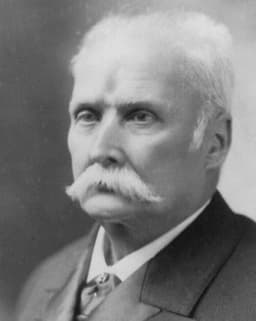
Calixto Garcia
General · Modern
45.5Total
Basic Information
Born
1919
1839
Died
2017
1898
Era
Modern
Modern
Nationality
India
Cuba
Occupation
General
General
Civilization
Indian
Western
Score Comparison
Military (10%)
52.5
30.0
Political (20%)
68.0
33.6
Influence (20%)
55.0
54.9
Legacy (20%)
50.0
46.7
Leadership (15%)
68.0
40.4
Strategy (15%)
68.1
60.0
TOTAL
58.7
45.5
Arjan Singh — Complete Timeline
1964 AD
Served as Chief of Air StaffPolitical Action◆ Major
Arjan Singh was appointed Chief of Air Staff in 1964. He oversaw the expansion and modernization of the Indian Air Force, including the induction of new aircraft like the MiG-21.
Air ChiefModernizationLeadership
Impact: nationalconstructive
1965 AD
Served as Chief of Air Staff during 1965 Indo-Pakistani WarWar◆ Major
As Chief of Air Staff, Arjan Singh led the Indian Air Force during the 1965 war with Pakistan. The IAF conducted air operations in support of ground forces, though the war ended in a stalemate.
1965 WarAir ForceLeadership
Impact: regional
1971 AD
Served as Governor of AssamPolitical Action
After retiring from the air force, Arjan Singh served as Governor of Assam. He dealt with insurgency and refugee issues during the Bangladesh Liberation War.
GovernorAssamInsurgency
Impact: regional
2002 AD
Promoted to Marshal of the Indian Air ForcePolitical Action◆ Major
Arjan Singh was promoted to the rank of Marshal of the Indian Air Force, the first and only officer to hold this five-star rank. The promotion recognized his leadership during the 1965 war and his long service.
MarshalAir ForceHonor
Impact: nationalconstructive
Calixto Garcia — Complete Timeline
1868 AD
Capture of BayamoWar◆ Major
Garcia participated in the capture of Bayamo, the first major rebel victory of the Ten Years' War. The city became the provisional capital of the Cuban Republic in Arms.
Ten Years' WarBattleCuban Independence
Impact: regional
1874 AD
Refusal to Surrender at San LuisWar
Garcia was captured by Spanish forces at San Luis but refused to surrender. He was imprisoned in Spain but later escaped and returned to Cuba to continue fighting.
Ten Years' WarPrisoner of WarEscape
Impact: national
1879 AD
Participation in the Little WarWar
Garcia fought in the Little War, a failed uprising against Spanish rule. The conflict ended quickly due to lack of resources and internal divisions, but Garcia continued to advocate for independence.
Little WarCuban IndependenceUprising
Impact: regional
1898 AD
Battle of GuantánamoWar◆ Major
Garcia led Cuban forces in the Battle of Guant
Spanish-American WarBattleUS-Cuba Alliance
Impact: regional
This comparison has not been analyzed yet.
One-time AI generation (~1 minute). Scores and timeline are already available below.
Rankings
🥇
Arjan SinghLeader
Mil: 52.5Pol: 68.0Inf: 55.0
58.7
🥈
Calixto Garcia
Mil: 30.0Pol: 33.6Inf: 54.9
45.5
+13.2 behind
How This Comparison Works
Algorithm
Each figure is scored on 6 dimensions (0—100 scale) based on structured historical data: Military (10%), Political (20%), Influence (20%), Legacy (20%), Leadership (15%), Strategy (15%). The weighted total produces the final ranking.
Data Sources
Scores are computed from structured sub-indicators in the database. Scale factors adjust for era (Ancient ×0.85, Modern ×1.0) and civilization size (Eastern ×1.05, Other ×0.80) to account for differences in population and military scale.
Maximum 3 Figures
Comparisons are limited to 2—3 figures to ensure readability and statistical meaningfulness.
Error Margins
±5 points per dimension — Sub-scores are derived from historical records with inherent uncertainty. Two figures within 5 points on a dimension should be considered roughly equivalent in that area.
Total Score Accuracy
±3 points overall — The weighted combination of 6 dimensions produces a total score with approximately ±3 points of uncertainty. Differences of less than 3 points are not statistically significant— the figures are effectively tied.
Known Limitations
- Historical records are incomplete and uneven across civilizations
- Figures from oral-tradition societies may be underrepresented
- Occupation labels can misclassify multi-role figures
- Scores measure capability and impact, not moral character
- Quantitative scoring is a comparison tool, not absolute truth
Capability Radar
Military (10%) — Battles & Warfare
Battles
60
45
Win Rate
65
50
Expansion
30
25
Political (20%) — Governance & Reform
Reform
50
15
Diplomacy
60
30
Economy
30
10
Influence (20%) — Cultural & Global Reach
Cultural
40
35
Global
45
25
Legacy (20%) — Historical Impact
Historical
55
40
Longevity
40
30
Leadership (15%) — Power & Stability
Tenure
55
20
Stability
65
15
Strategy (15%) — Tactics & Innovation
Strategy
75
50
Tactics
70
55
Reform
80
30
Similar Comparisons
Comments & Discussion
No comments yet. Be the first to share your thoughts!