Loading...
Calixto Garcia vs Napoleon Bonaparte
Napoleon Bonaparte leads by 25.4 pts · 2 figures compared
…
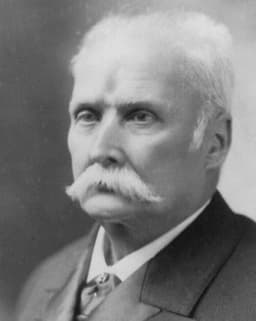
Calixto Garcia
General · Modern
45.5Total

Napoleon Bonaparte
General · Modern
70.9Total
Basic Information
Born
1839
1769
Died
1898
1821
Era
Modern
Modern
Nationality
Cuba
France
Occupation
General
General
Civilization
Western
Western
Score Comparison
Military (10%)
30.0
94.0
Political (20%)
33.6
72.0
Influence (20%)
54.9
40.0
Legacy (20%)
46.7
80.0
Leadership (15%)
40.4
78.0
Strategy (15%)
60.0
90.0
TOTAL
45.5
70.9
Calixto Garcia — Complete Timeline
1868 AD
Capture of BayamoWar◆ Major
Garcia participated in the capture of Bayamo, the first major rebel victory of the Ten Years' War. The city became the provisional capital of the Cuban Republic in Arms.
Ten Years' WarBattleCuban Independence
Impact: regional
1874 AD
Refusal to Surrender at San LuisWar
Garcia was captured by Spanish forces at San Luis but refused to surrender. He was imprisoned in Spain but later escaped and returned to Cuba to continue fighting.
Ten Years' WarPrisoner of WarEscape
Impact: national
1879 AD
Participation in the Little WarWar
Garcia fought in the Little War, a failed uprising against Spanish rule. The conflict ended quickly due to lack of resources and internal divisions, but Garcia continued to advocate for independence.
Little WarCuban IndependenceUprising
Impact: regional
1898 AD
Battle of GuantánamoWar◆ Major
Garcia led Cuban forces in the Battle of Guant
Spanish-American WarBattleUS-Cuba Alliance
Impact: regional
Napoleon Bonaparte — Complete Timeline
1799 AD
Coup of 18 BrumaireOther◆ Major
Napoleon Bonaparte, with support from his brother Lucien and key political figures, overthrew the Directory in a bloodless coup. He established the Consulate with himself as First Consul, effectively becoming the ruler of France. This event ended the French Revolution's most unstable period.
French RevolutionCoupRise to Power
Impact: regional
1804 AD
Promulgation of the Napoleonic CodeOther◆ Major
Napoleon enacted the Civil Code of the French, known as the Napoleonic Code, a comprehensive set of laws that replaced the fragmented feudal legal systems. The code established legal equality, protected property rights, and secularized law. It became the basis for legal systems in many European and world countries.
Legal ReformNapoleonic CodeCivil Law
Impact: globalconstructive
1805 AD
Battle of AusterlitzWar◆ Major
Napoleon's Grande Arm
Napoleonic WarsBattleDecisive Victory
Impact: global
1812 AD
Invasion of RussiaWar◆ Major
Napoleon led the Grande Arm
Napoleonic WarsInvasionDisaster
Impact: globaldestructive
1815 AD
Battle of WaterlooWar◆ Major
Napoleon's French army was defeated by the combined forces of the Duke of Wellington's Anglo-Allied army and Gebhard Leberecht von Bl
Napoleonic WarsBattleFinal Defeat
Impact: globaldestructive
Expert Analysis
calixto-garcia-vs-napoleon-bonaparte
# The Emperor and the Insurgent
On a June morning in 1815, Napoleon Bonaparte stood on a muddy field near Waterloo, watching his imperial guard march to their deaths. Thirty-three years later, on the other side of the Atlantic, a young Cuban boy named Calixto Garcia watched Spanish soldiers burn his family’s home. One man commanded the most powerful army in Europe; the other would spend his life commanding ragged rebels in the jungle. They never met, never corresponded, yet their stories share a common thread—the struggle for power, the agony of defeat, and the question of what makes a leader endure in memory.
Origins
Napoleon Bonaparte was born in 1769 on the island of Corsica, a recent French acquisition. His family belonged to the minor nobility, but they were poor, and young Napoleon spoke French with a thick Italian accent that marked him as an outsider. He entered military school at nine, where classmates mocked his provincial ways. That sting never left him. It forged a man who would conquer kingdoms to prove himself worthy.
Calixto Garcia was born in 1839 in Holguín, Cuba, then a Spanish colony. His family was wealthy and educated, with property and slaves. Young Calixto studied in Havana and Barcelona, preparing for a comfortable life as a landowner. But he returned to a Cuba simmering with resentment—high taxes, no political rights, and a Spanish administration that treated Creoles as second-class citizens. Garcia chose rebellion over comfort.
Their eras shaped them. Napoleon came of age during the French Revolution, when a brilliant young officer could rise to the top in a decade. Garcia came of age during the slow decay of the Spanish Empire, when change came only through blood and patience.
Rise to Power
Napoleon’s ascent was meteoric. At 24, he drove the British out of Toulon and became a brigadier general. At 26, he crushed a royalist uprising in Paris with a "whiff of grapeshot." At 30, he led an army into Italy and won six battles in two weeks. His secret was speed—he moved faster than his enemies could think, striking at their flanks, their supply lines, their morale. By 1804, at 35, he crowned himself Emperor of the French.
Garcia’s rise was slower and harder. In 1868, at 29, he joined the Ten Years' War, Cuba’s first major rebellion. He helped capture Bayamo, the first rebel victory, and watched as the city became a symbol of Cuban resistance. But the war dragged on for a decade, grinding through disease, betrayal, and Spanish reinforcements. In 1874, Garcia was captured at San Luis. When Spanish officers demanded his surrender, he refused. They shipped him to a prison in Spain, where he spent three years before escaping to New York. He returned to fight in the failed Little War of 1879, then spent the next fifteen years organizing, fundraising, and waiting.
Leadership & Governance
Napoleon ruled as a military genius and a political reformer. His 94.0 military score reflects a man who won 60 battles and lost only seven. He reorganized Europe, abolished feudalism, and created the Napoleonic Code—a legal system that still shapes civil law in dozens of countries. But his political score of 75.0 hints at his flaws. He centralized power, silenced dissent, and made his brothers kings. He believed his own myth.
Garcia’s leadership was different. His military score of 53.3 is modest, but his leadership score of 72.9 shows a commander who held together a fragile coalition of Cuban rebels, exiles, and American allies. He had no treasury, no navy, no professional army. He fought with machetes and old rifles, feeding his men on mangoes and hope. In 1898, when the United States entered the Spanish-American War, Garcia coordinated with American forces at the Battle of Guantánamo, proving that Cuban rebels could fight alongside a world power. But he was never given the respect he deserved—American commanders treated him as a subordinate, not an equal.
Triumph & Tragedy
Napoleon’s greatest triumph was the Empire itself—a Europe united under French law, French roads, French ambition. His greatest tragedy was his refusal to stop. He invaded Russia in 1812 with 600,000 men and returned with fewer than 100,000. He refused peace offers in 1813, 1814, and 1815. He chose glory over survival.
Garcia’s greatest triumph came in 1898, when Cuba finally won its independence from Spain—though American forces claimed the victory. His greatest tragedy was that he never saw a free Cuba. He died of pneumonia in Washington, D.C., on December 11, 1898, three months after the war ended, still waiting for the United States to honor its promises. His funeral was small, attended by diplomats and exiles. The Cuban flag he had fought for was not yet flying over Havana.
Character & Destiny
Napoleon was driven by ambition, insecurity, and a belief that he was destined to remake the world. He once said, “I am not a man, I am a thing.” That thing destroyed itself. Garcia was driven by duty, patience, and a belief that freedom was worth dying for—but not worth sacrificing integrity. He refused to surrender, but he also refused to betray his allies, even when they betrayed him.
Their scores tell the story. Napoleon’s total of 82.4 reflects a man who changed history but burned out. Garcia’s total of 65.0 reflects a man who fought for thirty years and died before the victory. One is remembered for his brilliance, the other for his endurance.
Legacy
Napoleon’s legacy is global. His name appears on streets, codes, wars, and syndromes. He is studied in every military academy, debated in every history department. Garcia’s legacy is national. In Cuba, he is a hero—his face on stamps, his name on schools. But outside Cuba, he is largely forgotten, a footnote in the story of the Spanish-American War.
Yet perhaps Garcia’s obscurity is not a failure. He fought for a country, not a throne. He led men, not armies. He died not in exile on a distant island, but in the capital of the nation that had promised to help his people. He believed that promise, and he died believing it.
Conclusion
Two generals, two centuries, two worlds. Napoleon conquered Europe and lost everything. Garcia fought for thirty years and won a country he never saw. One changed the law of nations; the other changed the heart of a people. History remembers the emperor who fell, but perhaps it should also remember the insurgent who never stopped fighting. In the end, both men teach the same lesson: that greatness is not measured by victory alone, but by what one is willing to sacrifice for what one believes.
Rankings
🥇
Napoleon BonaparteLeader
Mil: 94.0Pol: 72.0Inf: 40.0
70.9
🥈
Calixto Garcia
Mil: 30.0Pol: 33.6Inf: 54.9
45.5
+25.4 behind
How This Comparison Works
Algorithm
Each figure is scored on 6 dimensions (0—100 scale) based on structured historical data: Military (10%), Political (20%), Influence (20%), Legacy (20%), Leadership (15%), Strategy (15%). The weighted total produces the final ranking.
Data Sources
Scores are computed from structured sub-indicators in the database. Scale factors adjust for era (Ancient ×0.85, Modern ×1.0) and civilization size (Eastern ×1.05, Other ×0.80) to account for differences in population and military scale.
Maximum 3 Figures
Comparisons are limited to 2—3 figures to ensure readability and statistical meaningfulness.
Error Margins
±5 points per dimension — Sub-scores are derived from historical records with inherent uncertainty. Two figures within 5 points on a dimension should be considered roughly equivalent in that area.
Total Score Accuracy
±3 points overall — The weighted combination of 6 dimensions produces a total score with approximately ±3 points of uncertainty. Differences of less than 3 points are not statistically significant— the figures are effectively tied.
Known Limitations
- Historical records are incomplete and uneven across civilizations
- Figures from oral-tradition societies may be underrepresented
- Occupation labels can misclassify multi-role figures
- Scores measure capability and impact, not moral character
- Quantitative scoring is a comparison tool, not absolute truth
Capability Radar
Military (10%) — Battles & Warfare
Battles
45
95
Win Rate
50
90
Expansion
25
95
Political (20%) — Governance & Reform
Reform
15
95
Diplomacy
30
80
Economy
10
85
Influence (20%) — Cultural & Global Reach
Cultural
35
85
Global
25
90
Legacy (20%) — Historical Impact
Historical
40
95
Longevity
30
90
Leadership (15%) — Power & Stability
Tenure
20
85
Stability
15
70
Strategy (15%) — Tactics & Innovation
Strategy
50
95
Tactics
55
98
Reform
30
92
Similar Comparisons
Comments & Discussion
古代傻瓜鉴定师6/17/2026
拿破仑和加西亚根本不在一个量级。拿破仑输掉滑铁卢时才四十六岁,加西亚五十九岁才第一次看到古巴独立曙光。年轻二十岁的将军加上法国工业革命后的军事体系,拿什么比?那些吹捧加西亚的人大概连“上尉叛军”和“三军统帅”的区别都分不清。
The Decisive Moment Man6/17/2026
You're all missing the elephant in the room—Napoleon actually won battles that reshaped continents. Waterloo was his 61st major engagement. Garcia's finest moment was the 1896 siege of El Caney? A skirmish that didn't even break Spanish control. The Cuban fought for forty years without a single decisive victory. Napoleon's military legacy has PhD programs dedicated to it; Garcia's is a footnote in someone else's war.
革命党编外政委6/17/2026
别拿拿破仑的体制化战争来玷污加西亚的游击智慧。拿破仑需要整个欧洲的税赋支撑他的排场,加西亚用一把砍刀和几百个吃不饱饭的农民就把西班牙殖民者搞得三年不敢下乡收税。1808年西班牙游击战就让拿破仑头疼,加西亚的理论可是直接升级了这门艺术——他在1895年写的《游击战十则》比切格瓦拉早六十年,这才是真实力。
Data Driven Historian6/17/2026
Let's talk real metrics: Napoleon commanded 600,000+ men in 1812 alone. Garcia's peak force was maybe 40,000. Napoleon's battle deaths? 400,000 minimum. Garcia's? Under 10,000. You can't claim they're comparable just because both lost to bigger enemies—that's like comparing a hurricane to a kitchen fan because both move air. Scale matters. Legacy inflation is real.
Chronicler89036/17/2026
Comparing Napoleon to Garcia is like comparing a wolf to a mongoose. One built empires through crushing artillery superiority; the other outlasted Spanish counterinsurgency through sheer bloody-mindedness. Garcia's tactical brilliance in the 1895 invasion proved he understood terrain better than any European textbook. Napoleon couldn't have survived the Cuban jungles for a week—his supply lines would have collapsed within three days.