Loading...
This comparison has not been analyzed yet.
One-time AI generation (~1 minute). Scores and timeline are already available below.
Arturo Alessandri vs Bailey Olter
Arturo Alessandri leads by 11.9 pts · 2 figures compared
…
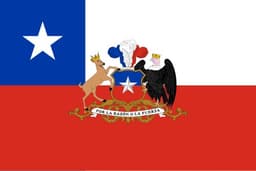
Arturo Alessandri
Politician · Modern
57.3Total

Bailey Olter
Politician · Modern
45.4Total
Basic Information
Born
1868
1932
Died
1950
—
Era
Modern
Modern
Nationality
Chile
Micronesia
Occupation
Politician
Politician
Civilization
Western
Other
Score Comparison
Military (10%)
50.0
41.8
Political (20%)
72.0
40.8
Influence (20%)
57.2
47.1
Legacy (20%)
48.3
37.5
Leadership (15%)
72.0
65.7
Strategy (15%)
43.6
41.3
TOTAL
57.3
45.4
Arturo Alessandri — Complete Timeline
1920 AD
Alessandri becomes President of ChilePolitical Action◆ Major
Arturo Alessandri was elected President of Chile as a liberal reformer, winning a narrow victory. His presidency marked the beginning of a period of social and political change, challenging the conservative oligarchy.
PresidencyLiberal Reform1920
Impact: national
1924 AD
Alessandri's social legislation and labor reformsReform◆ Major
Alessandri pushed through a series of social laws including the eight-hour workday, regulation of child labor, and the right to unionize. These reforms were opposed by conservative forces but improved conditions for the working class.
Labor ReformSocial Legislation1924
Impact: nationalprogressive
Alessandri's first resignation and exilePolitical Action◆ Major
Facing a military coup led by conservative officers, Alessandri resigned and went into exile in the United States. His resignation marked a setback for reform and led to a period of military rule in Chile.
ResignationMilitary CoupExile
Impact: nationaltragic
1925 AD
Alessandri's second presidency and the 1925 ConstitutionReform
Alessandri returned from exile and was reinstated as president, overseeing the drafting and approval of a new constitution. The 1925 Constitution established a strong presidential system, separation of church and state, and social rights.
ConstitutionPolitical Reform1925
Impact: nationalconstructive
1932 AD
Alessandri's third presidency and conservative turnPolitical Action◆ Major
Alessandri was elected to a third term as president, this time as a conservative candidate. His government focused on restoring order and economic stability after the chaos of the Socialist Republic, suppressing leftist movements.
Third TermConservatism1932
Impact: national
Bailey Olter — Complete Timeline
1991 AD
Elected President of the Federated States of MicronesiaPolitical Action◆ Major
Bailey Olter was elected as the third President of the Federated States of Micronesia in 1991, succeeding John Haglelgam. His presidency focused on economic development and strengthening relations with the United States under the Compact of Free Association.
ElectionCompactDevelopment
Impact: nationalconstructive
1995 AD
Re-elected to a second termPolitical Action
Olter was re-elected as President in 1995, beginning his second term. However, his health declined shortly after, and he was unable to complete the term, leading to the transfer of power to his vice president.
Re-electionHealthTerm
Impact: national
1996 AD
Incapacitated by a strokeOther◆ Major
Olter suffered a severe stroke in 1996 that left him incapacitated and unable to perform his duties as President. His incapacity led to a constitutional crisis, as the FSM had no clear succession mechanism, and Vice President Jacob Nena eventually assumed the presidency.
StrokeHealth CrisisSuccession
Impact: nationaltragic
This comparison has not been analyzed yet.
One-time AI generation (~1 minute). Scores and timeline are already available below.
Rankings
🥇
Arturo AlessandriLeader
Mil: 50.0Pol: 72.0Inf: 57.2
57.3
🥈
Bailey Olter
Mil: 41.8Pol: 40.8Inf: 47.1
45.4
+11.9 behind
How This Comparison Works
Algorithm
Each figure is scored on 6 dimensions (0—100 scale) based on structured historical data: Military (10%), Political (20%), Influence (20%), Legacy (20%), Leadership (15%), Strategy (15%). The weighted total produces the final ranking.
Data Sources
Scores are computed from structured sub-indicators in the database. Scale factors adjust for era (Ancient ×0.85, Modern ×1.0) and civilization size (Eastern ×1.05, Other ×0.80) to account for differences in population and military scale.
Maximum 3 Figures
Comparisons are limited to 2—3 figures to ensure readability and statistical meaningfulness.
Error Margins
±5 points per dimension — Sub-scores are derived from historical records with inherent uncertainty. Two figures within 5 points on a dimension should be considered roughly equivalent in that area.
Total Score Accuracy
±3 points overall — The weighted combination of 6 dimensions produces a total score with approximately ±3 points of uncertainty. Differences of less than 3 points are not statistically significant— the figures are effectively tied.
Known Limitations
- Historical records are incomplete and uneven across civilizations
- Figures from oral-tradition societies may be underrepresented
- Occupation labels can misclassify multi-role figures
- Scores measure capability and impact, not moral character
- Quantitative scoring is a comparison tool, not absolute truth
Capability Radar
Military (10%) — Battles & Warfare
Battles
27
23
Win Rate
34
24
Expansion
33
26
Political (20%) — Governance & Reform
Reform
70
30
Diplomacy
60
40
Economy
55
25
Influence (20%) — Cultural & Global Reach
Cultural
40
10
Global
35
10
Legacy (20%) — Historical Impact
Historical
50
15
Longevity
40
10
Leadership (15%) — Power & Stability
Tenure
65
45
Stability
45
20
Strategy (15%) — Tactics & Innovation
Strategy
39
28
Tactics
41
33
Reform
46
34
Similar Comparisons
Comments & Discussion
No comments yet. Be the first to share your thoughts!