Loading...
This comparison has not been analyzed yet.
One-time AI generation (~1 minute). Scores and timeline are already available below.
Aruna Roy vs B. P. Koirala
Aruna Roy leads by 0.5 pts · 2 figures compared
…

Aruna Roy
Politician · Modern
56.5Total
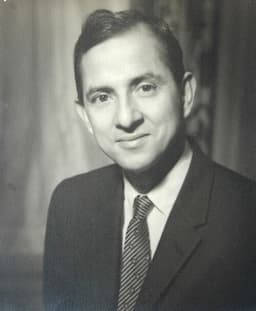
B. P. Koirala
Politician · Modern
56.0Total
Basic Information
Born
1946
1914
Died
—
1982
Era
Modern
Modern
Nationality
India
Nepal
Occupation
Politician
Politician
Civilization
Indian
Indian
Score Comparison
Military (10%)
41.2
27.4
Political (20%)
53.8
62.7
Influence (20%)
56.7
58.0
Legacy (20%)
52.0
49.2
Leadership (15%)
74.0
74.0
Strategy (15%)
60.0
60.0
TOTAL
56.5
56.0
Aruna Roy — Complete Timeline
1975 AD
Resigned from the Indian Administrative ServicePolitical Action
Roy resigned from the IAS to work with rural communities in Rajasthan. This decision allowed her to engage in grassroots activism and eventually lead the RTI movement.
ResignationActivismIAS
Impact: nationalconstructive
1990 AD
Co-founded the Mazdoor Kisan Shakti Sangathan (MKSS)Political Action◆ Major
Aruna Roy co-founded MKSS in Rajasthan to organize rural workers and peasants for rights to minimum wages and social security. The organization pioneered the use of public hearings to expose corruption.
Labor RightsRural ActivismMKSS
Impact: regionalconstructive
2005 AD
Led the campaign for the Right to Information ActPolitical Action◆ Major
Roy was a key leader of the National Campaign for People's Right to Information (NCPRI), which successfully pushed for the passage of the RTI Act in 2005. The law gave citizens access to government documents.
RTITransparencyLegislation
Impact: nationalconstructive
B. P. Koirala — Complete Timeline
1959 AD
Election as First Democratically Elected Prime MinisterPolitical Action
B.P. Koirala led the Nepali Congress to victory in Nepal's first general election. He became the first democratically elected prime minister, forming a government that introduced land reforms and social welfare programs.
ElectionDemocracyNepal
Impact: nationalprogressive
1960 AD
Imprisonment after 1960 CoupPolitical Action◆ Major
King Mahendra arrested B.P. Koirala and his cabinet during the royal coup. Koirala was imprisoned for eight years, enduring harsh conditions. His detention symbolized the suppression of democracy under the Panchayat system.
ImprisonmentAuthoritarianismDemocracy
Impact: nationaltragic
1968 AD
Exile and Leadership of Democratic MovementPolitical Action
After his release, B.P. Koirala went into exile in India. He continued to lead the democratic opposition against the Panchayat regime, organizing protests and advocating for multiparty democracy until his death.
ExileOppositionDemocracy
Impact: nationalconstructive
This comparison has not been analyzed yet.
One-time AI generation (~1 minute). Scores and timeline are already available below.
Rankings
🥇
Aruna RoyLeader
Mil: 41.2Pol: 53.8Inf: 56.7
56.5
🥈
B. P. Koirala
Mil: 27.4Pol: 62.7Inf: 58.0
56.0
+0.5 behind
How This Comparison Works
Algorithm
Each figure is scored on 6 dimensions (0—100 scale) based on structured historical data: Military (10%), Political (20%), Influence (20%), Legacy (20%), Leadership (15%), Strategy (15%). The weighted total produces the final ranking.
Data Sources
Scores are computed from structured sub-indicators in the database. Scale factors adjust for era (Ancient ×0.85, Modern ×1.0) and civilization size (Eastern ×1.05, Other ×0.80) to account for differences in population and military scale.
Maximum 3 Figures
Comparisons are limited to 2—3 figures to ensure readability and statistical meaningfulness.
Error Margins
±5 points per dimension — Sub-scores are derived from historical records with inherent uncertainty. Two figures within 5 points on a dimension should be considered roughly equivalent in that area.
Total Score Accuracy
±3 points overall — The weighted combination of 6 dimensions produces a total score with approximately ±3 points of uncertainty. Differences of less than 3 points are not statistically significant— the figures are effectively tied.
Known Limitations
- Historical records are incomplete and uneven across civilizations
- Figures from oral-tradition societies may be underrepresented
- Occupation labels can misclassify multi-role figures
- Scores measure capability and impact, not moral character
- Quantitative scoring is a comparison tool, not absolute truth
Capability Radar
Military (10%) — Battles & Warfare
Battles
44
46
Win Rate
45
48
Expansion
51
50
Political (20%) — Governance & Reform
Reform
85
60
Diplomacy
60
55
Economy
30
40
Influence (20%) — Cultural & Global Reach
Cultural
60
45
Global
55
35
Legacy (20%) — Historical Impact
Historical
70
55
Longevity
65
40
Leadership (15%) — Power & Stability
Tenure
40
55
Stability
50
35
Strategy (15%) — Tactics & Innovation
Strategy
52
51
Tactics
57
56
Reform
57
59
Similar Comparisons
Comments & Discussion
No comments yet. Be the first to share your thoughts!